
Glasgow closed with a flag for Ahmedabad. The countdown is the story now.
Chopra, PT Usha, and Gujarat’s Harsh Sanghavi took the Commonwealth Games flag at the Hydro — India leaves with 39 medals on a stripped programme and four years to host the centenary.
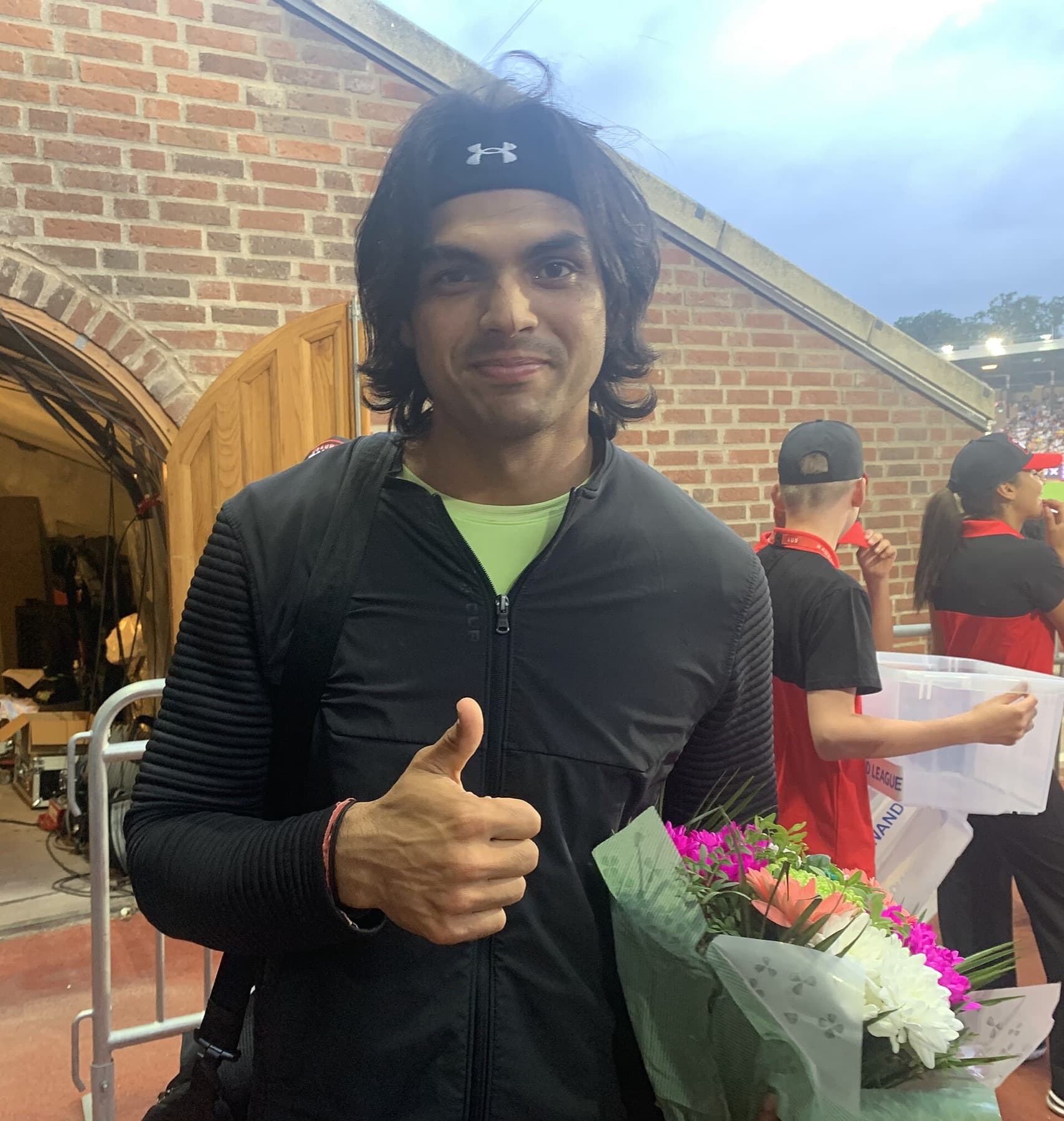
Neeraj Chopra after competition at Bauhaus Galan in Stockholm on June 30, 2022 — the Olympic champion who stood for India as Glasgow passed the Commonwealth Games flag toward Ahmedabad 2030.
Photo: Anass Sedrati / CC BY-SA 4.0
Glasgow’s Commonwealth Games ended Sunday night at the OVO Hydro the way host cities always hope to end: with a full house, a folded flag, and a next address already lit on the boards. Scotland passed the ceremonial Commonwealth Games flag and baton to India. Olympic champion Neeraj Chopra and Indian Olympic Association president P. T. Usha received them; Gujarat Deputy Chief Minister Harsh Sanghavi completed the transfer for Ahmedabad — branded Amdavad 2030 — host of the centenary Games four years from now. Prince Edward, Duke of Edinburgh, declared the 23rd Games closed and invited the Commonwealth back to Ahmedabad. Glasgow 2026 chair George Black framed the handoff as two river cities trading the same job: “From Glasgow to Ahmedabad… we wish you every success as you prepare to welcome the centenary Games.”
The ceremony also closed India’s fortnight as a competitor. A 122-athlete contingent finished fourth with 39 medals — 13 gold, 17 silver, nine bronze — edging hosts Scotland on the silver-medal tiebreaker after both landed on the same total. Australia, England, and Canada filled the top three. The number looks modest against Birmingham’s haul until the programme is remembered: Glasgow ran a reset, roughly ten sports, with shooting, badminton, wrestling, hockey, and table tennis among the traditional Indian medal factories left off the schedule. Boxing still delivered ten medals — seven of them gold — that rewrote the Commonwealth record books; athletics and para athletics stacked the rest. Gold-medal boxer Jaismine Lamboria carried India’s flag into the closing parade. Chopra, who had already taken javelin silver earlier in the meet, stood for the host handover instead of another throw.
Ahmedabad’s job is different from Glasgow’s rescue mission. Commonwealth Sport ratified the Gujarat city in November 2025 over Abuja as host of the 100th anniversary of the Games that began in Hamilton, Ontario, in 1930. India last hosted in New Delhi in 2010; 2030 will be the second Indian edition and the first branded around a century rather than a recovery. Commonwealth Sport has already sketched a wider canvas — 15 to 17 sports, with athletics, swimming, table tennis, bowls, weightlifting, artistic gymnastics, netball, and boxing among the confirmed cores, and cricket, hockey, badminton, shooting, and wrestling among the disciplines still in the conversation. Screens at the Hydro flashed “Amdavad 2030” while India’s cultural segment — Vasudhaiva Kutumbakam, with Shankar Mahadevan and Manushi Chhillar among the leads — sold welcome more than venues. The venues still have to arrive on time.
That is the Medalist read on Sunday’s theatre. Glasgow proved a stripped Games can still finish, and that India can finish fourth without its usual medal sports. Ahmedabad now has to prove the opposite problem: that a centenary host can put those sports — and a city-scale welcome — back on a calendar the Commonwealth will trust. Chopra handing a flag to Usha was not the end of India’s Glasgow story. It was the first public minute of India’s hosting one.