
Money & Media
The business of global football media rights
How broadcast markets fragment across regions — and why a North American World Cup resets the price of football’s biggest product.
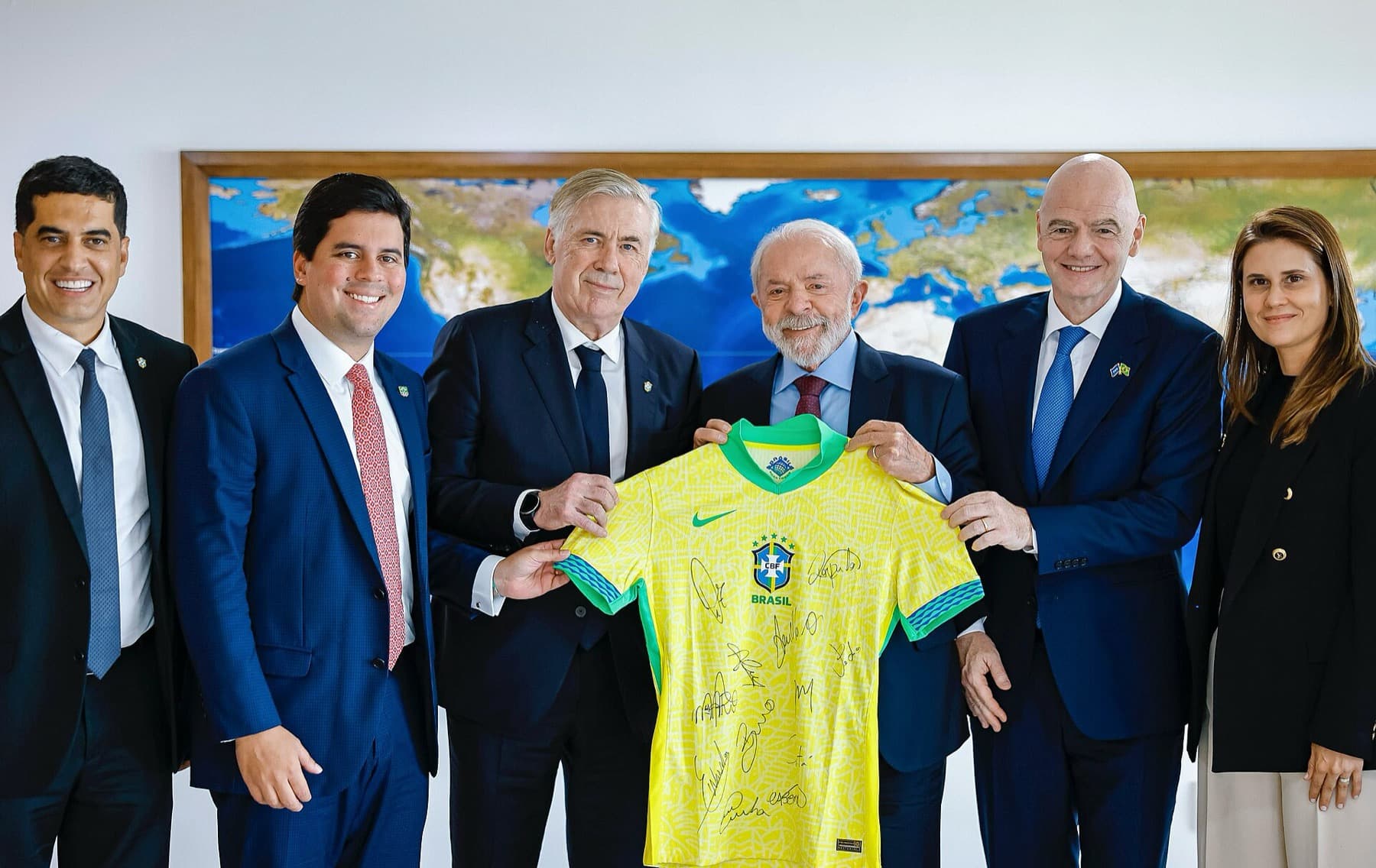
FIFA president Gianni Infantino in Brasília in January 2026 — the office that sets the global football media-rights calendar.
Photo: Lula Oficial / CC BY-SA 4.0
Football sells rights by territory, then stacks those territories into a global calendar. Domestic leagues, continental cups, and FIFA tournaments compete for the same household attention with different bundling logic. Streaming did not erase that map; it added another window inside each territory.
The 2026 World Cup is the clearest current case study. Analysts put media rights alone near $3.8 billion for the tournament — roughly a fifth higher than Qatar 2022 — helped by 40 extra matches and a U.S. summer schedule. Fox’s English-language U.S. deal (~$485 million) and Telemundo’s Spanish package sit well below what many executives now quote as open-market value, a hangover from FIFA’s earlier calendar concessions. That gap is why early talk for 2030 and 2034 already assumes combined English–Spanish U.S. bids in the $1.5–2 billion range per Cup.
Asia remains the growth argument even when the matches kick off in North American evenings. Packages into Japan, Korea, Southeast Asia, and India still set floors for multi-territory sales, and streamers such as DAZN have used World Cup windows to deepen local footprints. The paradox of a U.S.-centric commercial cycle is that sponsors skew American while rights buyers in Asia still decide whether the inventory feels premium or fatigued.
Sponsorship and ticketing now move almost as much money as the broadcast line. Ampere-style estimates put World Cup sponsorship near $2.4 billion this cycle, with U.S. brands taking a majority share of the pool. Dynamic pricing and FIFA’s own resale fees turned MetLife’s final weekend into a hospitality product as much as a match ticket — a model European federations will study and fans will argue about for years.
The next negotiation cycle will ask a blunt question: was 2026’s revenue a hosting windfall, or the new baseline for football’s biggest month? Broadcasters who underpaid this time will not get the same courtesy again. Federations and clubs watching from outside FIFA’s tent will price their own rights against that floor — which is how a single World Cup quietly reshapes the rest of the calendar.