
Why Asian American athletes are still called “technical”
Discipline and hard work sound like praise. In sports media they often become a ceiling — and the research on that pattern is clearer than the broadcast habit.
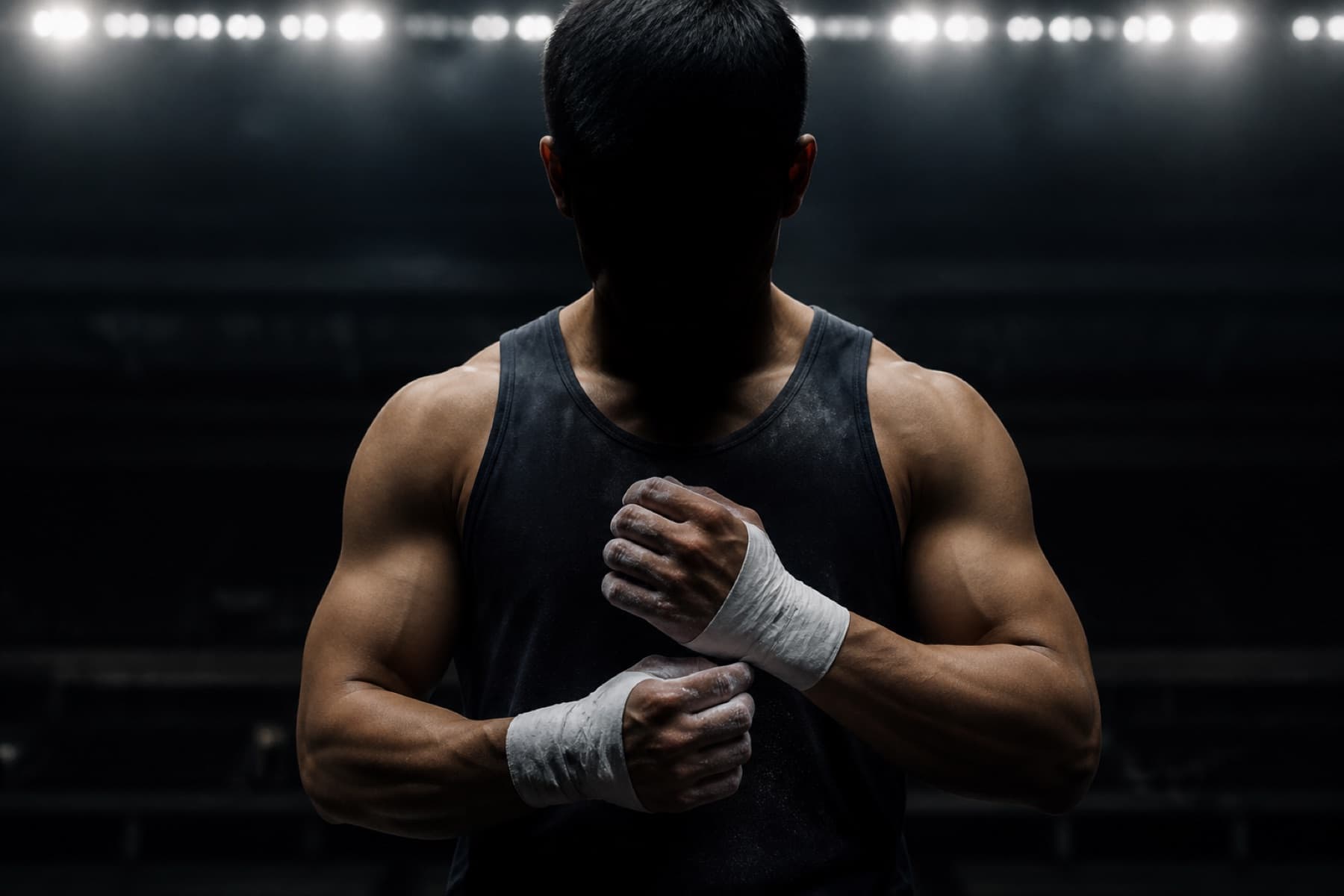
An anonymous Asian athlete under stadium lights — a conceptual portrait for a language problem, not a stand-in for any named player.
Illustration: The Medalist
Open a broadcast or a profile of an Asian American athlete and the adjectives arrive early. Technical. Disciplined. Hard-working. Focused. Coachable. The words are rarely meant as insults. They still do a job: they explain excellence as process and leave less room for power, creativity, swagger, or leadership — the language American sports uses freely for other stars.
No individual writer is the problem here, and most of them would be surprised to hear the question. The pattern is what matters. Media scholarship, the athletes’ own interviews, and a handful of well-documented cases all point the same direction: praise that sounds generous can still shrink what an athlete is allowed to be.
Why “positive” still limits
The model-minority myth treats Asian Americans as proof that hard work alone conquers inequality. In sport, that shows up as praise for grind and basketball IQ that quietly declines to mention athleticism, creativity, or nerve. Scholars writing during Linsanity kept landing on the same bind: Jeremy Lin had just proved an Asian American could take over an NBA game, and the coverage still reached for intelligence and perseverance as the explanation of choice.
UC Irvine scholar Long T. Bui, writing after Nathan Chen’s Beijing Olympic gold, traced how “robotic” praise draws on a longer history of casting Asians as machine-like workers — tireless, unfeeling, interchangeable. When The Washington Post credited Chen’s gold to an “almost robotic zeal,” the sentence sounded like admiration. It also borrowed a dehumanizing trope. Lisa Nakamura’s point, cited in that debate, was blunt: call someone’s work robotic and you imply it is not uniquely worthy of recognition.
MIT Sloan research by Jackson Lu has tied creativity stereotypes to the “bamboo ceiling” — East Asians doing well in school and early careers, then thinning out at the top. Sport is not a corporate org chart, but the same adjective set travels. Being called technical gets an athlete respect. Being called creative, explosive, or magnetic is what gets them treated as a franchise player.
What we reviewed
We did not code every primetime hour of the last decade. We reviewed published scholarship and a transparent set of high-visibility cases where the descriptor pattern is on the record, then compared how those frames differ by sport and gender. Treat this as a teaching sample, not a census.
| Sport / case | Common praise frame | What gets underplayed |
|---|---|---|
| Figure skating (Chen 2022) | Focus, zeal, technical difficulty | Artistry, joy, authorship of the program |
| Basketball (Lin 2012) | Intelligence, Harvard, hard work | On-ball aggression, improvisation, physical playmaking |
| Golf (Morikawa / Zhang) | Ball-striking, process, composure | Competitive edge and star charisma (more available in men’s major coverage than women’s) |
| Football / baseball (Hamilton, Carroll) | Length, tools, “surprising” athleticism | Belonging in the sport’s default image of a star |
How it shows up by sport
Figure skating and women’s golf have treated Asian excellence as ordinary for a generation, which is progress that comes with its own flattening. Chen’s Olympic night was a skater who had rebuilt men’s jumping and then delivered it with a country watching. Calling that robotic took the hardest part — the nerve — and handed the credit to a machine.
Basketball still has the eye-test problem. High school and college coaches have described Asian American prospects who look identical to their peers on film and still lose the recruiting room to assumptions about explosiveness. Linsanity interrupted that story for a season. It did not change the default setting of a scouting report.
Football and baseball have so few Asian American stars that each one carries extra weight. Kyle Hamilton plays with length and violence in space, vocabulary the NFL already owns. Corbin Carroll’s Rookie of the Year season was speed and impact, not a parable about studying harder. Coverage that reaches for heritage before it describes the tools is treating their presence as the surprising part.
Golf sells its Asian American stars more comfortably than the NFL does, which is both progress and a trap. Process language is native to golf. It also makes it easy to write about Rose Zhang or Collin Morikawa as if they were spreadsheets with tour cards.
What athletes have said
Chloe Kim has spent years refusing the quiet, grateful version of herself that the coverage kept offering. After racist messages followed her Olympic gold, she described lying in bed sobbing next to her mother and asking why people were being cruel to her because she is Asian. She has also talked about the exhaustion of being expected to be a flawless role model, which is the model-minority demand arriving in the shape of a compliment.
Jeremy Lin’s career is still the clearest basketball case study: undrafted, then unignorable, then explained over and over as an exception. The academic work on Linsanity found plenty of racialized framing in that first month — and also found it fading in later seasons, once he was simply a guard in the league. Desks can learn. They tend to do it after the fact.
Commercial and leadership stakes
Endorsements follow the story brands think they can sell. Technical athletes get equipment and efficiency deals. Charismatic ones get lifestyle campaigns, and the fee that comes with them. When an Asian American star is typed as process first, the commercial ceiling moves down with the language, and the same pattern shows up in who gets called a face of the league or the guy who runs the locker room. Kyle Hamilton wearing a South Korean flag on his helmet is still rare enough to be a story in a 1,600-player league. Vocabulary is not the only reason for that, but it helps keep it true.
Better reporting questions
- What did the athlete actually do on the play — force, deception, timing — before heritage enters the sentence?
- Would this adjective appear in a profile of a white or Black peer with the same skill set?
- Are we explaining success as grind because we lack the vocabulary for improvisation?
- Did the athlete invite a family or immigration frame, or did we reach for it first?
- Who gets called a leader, and who only gets called coachable?
Technical is often accurate, and there is nothing wrong with saying it. The problem is when it arrives first, does all the work, and leaves the rest of the player unwritten.