
How Asian and diaspora athletes reshape global sport
Export pipelines, diaspora pathways, and dual-market audiences — a structural read, not a checklist of names.
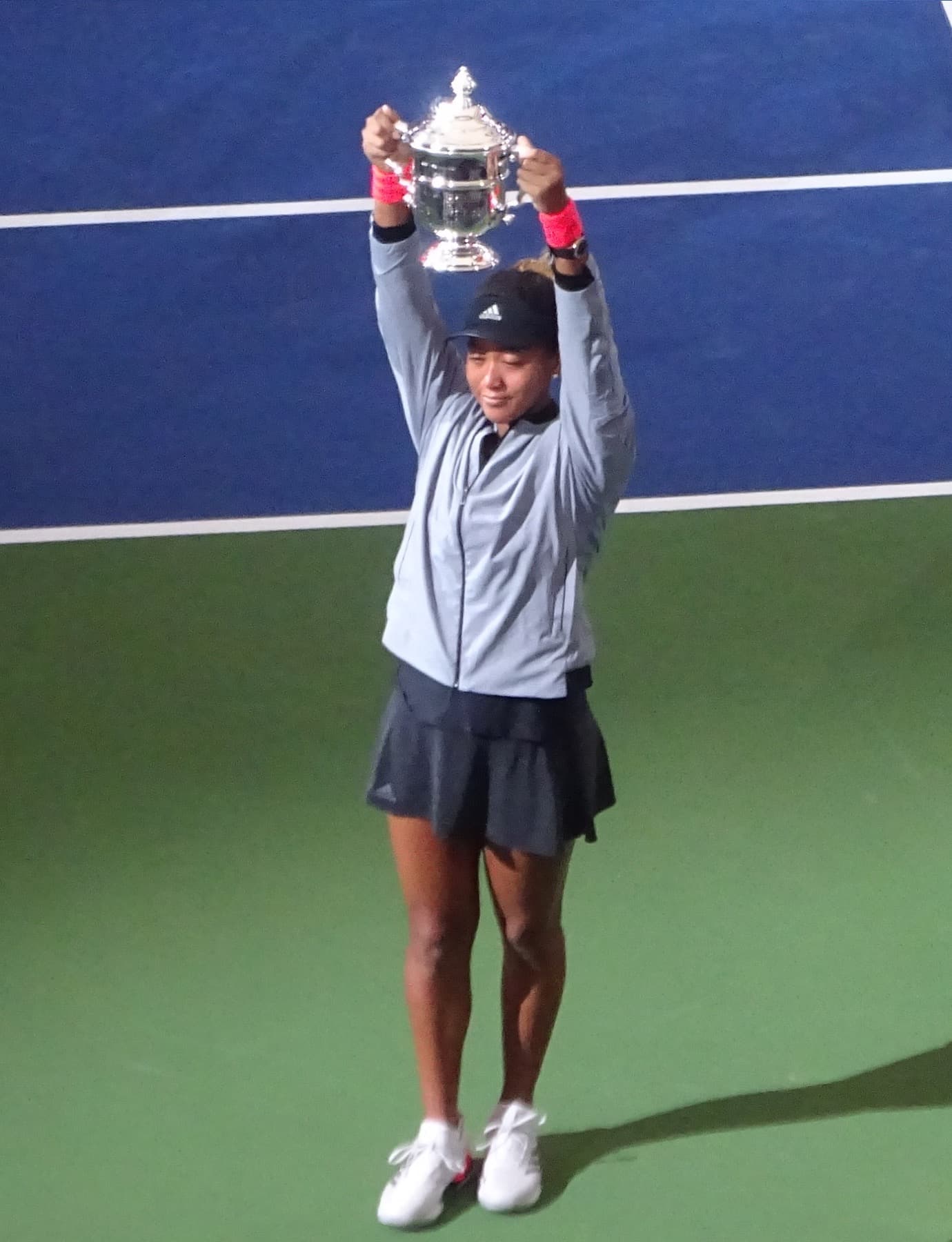
Naomi Osaka at the 2018 U.S. Open — a Japan-born, U.S.-trained champion whose identity and excellence remade tennis’s global audience.
Photo: Azilko / CC BY-SA 4.0
When Naomi Osaka beat Serena Williams in the 2018 U.S. Open final, the scoreline was only part of the story. A Japan-born player raised and trained in the United States, competing under the Japanese flag, had just become a Grand Slam champion — and tennis’s commercial map had to stretch to hold her.
Asian and Asian-diaspora athletes have long mattered at the highest levels of baseball, basketball, golf, tennis, football, and badminton. The useful question is not whether they “belong.” It is how they change the systems around them: who leagues recruit, which markets sponsors chase, and which pathways the next cohort can see.
One pathway is export from a domestic league or federation into a global circuit. Japanese baseball’s posting system moves NPB stars into MLB on terms both leagues can live with. Ichiro Suzuki’s 2001 arrival as a position player — and his first-ballot Hall of Fame election with near-unanimous support — proved the pipeline could produce excellence, not only novelty. Shohei Ohtani, Yoshinobu Yamamoto, and Roki Sasaki arrive into a market that already knows how to price Japanese stars because earlier generations paid the education cost. Korean women’s golf ran a parallel export machine for two decades: junior volume, national coaching infrastructure, and LPGA-ready players who remade the women’s tour’s competitive and commercial center of gravity without needing a U.S. childhood.
European football now runs a version of the same logic. Son Heung-min made Asian excellence ordinary in the Premier League’s weekly product; Japanese players such as Kaoru Mitoma and Takefusa Kubo followed a faster academy-to-Europe path as scouts treat East Asian development as a value market, not a novelty window. Export success changes budgets. Clubs that once waited for national-team proof now scout younger, and federations that keep producing exports keep their domestic leagues commercially relevant even when stars leave.
A second pathway is diaspora formation inside another country’s system. Jeremy Lin, the American-born son of immigrants from Taiwan, did not come through a Chinese or Taiwanese pro league; he came through Harvard, an undrafted NBA path, and a February 2012 Knicks run that averaged 24.6 points and 9.2 assists across an 11-game stretch. Linsanity was a basketball story and a media market story at once: Asian American audiences in the U.S. and fans across Asia treated the same point guard as proof that the path existed.
Osaka sits at another node of the same map. Born in Osaka to a Japanese mother and Haitian-American father, she has lived and trained in the United States since age three and represents Japan internationally. She became the first Asian player to hold the WTA singles No. 1 ranking and the first Japanese player to win a major singles title. Brands followed both identities — Japanese corporate partners for the Olympic and domestic spotlight, global apparel and luxury for the U.S.-anchored tour life. Diaspora here is not a footnote; it is the commercial architecture.
A third pathway runs through college and NIL-era amateur markets. Rose Zhang, a Chinese-American from California, became Adidas’s first individual college athlete NIL signing while at Stanford, then won her LPGA debut at the 2023 Mizuho Americas Open — the first player to win an LPGA event in a professional debut since 1951. That is not the same story as a Korea-trained LPGA export or an NPB posting case. It is a U.S. development system producing an athlete whose market already spans both sides of the Pacific before the first pro tee time.
A fourth pattern is Asia-anchored excellence that still rewires global systems without a Western passport story. World No. 1 badminton player An Se-young forced Korean badminton’s association rules toward individual sponsorship rights, then signed a record personal equipment deal with Yonex — reported around ₩10 billion over four years — after the federation’s old collective-sponsor model cracked. She did not need a diaspora narrative to move money and policy. She needed dominance plus a willingness to argue that a world No. 1 should control her own commercial lane.
The next tennis chapter shows how fast a national audience can attach to a new pathway star. Alexandra Eala, representing the Philippines, broke through in 2025 with a Miami Open semifinal that included wins over Grand Slam champions, a first WTA-level title run for a Filipina, and a climb into the WTA top 50. Her story is not Osaka’s dual-market biography; it is a Southeast Asian talent pipeline meeting a tour that suddenly has to schedule her as a ratings and sponsorship event across Manila as well as Miami. Different route. Same structural effect: attention follows the athlete, and institutions rearrange around the audience.
These routes overlap without being identical. Export changes scouting and transfer fees. Diaspora breakthroughs change who kids copy in suburban gyms and which U.S. brands discover Pacific audiences. College-NIL stars compress the amateur-to-pro commercial timeline. Asia-anchored champions rewrite federation rules and home-market media rights even when they never “leave.” The shared fact is that talent, capital, and attention no longer need a single national home to scale.
Reading the next wave well means asking which system an athlete is actually moving — and which market has to stretch because of it. The names will keep shifting. The pathways are what last.