
Korean golf's global rise
A development system built on volume, coaching infrastructure, and LPGA export economics.
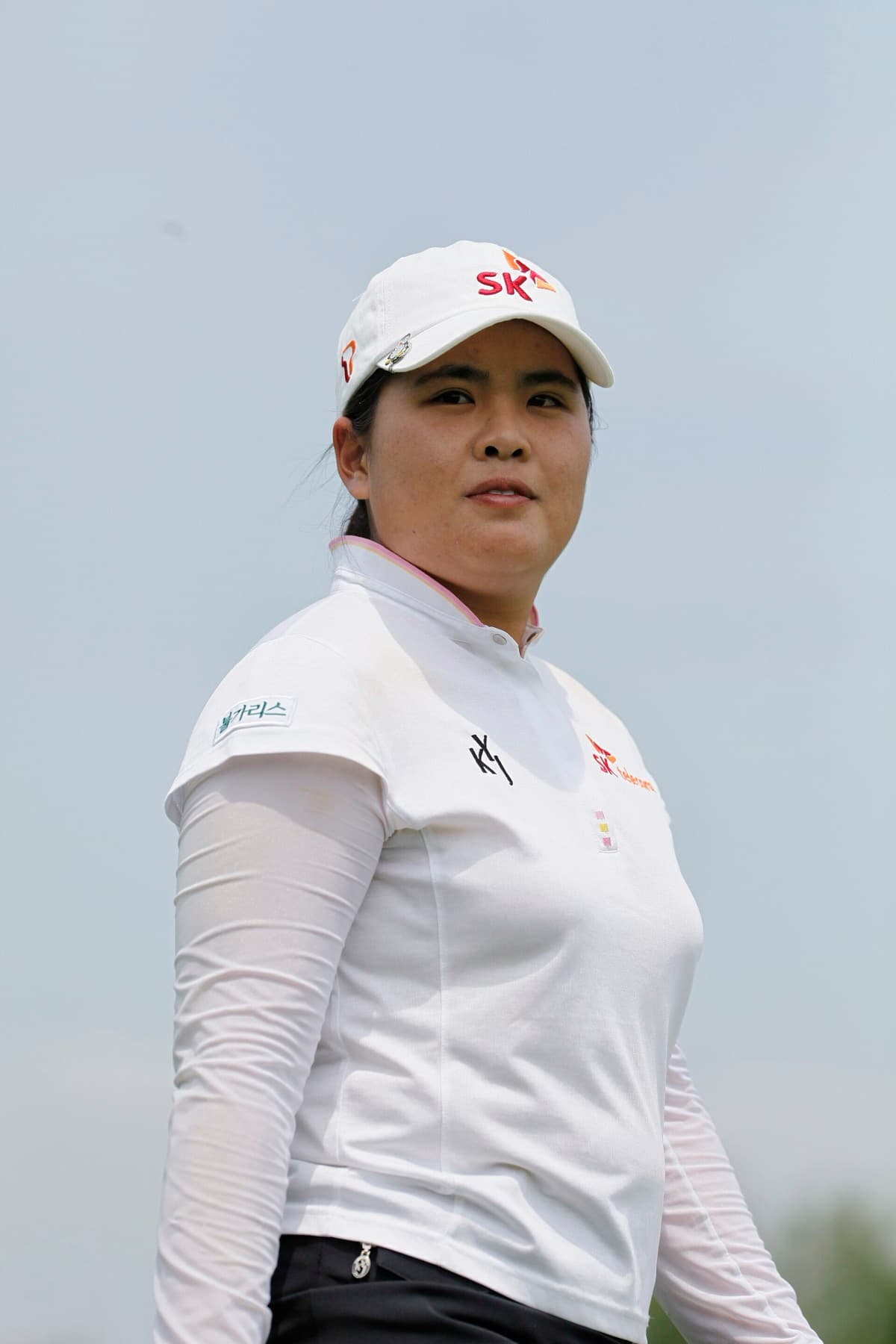
Inbee Park at the 2009 LPGA Championship — part of the Korean export wave that remade women’s golf.
Photo: Keith Allison / CC BY-SA 2.0
Inbee Park’s generation did not invent Korean golf. It inherited a finished proof. When Se Ri Pak won the 1998 LPGA Championship and then the U.S. Women’s Open — a 20-hole Monday playoff after a water-logged recovery on the 72nd hole at Blackwolf Run — Korean television stayed up overnight. Ten-year-olds who became major champions later, including Park, have said their parents woke them to watch. Pak entered the LPGA as one of a handful of Koreans. Within a decade the tour’s Korean membership counted in the dozens. The rise was not a vibe. It was a copyable path.
The useful question is how the copy machine works. Pak’s win sat inside a national mood — the late-1990s financial crisis — and gave families a concrete dream with prize money attached. What followed was volume: juniors hitting before school, parents treating practice hours like another academic track, corporate sponsors underwriting promising amateurs, and a domestic professional ladder thick enough that missing an LPGA card did not mean the end of a career. Players themselves, surveyed in academic work on the first Korean LPGA wave, pointed less to mystical national traits than to hard practice, clear goals, and family logistics. The culture story and the grind story are the same story told at different altitudes.
Infrastructure made the grind cheap relative to green-grass scarcity. South Korea’s traditional courses are limited by land and often expensive or private; participation still runs high because practice does not require an 18-hole tee time. Multi-tier driving ranges and simulator venues — Golfzon alone has counted thousands of domestic screen-golf sites — turn repetition into an urban habit. Elite juniors still need tournament golf and coaching, but the base of ball-striking hours is wider than course count suggests. That is development economics: raise the number of kids who can hit 300 quality balls a week without a country-club membership.
The KLPGA Tour is the professional middle layer. It is not a quiet feeder; it is a commercially serious domestic circuit whose 2026 season carried a record purse near ₩34.7 billion across roughly thirty events. Money leaders can earn eight-figure won seasons at home. The Jump Tour and Dream Tour sit underneath as lower divisions. Stars routinely win Rookie of the Year on the KLPGA, then chase LPGA membership — Ryu Hae-ran’s path from KLPGA honors to LPGA Rookie of the Year and a Women’s PGA Championship is the current template, not an outlier. Domestic depth keeps the pipeline full even when the top twenty Koreans live on the LPGA calendar.
Export economics close the loop. An LPGA win pays dollars, rankings points, and global sponsors; Korean broadcasters and brands still treat those Sundays as home-market events. Inbee Park became the clearest second-wave face of the system: youngest U.S. Women’s Open champion in 2008, three majors in 2013, a career Grand Slam as credited by the LPGA, Olympic gold in Rio 2016. She is what the Se Ri Kids were supposed to become — and what younger Koreans still see as ordinary excellence rather than a national miracle.
Men’s golf followed a slower clock. For years the gap was real: Korean women remade the LPGA while Korean men remained occasional PGA Tour stories. Explanations stack without canceling each other — later hero formation, a deeper women’s junior culture after 1998, and military-service timing that can interrupt male careers unless Olympic or Asian Games medals shorten the obligation. The catch-up is now visible anyway. Sungjae Im won PGA Tour Rookie of the Year, then The Honda Classic; Si Woo Kim has been a Players Championship winner and a 2026 FedExCup contender; Tom Kim collected multiple Tour titles as a teenager and young twenty-something and finished third at the 2026 U.S. Open. The women’s system still runs hotter. The men’s map is no longer empty.
What Korea proved to the rest of golf is modular. A founding televised hero, a domestic tour that pays enough to hold talent, practice infrastructure that does not wait on land, and sponsors who treat LPGA Sundays as domestic media — those pieces can be studied without romanticizing childhood. Other countries already copy fragments. Few have matched the women’s density for as long. The next test is whether the men’s wave becomes a second export machine of the same thickness, and whether the Asian Tour’s new PGA–DP World pathway gives Korean men another escalator that does not require waiting for a single breakout major. The women’s rise already answered the harder question: talent scale is a system, not a season.