
Alex Eala’s historic title is creating a tennis boom in the Philippines
Washington supplied the trophy and the flags. The harder job is turning packed courts into an affordable pipeline beyond Manila.
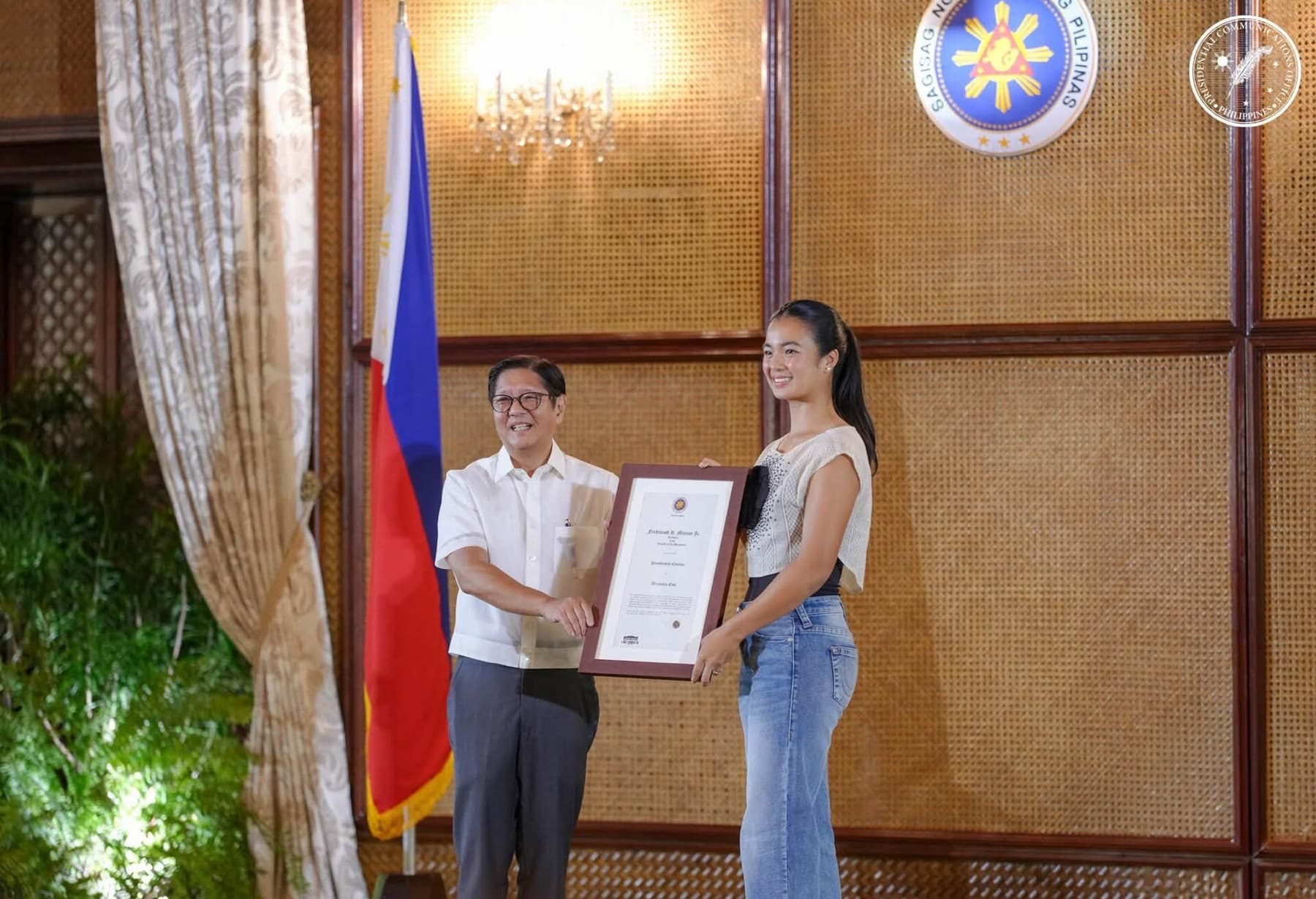
Alexandra Eala with Philippine president Ferdinand Marcos Jr. and the national flag at Malacañang Palace on July 13, 2026, after her historic Wimbledon run.
Photo: Presidential Communications Office / Public Domain
Alexandra Eala returned to a rain-delayed final in Washington on Monday with Jessica Pegula still one set from the title. After play resumed, the 21-year-old Filipina took the second set and closed with a 6-0 third. Her 4-6, 6-4, 6-0 victory made her the first player from the Philippines to win a WTA Tour-level singles title.
The week was much bigger than one comeback. Eala beat Paris Olympic champion Zheng Qinwen on the way in, then took out the tournament’s top three seeds: Elina Svitolina, Naomi Osaka, and Pegula, the American world No. 3 — the first such path to a title since Barbora Krejcikova in Dubai in 2023. The win lifted Eala into the top 20 for the first time and finished the job she had narrowly missed at Eastbourne last year, when four championship points slipped away.
Washington sounded like a home tournament by the end. Philippine flags filled the stands for a rare Monday final, and Pegula thanked the Filipino crowd for helping tennis grow. Tournament chairman Mark Ein said at least 80 percent of recent ticket inquiries had asked when Eala would play.
Back home, the rush had started before the trophy. Eala’s Miami semifinal in 2025 and Wimbledon run this summer filled fan events, courts, and beginner classes. Players in Manila have reported difficulty booking time, while shoes, apparel, and some rackets have run short. The surge has exposed the harder problem: access.
Good courts remain concentrated in country clubs and wealthy parts of Metro Manila. Private rentals can reach about ₱2,000 an hour, before a family pays for rackets, balls, coaching, and travel. Eala put the change plainly during a July homecoming: courts were empty when she was young; now people tell her they cannot get one. Her first request was more courts.
Her own route shows why the next Eala cannot depend on inspiration alone. She learned from her grandfather on Valle Verde Country Club courts, competed abroad with family support, and moved to Spain at 13 on a full scholarship from the Rafa Nadal Academy. Globe had backed her since she was eight, with BPI, Nike, and Babolat later joining the portfolio. It was an exceptional mix of talent, family means, elite coaching, and private support — difficult for most Filipino children to reproduce.
There has been movement. The renovated Rizal Memorial Tennis Center hosted the country’s first WTA 125 event in January and later opened public bookings. Those four courts filled quickly even at rates of ₱600 by day and ₱1,000 at night. Quezon City added two public courts in May. The Philippine Sports Commission has discussed regional training centers, a Baguio upgrade, competition courts in Cebu, and a larger national tennis base at New Clark City. Demand is visible; the supply is still small and heavily urban.
The Philippine Tennis Association now has to make the route legible outside Manila: publish where children can play, reserve affordable beginner hours, certify more regional coaches, and keep women’s events on the calendar after years when that pathway nearly vanished. The Palawan Pawnshop and Cebuana Lhuillier junior tours already bring competition through Luzon, Visayas, and Mindanao. Connecting those events to schools, national selection, equipment libraries, and travel grants would turn separate opportunities into a pathway. The federation only returned to full International Tennis Federation standing in 2024 after a three-year suspension, so trust and nationwide reach are part of the work too.
Sponsors have a clear role. Eala’s partners know how to stage a homecoming and put a champion on a campaign, while Philippine brands already support junior tours. The opportunity now is to fund public-court hours, school programs, rackets, coaches, and tournament travel throughout the year.
A national plan can start smaller than a country club in every barangay. Shared hard courts, portable nets, school partnerships, and trained community coaches can make the first step cheaper while regional centers serve players ready for more. Eala has already made a Filipino tennis champion imaginable. Whether this becomes a national pipeline depends on what a child can find after asking where to play.