
Why cricket is one of the world's biggest sports
Audience scale, league economics, and diaspora fandom make cricket impossible to ignore in global sport.
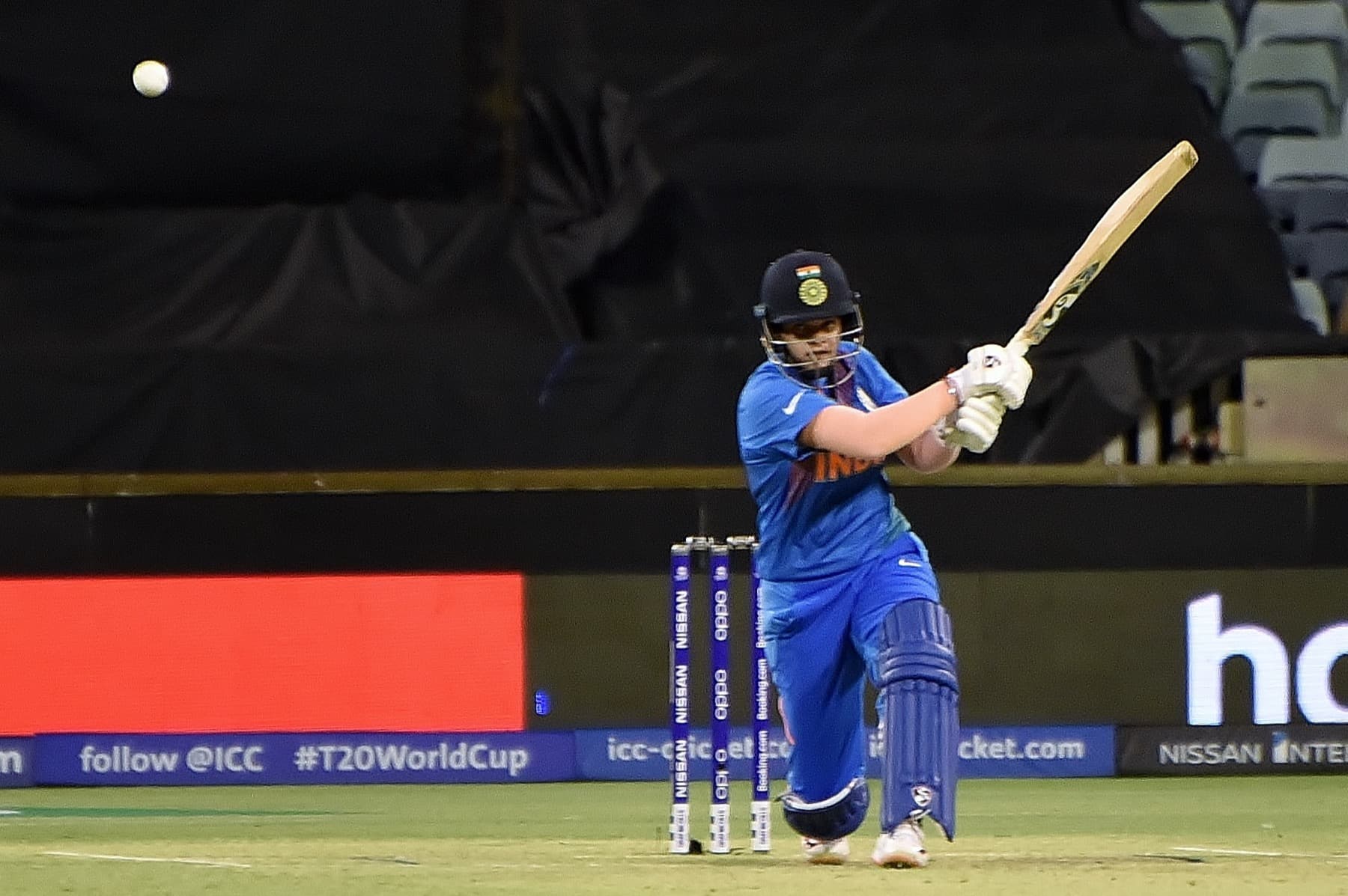
Shafali Verma batting for India at the 2020 Women’s T20 World Cup — cricket’s global footprint includes women’s game growth as well as men’s leagues.
Photo: Bahnfrend / CC BY-SA 4.0
Ask a sports executive in New York whether cricket is “big,” and you may get a polite shrug. Ask the same question in Mumbai, Lahore, Dhaka, Melbourne, Bridgetown, or London during an India–Pakistan World Cup week, and the shrug looks provincial. Cricket’s claim to being one of the world’s biggest sports is not about uniform global distribution. It is about audience scale where it lives, commercial density where it concentrates, and a product ladder that keeps inventing new ways to watch.
Start with the ICC’s own measuring sticks. The 2023 Men’s Cricket World Cup in India logged more than a trillion live viewing minutes worldwide — up sharply from both the 2011 subcontinent edition and the 2019 tournament in England and Wales — with digital streaming adding hundreds of billions of minutes on top of linear TV. India alone drove hundreds of billions of viewing minutes on the Disney Star network. Those are not niche numbers. They are World Cup-scale consumption in a sport whose largest markets treat international cricket as civic appointment viewing.
Geography explains the gravity. South Asia holds the overwhelming share of cricket’s audience. India, Pakistan, Bangladesh, and Sri Lanka turn bilateral series and ICC events into national weather. England, Australia, South Africa, New Zealand, and the multi-island West Indies keep the historical spine. Afghanistan’s rise to full ICC membership — and World Cup wins over established sides in 2023 — showed that the map can still expand under pressure. The diaspora then exports the habit: South Asian communities in the Gulf, North America, and the UK make evening T20 windows and weekend Tests into transnational rituals. Major League Cricket’s U.S. experiment is betting that those diasporas plus a three-hour product can build a local league, not only an imported broadcast.
Three formats are the product design. Test cricket remains the five-day craft exam. One-Day Internationals (fifty overs a side) host the traditional World Cup. Twenty20 compresses the night into roughly three hours of power hitting and tactical bowling — the format that opened doors for new fans and new leagues. Rather than killing Tests, T20 created a second on-ramp: follow a star through the IPL or a T20 World Cup, then follow that name into ODIs and whites. Women’s cricket has used the same ladder. Shafali Verma’s emergence around the 2020 Women’s T20 World Cup in Australia — teenage power batting under a central BCCI contract — was one early face of a women’s game that now carries Commonwealth Games medals, World Cup finals, and growing broadcast windows of its own.
League economics sealed the argument for capital. The Indian Premier League’s 2023–27 domestic media rights sold for roughly $6 billion split between television and streaming — more than double the previous cycle and among the richest per-match sports properties on earth. Franchise valuations, player auctions, and city identities turned two months of T20 into an annual commercial festival that other boards try to copy. The Big Bash, Pakistan Super League, Caribbean Premier League, and newer U.S. and UAE ventures are variations on the same thesis: short-form cricket sells like entertainment, then feeds the international calendar.
What cricket is not: evenly popular in every country, or automatically “bigger than football” by every metric. Football’s footprint is wider. Cricket’s depth in its core markets is deeper, and its media rights in India can rival or exceed properties that U.S. boards treat as global by default. For anyone building a serious global sports map — media, sponsorship, pathway investment — ignoring cricket because it is quiet on American primetime is a category error. The sport’s center of gravity is South Asian, its growth engine is multi-format and franchise-led, and its biggest nights already move billions of viewing minutes. That is what “one of the world’s biggest” means when you measure by attention, not by whether your local bar shows the highlights.