
Cricket powerplay tactics
Field restrictions, strike rotation, and when aggression pays in T20 and ODI formats.
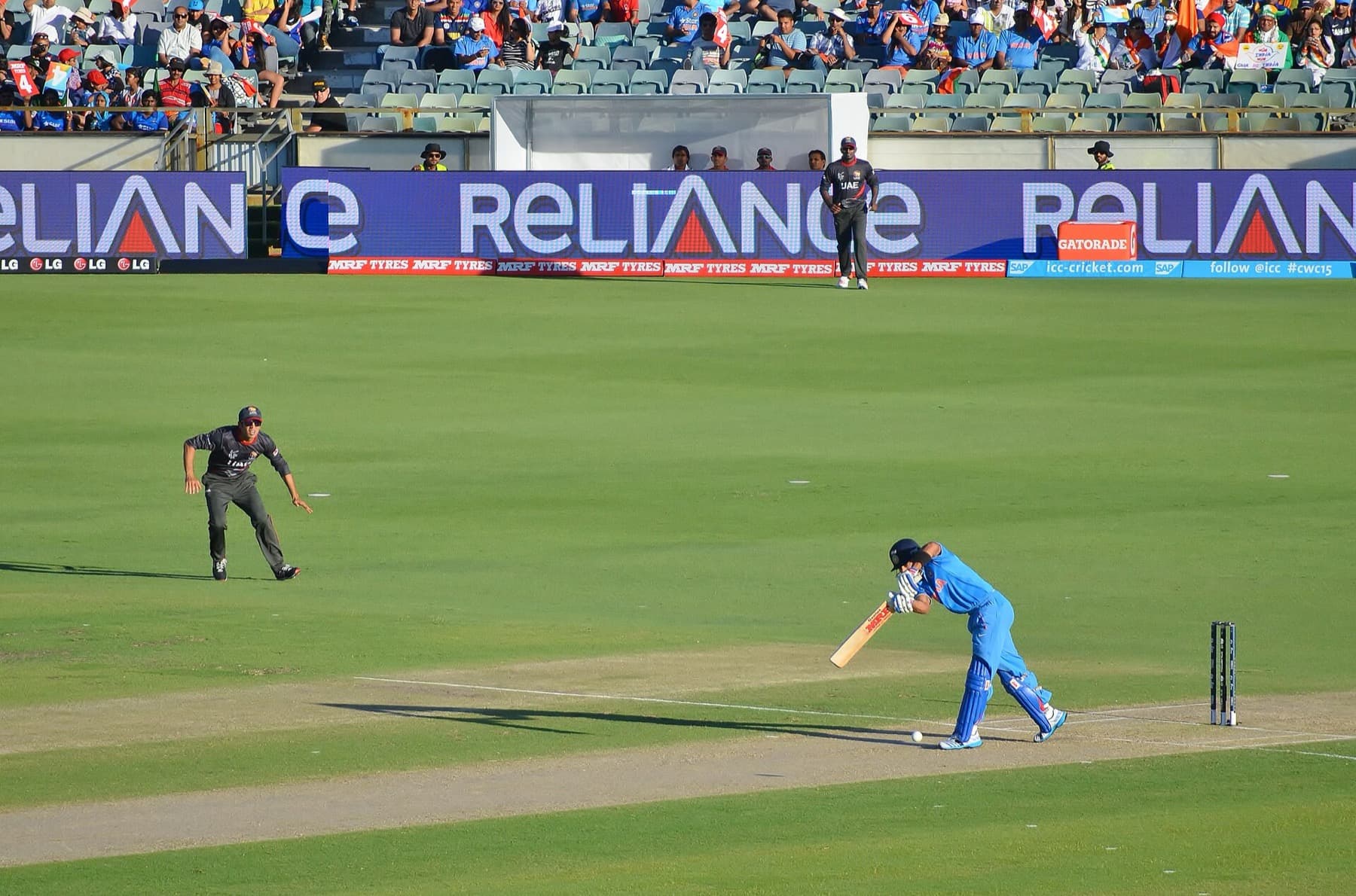
Virat Kohli batting for India against UAE at the 2015 Cricket World Cup — early overs that set the chase tempo.
Photo: Bahnfrend / CC BY-SA 4.0
A powerplay is not a mood. It is a temporary law about where fielders may stand. In limited-overs cricket, only a small number of players can wait outside the 30-yard circle during those overs, which opens gaps between the ring and the rope. Batters get an invitation to hit through or over the infield. Bowlers get a shorter menu of defensive shapes. Everything else in white-ball tactics — openers, new-ball spin, chase math — hangs off that geometry.
The rules differ by format. In men’s T20 internationals and most franchise leagues, the first six overs are the powerplay: at most two fielders outside the circle. From the seventh over, up to five can go deep. In uninterrupted ODIs, the innings runs in three fixed phases — overs 1–10 with two outside; 11–40 with four; 41–50 with five — after the ICC retired the old optional “batting powerplay” in 2015. Tests have no powerplay at all. League variants exist (the Big Bash’s Powersurge is a batting-triggered second restriction block), but the core idea is the same: early overs are deliberately harder to defend with a spread field.
For batters, the powerplay is a finite resource with a price. The open field rewards lofted drives, square cuts, and pulls into unmanned pockets. The new ball still swings and seams, so the same over that yields a boundary can also produce a nick. Modern T20 sides therefore recruit specialists whose job is to spend the first six overs at high intent — sometimes accepting a low control percentage if the strike rate clears 140–160 when it works. Franchise cricket even promotes hitters who look odd on paper: Sunil Narine’s IPL opening spells turned a mystery spinner into a powerplay batter because captains rarely put long-on and long-off both deep early, and Narine thrives hitting into that V. Pair him with a partner who owns pace (a Lynn or Salt type) and the bowling captain faces a matchup trap — bowl spin and feed one opener, bowl pace and feed the other.
Bowling captains answer with matchups and geometry, not vibes. With only two deep fielders allowed, they choose whether those two protect the rope or sit as catching positions just outside the circle. Pace with a hard new ball still owns most powerplays: swing, seam, and short-ball plans that force mishits into the ring. But a narrow cohort of high-rev, hard-to-read spinners — Narine again as bowler, and left-arm fingerspinners who cramp right-handers from around the wicket — can take the new ball because batters cannot free their arms against a flat, skiddy trajectory. ESPNcricinfo noted that in Major League Cricket’s 2026 final run, a large share of Narine’s wickets arrived in the powerplay. The lesson is not “always bowl spin early.” It is “bowl the bowler who denies room when the field cannot cover the whole outfield.”
Chases rewrite the risk table. When a side is batting first, a 50-for-0 powerplay in T20 is a platform; 50-for-3 is a crisis that forces the middle order into recovery mode for the rest of the night. When chasing a modest total — India’s 2015 World Cup chase against UAE, finished inside twenty overs with Kohli and Rohit in control after an early wicket — the powerplay is less about maximum boundary rate and more about staying ahead of the required rate without giving the bowling side a collapse. Required-run math tells you when a four is worth a wicket and when a single is the adult choice. Commentators call both “aggression.” Only one of them is priced correctly.
How to watch a powerplay, then: count the fielders outside the circle, note which two deep pockets the captain has chosen to guard, and watch whether the batting pair are hunting those gaps or waiting for a softer ball later. Track who bowls the third and fourth overs — that is often where the matchup call appears. And remember that the overs after the powerplay are a different sport: five deep fielders in T20, four in the ODI middle, change the value of a lofted shot overnight. The powerplay does not decide every match. It decides whether the rest of the innings is played from strength or from repair — which is usually enough.