
Baseball shift and defensive alignment
How data repositioned fielders — and what rule changes altered.
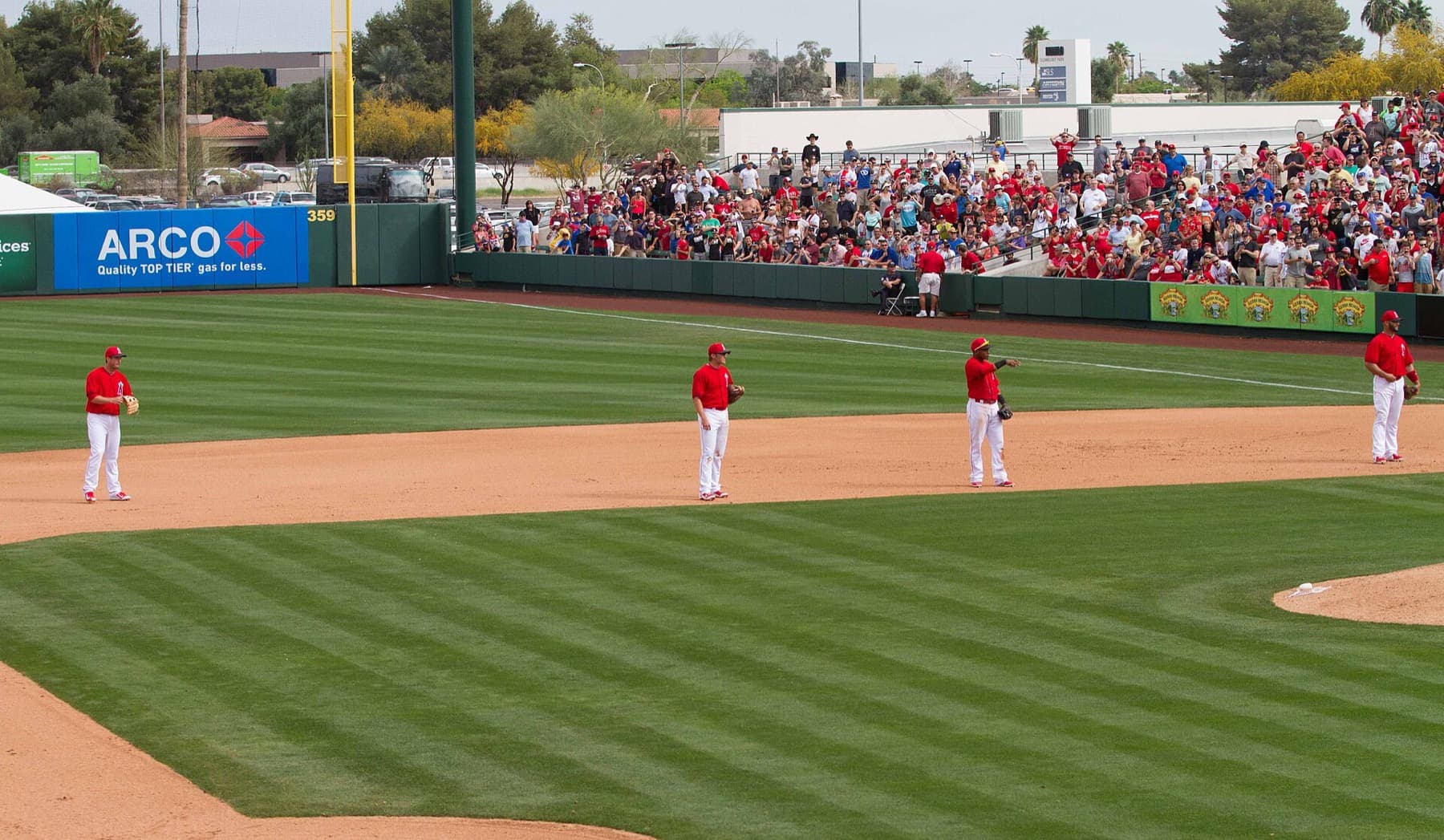
Los Angeles Angels infielders shifting against a pull hitter — the defensive alignment that rewrote batting averages before MLB restricted it.
Photo: Jon Gudorf Photography / CC BY-SA 2.0
Spray charts and launch-angle profiles once pushed three infielders to the pull side. Extreme shifts crushed singles into outs and forced hitters to choose between rolling over and changing their swing identity.
MLB’s infield restrictions ended the most aggressive versions: two infielders must stand on each side of second base when the pitch is released. Managers still position within that box — deeper, shallower, shaded — but they cannot park a shortstop in short right field as a default.
October strategy shifted with the rule. Clubs now win more with outfield shading, catcher receiving, and pitch design that induces the weak contact the old shift used to vacuum. The first-base hole is alive again; pull-side doubles are rarer than they were in the peak-shift years, but not extinct.
Watch postseason defenses on the second pitch of an at-bat, not just the first. Adjustments after a stolen-base threat or a lefty-on-lefty matchup still matter. The ban removed one cheat code; it did not remove the spreadsheet.