
How Japanese baseball became a global pipeline
Japan built an elite domestic development system; posting rules and modern club infrastructure turned its best players into a repeatable MLB market.
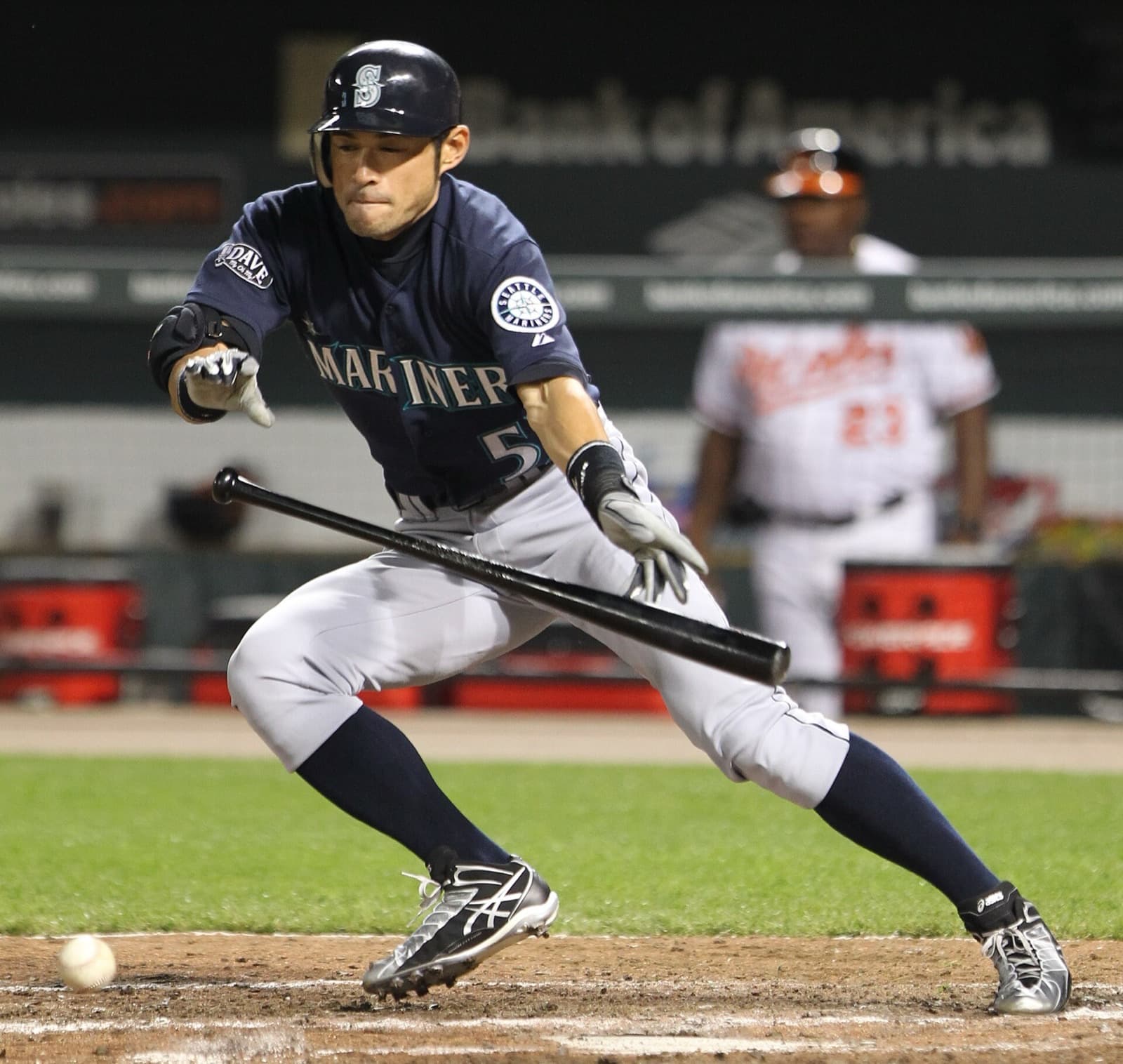
Ichiro Suzuki with the Seattle Mariners in 2011 — the posting-system proof that an NPB résumé could predict MLB superstardom.
Photo: Keith Allison / CC BY-SA 2.0
Japan’s baseball pipeline begins long before a Major League scout opens a file. High school programs compete through prefectural tournaments for a place at Koshien, universities and corporate clubs offer additional development routes, and Nippon Professional Baseball’s 12 organizations draft from all three. NPB then develops players through a first team and a single farm affiliate rather than MLB’s ladder of minor-league levels.
Calling NPB a feeder league understates what players leave behind. It is Japan’s top professional competition, with its own championships, stars, media economy, and tactical traditions. Most Japanese professionals never need or want an MLB move. The players who do cross the Pacific arrive after proving themselves in a league strong enough to make their performance meaningful but different enough that translation still carries risk.
The modern path was not inevitable. Masanori Murakami became MLB’s first Japanese player with the Giants in 1964, then returned to Japan after two seasons. Three decades later, Hideo Nomo used a contract loophole to retire from the Kintetsu Buffaloes and sign with the Dodgers. His 1995 National League Rookie of the Year season turned an exceptional escape into a visible career option and helped force the leagues to create a formal transfer mechanism.
Ichiro Suzuki supplied the posting system’s first defining proof. In 2000, Seattle won exclusive negotiating rights with a $13.125 million bid to Orix, then signed the seven-time Pacific League batting champion. Ichiro became the first Japanese position player in MLB and won both American League Rookie of the Year and MVP in 2001. Nomo showed that a Japanese star could cross; Ichiro showed that an NPB résumé could predict superstardom.
The current posting system is more open than the old blind auction. A player who has not reached nine years of NPB service can ask his club to make him available, but the club must agree. Once posted, all 30 MLB teams have 45 days to negotiate. If the player signs, his former NPB club receives a release fee. If no deal is reached, he returns to Japan and cannot be posted again until the next offseason.
That release fee rises with the guaranteed MLB contract: 20% of the first $25 million, 17.5% of the next $25 million, and 15% above $50 million. A player who reaches nine years of NPB service can pursue international free agency without posting or a fee. The structure gives clubs compensation for releasing stars early while giving established players a route that does not depend entirely on club permission.
Age creates a second track. Foreign professionals who are younger than 25 and have fewer than six seasons in a recognized league are treated under MLB’s international amateur rules. Shohei Ohtani accepted that constraint in 2017, signing with the Angels for a bonus limited by their international pool rather than waiting for an unrestricted contract. Roki Sasaki made a similar choice in 2025, joining the Dodgers on a minor-league deal with a $6.5 million bonus.
Yoshinobu Yamamoto demonstrated the market available on the other side of that threshold. Posted by Orix at 25 after dominating NPB, he signed a 12-year, $325 million contract with the Dodgers, who also owed the Buffaloes a $50.625 million release fee. MLB clubs were valuing a Japanese ace as a finished top-of-rotation player, not as a prospect who needed years of minor-league proof.
The 2025–26 class showed that the market had widened beyond one club and one player type. Munetaka Murakami signed a two-year, $34 million deal with the Chicago White Sox; Tatsuya Imai joined Houston for three years and $54 million; Kazuma Okamoto signed with Toronto for four years and $60 million. Their shorter and differently structured contracts also reveal the remaining evaluation questions—how NPB power, command, defense, and durability translate against MLB velocity and schedules.
International competition helps answer some of those questions in public. Japan’s 2023 World Baseball Classic title put Ohtani, Yamamoto, Sasaki, Murakami, Okamoto, and Shota Imanaga in the same high-pressure tournament. MLB scouts already knew the players, but the WBC let global audiences see NPB stars against major-league opposition and made Japan’s development depth part of the event’s central story.
Signing the player is only the beginning of the investment. The season is longer, travel is different, baseball terminology becomes a technical language problem, and a family must build a life in a new country. Interpreters often translate coaching data, join mound visits, arrange housing, and bridge clubhouses as well as press conferences. Teams with trusted medical handoffs, Japanese-speaking staff, food and housing support, and clear development plans reduce transition risk.
The commercial return can extend far beyond wins. The 2024 World Series averaged 12.1 million viewers in Japan, and the 2025 Dodgers-Cubs Tokyo Series averaged more than 24 million there across two games. Japanese stars can change broadcast schedules, sponsorship categories, merchandise demand, and a club’s relevance across the Pacific. MLB’s expanding Tokyo operation treats Japan as a major business market, not merely a scouting territory.
The pipeline also creates tension for NPB. Release fees reward clubs for developing stars, and MLB success can raise the Japanese league’s global prestige. Early departures can still weaken domestic rosters, concentrate talent on wealthy MLB clubs, and give players less control than they would have under earlier international free agency. The Japanese players’ association continues to argue that nine years is too long to wait for an unrestricted move.
For fans evaluating the next candidate, the useful questions go beyond an NPB stat line. Is the player old enough to escape bonus-pool limits? Will his club approve a posting? Does his pitch shape, contact profile, or defense translate? Which MLB organization can support the transition after the press conference ends? Japan now produces talent MLB trusts; the advantage belongs to clubs that understand the entire passage, not only the auction at its end.