
Why badminton is a major global sport
Hundreds of millions of players, Olympic medal depth concentrated in Asia, and a tour calendar that still runs on national systems — not U.S. primetime.
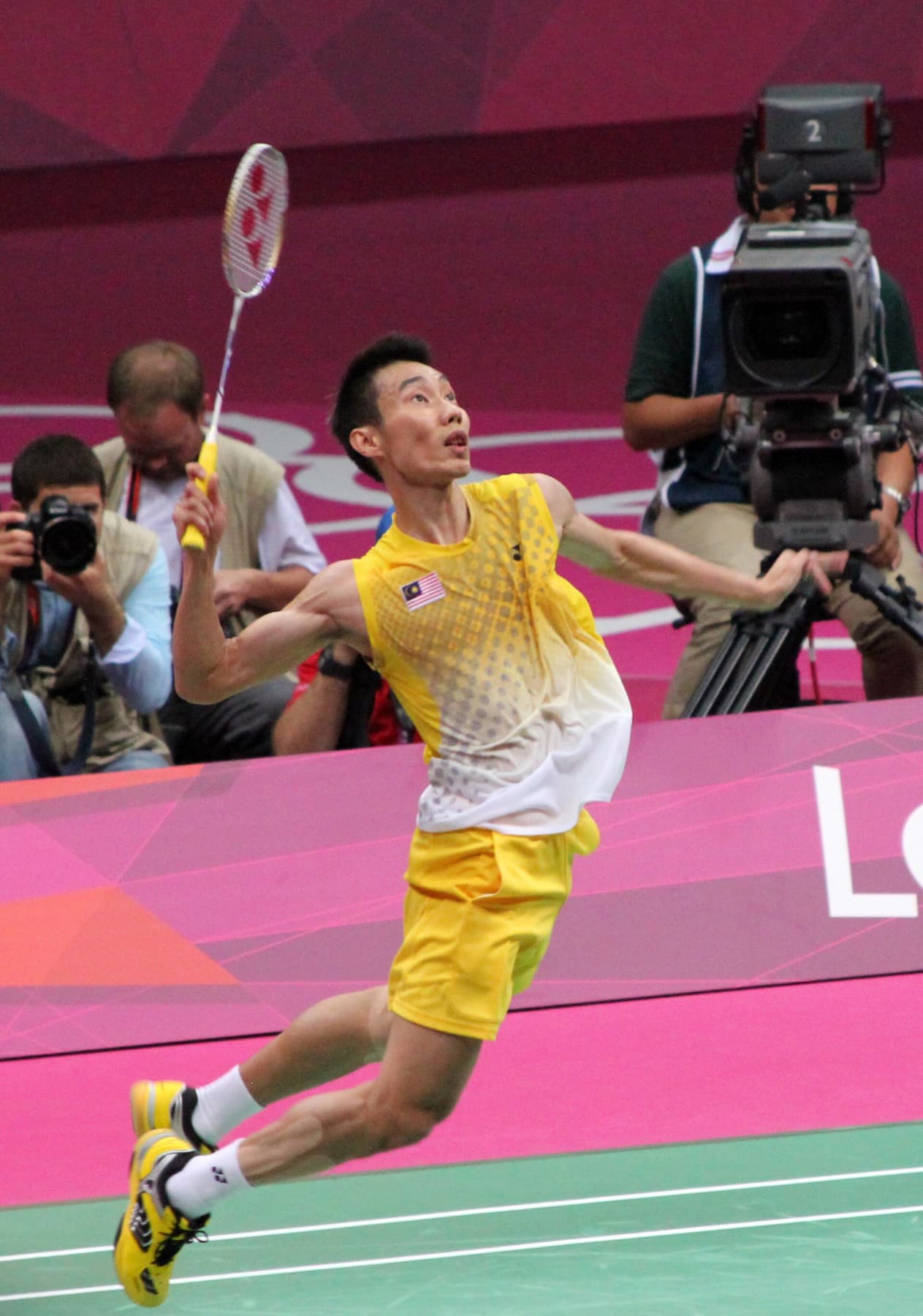
Lee Chong Wei prepares to smash — Malaysia’s longtime world No. 1 embodying badminton’s Asian depth and Olympic prestige.
Photo: Antony Stanley / CC BY-SA 2.0
If you measure a sport by how often it leads Western sports talk shows, badminton looks niche. If you measure it by who actually plays, who fills arenas from Jakarta to Tokyo, and who wins Olympic medals, it sits among the world’s major codes — just on a different map.
The Badminton World Federation’s 2024 reporting put the fan base near 744 million and active players near 384 million, with membership across 204 associations. Those are federation figures, not a single census, but they explain why the sport can feel omnipresent in East and Southeast Asia while remaining a specialty interest in much of North America.
Olympic history sharpens the geography. Since badminton joined the Summer Games in 1992 (mixed doubles followed in 1996), China has collected 52 medals through Paris 2024, including 22 golds. Indonesia and South Korea sit next with 22 medals each. Denmark is the European outlier that keeps finishing on the podium; Malaysia’s medal haul is heavy on silver and bronze. The pattern is not a fluke of one Games — it is three decades of state-backed and club-backed depth.
That depth is institutional. China, Indonesia, Korea, Japan, Malaysia, and India treat badminton as a priority pathway with school courts, national training centers, and federations that can produce multiple world-tour players in the same draw. Denmark’s licensed-player density punches far above its population. The BWF World Tour then turns that talent into a weekly ranking economy: Super 1000 and Super 750 weeks in Asia are career-making stages, not exhibitions.
Team events give the sport a second public language. The Thomas Cup (men), Uber Cup (women), and Sudirman Cup (mixed) still organize national pride the way World Cups do in football — especially in Indonesia and China, where a cup final can empty living rooms. Individual World Championships and Olympic singles gold remain the personal peaks, but the cups explain why federations invest in squads, not only stars.
Commercial reach is uneven for the same reason the map is uneven. Equipment brands and Asian broadcasters already treat An Se-young, Viktor Axelsen, or a home Super 750 final as mass product. U.S. and UK linear TV still treat the same matches as curiosities. That gap is a media market fact, not a verdict on the sport’s scale. Participation and Olympic prestige do not require American primetime to be real.
For a curious viewer, the practical test is simple. Watch a World Tour final or an Olympic quarter-final and notice the athletic demand: endurance across long rallies, wrist deception, and court coverage that looks closer to squash than to casual backyard play. Then check the draw: half the bracket will often be Asian, and the other half will still have to beat that standard. That is what a major global sport looks like when its center of gravity is not the Atlantic.