
Why table tennis is a major global sport
The ITTF’s biggest-in-sport membership map, Olympic gold concentrated in East Asia, and a tour that fills arenas from Chongqing to Montpellier — whether U.S. primetime notices or not.
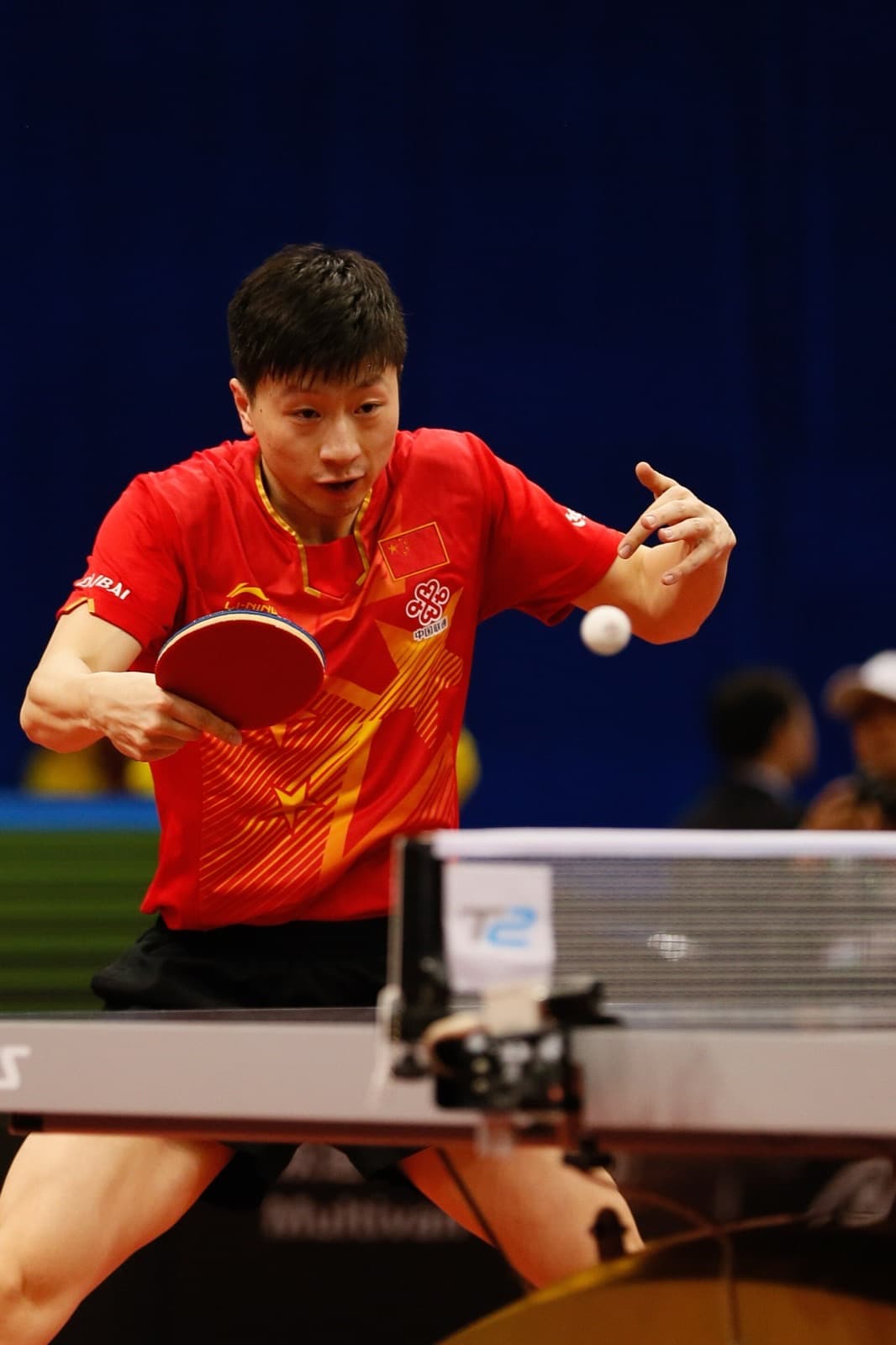
Ma Long of China mid-rally at the 2017 Asian Championships — the six-time Olympic champion as the face of table tennis’s East Asian center of gravity.
Photo: Xiaoyu Tang / CC BY-SA 2.0
If you measure a sport by American highlight packages, table tennis looks like basement recreation with Olympic branding. If you measure it by who actually plays, which federations show up, and who wins when medals are on the line, it sits among the world’s major codes — with a center of gravity that has been East Asian for two generations.
Start with the map the International Table Tennis Federation keeps. Founded in 1926 and now based in Lausanne, the ITTF counts 227 member associations — more than any other international sports federation claims. That is not a vibe. It is participation infrastructure that stretches from community parks in China to club halls in Germany and school programs across Southeast Asia. World Table Tennis Day events in 2025 alone registered hundreds of gatherings across more than 140 countries. The sport’s everyday language is local; its competitive language is global.
Olympic history makes the hierarchy unmistakable. Table tennis joined the Summer Games in 1988. Through Paris 2024, China has taken 66 medals and 37 of 42 available golds. South Korea sits second with 20 medals; Japan has climbed into double digits, including the Tokyo 2020 mixed-doubles gold that Jun Mizutani and Mima Ito stole from China’s top pair. Sweden’s Jan-Ove Waldner (Barcelona 1992) and Korea’s Ryu Seung-min (Athens 2004) remain the rare non-Chinese men’s singles golds that prove the door can open — and how rarely it stays open. Paris 2024 still ended with China collecting five golds across mixed doubles, both singles, and both team events.
China’s depth is a system, not a lucky cohort. Provincial teams feed national training; national trials can be harder than Olympic draws because several world-class players chase two singles berths. Ma Long became the sport’s clearest modern proof — six Olympic golds, consecutive men’s singles titles in Rio and Tokyo, and a career that closed its Olympic chapter with another team gold in Paris. When Fan Zhendong finally took the Paris singles crown and Chen Meng defended the women’s title, the story was succession inside the same machine, not a changing of continents.
Japan and Korea keep the machine honest. Japan’s academy-and-club pathway produced Harimoto-generation stars and enough women’s depth to push China to silver in Olympic team finals. Korea’s Olympic medal haul — heavy on bronze and silver, with those two men’s singles golds separated by sixteen years — reflects a country that treats the sport as national infrastructure, not a hobby. Europe still matters at the margins: German players fill podiums without gold; French teenagers such as Félix Lebrun turned home Paris nights into bronze theater; Sweden’s Truls Möregårdh reached the men’s singles final in 2024. Those results enlarge the audience. They have not relocated the sport’s headquarters.
The calendar now sells that depth weekly. World Table Tennis, the commercial tour arm launched around the turn of the decade, stacks Champions, Contender, and Smash weeks from Chongqing to Montpellier to Singapore. WTT’s own 2025 season wrap reported a multi-billion global broadcast reach, nearly half a million in-arena spectators across twenty-five events, and a live crowd skewing young — figures that only stick if the product can fill seats in Asia and Europe. Team World Championships still behave like national holidays in China and Japan; the 2026 London finals ended with another Chinese double over Japan after a group stage that briefly looked mortal.
Commercial reach follows the same uneven map as badminton. Chinese and Japanese broadcasters treat WTT finals and Olympic sessions as mass appointment viewing. Atlantic linear TV often treats the same matches as curiosities between other sports. That gap is a media market fact, not a verdict on scale. A sport with the widest federation membership in the Olympic family, a recreational culture thick enough to put tables in city parks by the tens of thousands, and an Olympic gold record that barely leaves East Asia does not need U.S. primetime to be major. It needs a viewer willing to watch a seven-game final at speed — and to notice that half the draw already speaks the language of that speed.