
What an Asian NFL star actually looks like
When the ask is Korean or East Asian representation in the NFL, the honest answer is still a short list — and Kyle Hamilton sits at the top of it.
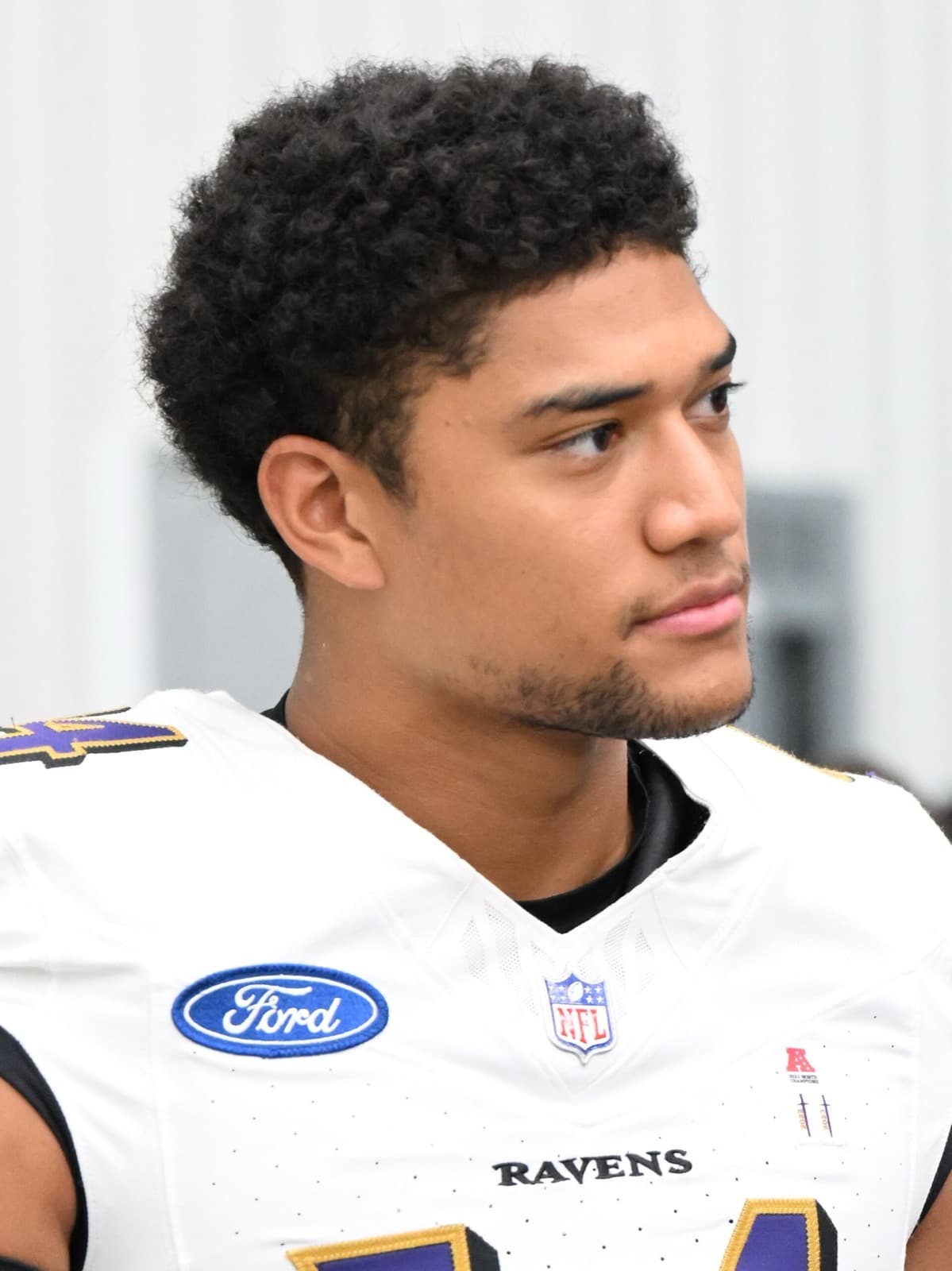
Kyle Hamilton at Baltimore Ravens training camp in Owings Mills in July 2024 — the All-Pro safety who now anchors the league’s thinnest Korean-heritage short list.
Photo: Maryland GovPics / Pat Siebert / CC BY 2.0
Ask for an Asian NFL star and the conversation usually stalls on definitions. Pacific Islander talent has long been part of the league’s fabric. East Asian and Korean heritage names remain rare enough that fans can still recite most of them from memory. In that thinner category, Baltimore Ravens safety Kyle Hamilton is no longer a curiosity. He is one of the best defensive players in the sport.
The résumé is the simplest proof. Hamilton arrived from Notre Dame as the 14th pick in 2022, then stacked three straight Pro Bowls and All-Pro honors in 2023, 2024, and 2025 — first team, second team, first team again. In August 2025 the Ravens made him the NFL’s highest-paid safety on a four-year, $100.4 million extension. For a league that still reports Asian players at roughly a tenth of a percent of roster spots in recent Institute for Diversity and Ethics in Sport audits, that is not a niche milestone. It is a top-of-sport one.
Korean heritage in the NFL has always lived on a short list. Hines Ward — Seoul-born, Super Bowl XL MVP, and a public advocate for mixed-race kids in Korea after 2006 — remains the historical reference point Hamilton has cited since Georgia. Younghoe Koo, born in Seoul and raised in New Jersey after immigrating at 12, became the clearest Korea-born specialist star during his Falcons peak, including a 2020 Pro Bowl season as the league’s scoring co-leader. Arizona’s Kyler Murray has worn the Taegeukgi on his helmet and spoken about his Korean grandmother on trips to Seoul. Hamilton’s mother, Jackie, was born in South Korea; he has represented that flag through the NFL’s heritage program alongside a handful of other Korean-tied names. The list lengthens a little each year. It never becomes a pipeline.
Widen the frame to East Asian heritage and the scarcity barely eases. Taylor Rapp, whose mother is from Shanghai, reached the league as a high draft pick and has spoken about how few Asian athletes he could look up to on Sundays. Kalif Raymond, half Chinese, has carved out All-Pro return value. Those careers matter. They still do not resemble Japanese baseball’s posting conveyor or Korean women’s golf’s LPGA density. American football’s developmental map — high school, Power conference recruiting, draft economics — has not yet produced a comparable East Asian volume story.
That gap sits awkwardly next to the league’s Asia ambitions. The Rams hold exclusive Global Markets Program rights in Japan and South Korea. Commissioner Roger Goodell keeps naming a regular-season game in Japan as unfinished business after the preseason American Bowl era. Europe, Mexico, Brazil, and now Australia already host international Sundays; Asia is still mostly marketing rights and streaming windows. Hamilton has said for years that he wants the game to grow in Korea. The product question for the Medalist reader is sharper: can a league sell Asia while its East Asian star inventory remains countable on two hands?
Hamilton’s answer, on the field, is already legible. At 6-foot-4 he plays everywhere Baltimore needs him — deep safety, slot, box, occasional edge — which is why the Ravens paid him like a foundational piece rather than a traditional free safety. Representation arguments get thinner when the player is merely present. They get thicker when the player is All-Pro, extended, and hard for opposing coordinators to scheme around. For now, that is what an Asian NFL star looks like in practice: not a finished regional pipeline, but a short Korean-heritage list with a Ravens safety at the front of it.