
Money & Media
A hundred dollars for six nuggets: what the US Open is really selling now
Last year’s caviar-topped chicken nuggets went viral. Grounds passes that cost $65 at face value were trading above $300 on resale. The tournament has always drawn a crowd — but the product is different now.
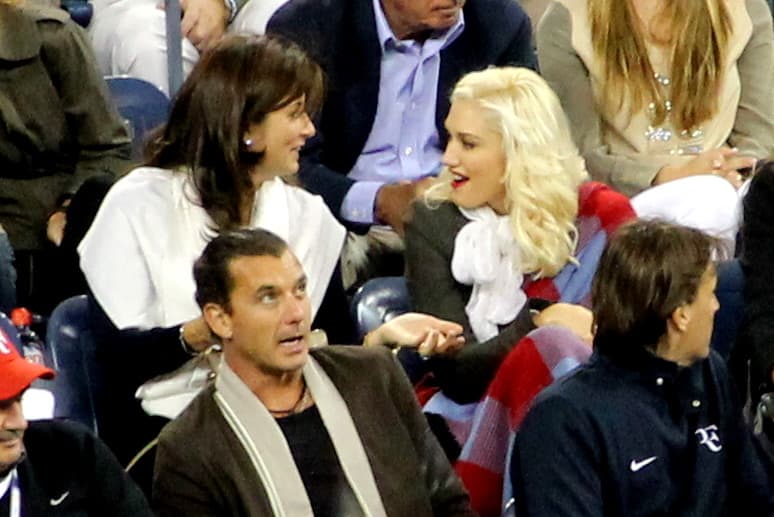
Anna Wintour, Gwen Stefani, and Gavin Rossdale courtside at the 2010 US Open. Celebrity rows are not new at Flushing Meadows — the price of admission to them is.
Photo: The Cosmopolitan of Las Vegas / CC BY-SA 2.0
On the third day of last year’s main draw, a line formed outside a red to-go box stand in the US Open Food Village for six chicken nuggets and a tin of Petrossian caviar. The price was $100. People filmed themselves assembling the dish — crème fraîche, pickled daikon, scallions, a spoonful of roe on a fried bite — and posted it before the match they had come to see had finished. Katie Holmes was photographed with the box in the stands. One attendee told the New York Post the nuggets were chewy and that McDonald’s would have been better. The stand’s manager told Bloomberg that the caviar box still accounted for roughly one in ten nugget orders anyway, more than a hundred a day.
COQODAQ, the Korean fried chicken restaurant behind the stunt, had sold the same box the year before only to club-level and courtside ticket holders. In 2025 it moved to the public food court. That is a useful detail. The US Open did not invent expensive stadium food. It democratized the photograph.
The ticket math tells the same story from another angle. A one-day grounds pass carried a face value of $65 to $135 depending on the session when the 2026 main draw went on sale in May. By late August, with singles starting in six days, resale listings for opening-day grounds passes were commonly north of $300. The cheapest seat inside Arthur Ashe Stadium for the same session was running around $327 on secondary markets; upper-deck Ashe tickets for Aug. 31 have cleared $2,000 for non-club courtside sections, with hospitality packages and renovated club seats climbing into the thousands per session. SeatGeek put the average 2025 US Open ticket at $529, up 18 percent from 2024. The distance between what the USTA prints on the ticket and what fans actually pay is where the signaling starts.
Nobody has to eat the nuggets or buy resale. The tournament is also running eight free-admission days this year — Fan Week, Arthur Ashe Kids’ Day, mixed doubles qualifying, and an Open for All day in the second week. That is the most open version of the event in its history. It is also compatible with a main draw that keeps getting more expensive to attend. Both things are true.
The celebrity rows are the third leg. Last September’s men’s final between Carlos Alcaraz and Jannik Sinner drew Bruce Springsteen, Pink, Sting, Ben Stiller, Mindy Kaling, Steph and Ayesha Curry, Lindsay Lohan, Courteney Cox, and Anna Wintour — the Vogue editor who has treated Flushing Meadows the way she treats Wimbledon for decades. Town & Country counted Jessica Alba, Simone Ashley, Naomi Watts, and Shonda Rhimes across finals weekend. Fashion coverage treated the stands like a runway: Ralph Lauren dressing half the room because the brand has outfitted the tournament since 2005; Vera Wang in the aisles as she has been since 2014; influencer WAGs such as Paige Lorenze and Morgan Riddle turning night sessions into content calendars. Lorenze told Town & Country she had fifteen to twenty brand deals during the fortnight. Tournament director Stacey Allaster has said plainly that fans come for the social aspect as much as the tennis.
This did not arrive fully formed in 2025. Forest Hills, where the US Nationals lived from 1915 to 1977, was a club garden party before it was a mass-market stadium. When night sessions and open tennis arrived in the late 1960s, attendance more than doubled in nine years. Bill Clinton and Donald Trump shared a box in 2000. Robert De Niro was a courtside regular by 2007. The move to Flushing Meadows in 1978 traded the West Side Tennis Club’s ivy for a food village, a plaza DJ, and room for 23,000 in Arthur Ashe.
What changed is the merchandising layer on top of that social history. Grey Goose introduced the Honey Deuce — vodka, lemonade, Chambord, three melon balls cut to look like tennis balls — at the 2007 Open. It costs $23 now and comes in a collectible plastic cup fans line up to keep. The USTA and Grey Goose reported more than 738,000 Honey Deuces sold in 2025, up 32 percent from the year before. Sportico estimated those sales alone at about $17 million, enough to cover the entire first-round losers’ purse in both singles draws. Serena Williams taste-tested one on TikTok. Taylor Swift and Travis Kelce were photographed with them courtside. The drink sells because it looks good in a photo, not because anyone needs a third cocktail on a humid Tuesday night in Queens.
Food followed the same logic. Lobster rolls at the Open run about $40. Mac and cheese and peaches-and-cream frozen yogurt were $19 last year. The standard COQODAQ six-pack, without caviar, was $26. The $100 box is the extreme case, but the pattern is ordinary: take something people already understand, add a luxury garnish, price it high enough to become content. Simon Kim, whose company runs COQODAQ, told USA Today the combination was meant to feel like a celebration. He was not wrong about what he was selling.
Attendance keeps rising anyway. A record 1,144,562 fans came through the gates across three weeks in 2025, the second straight year above a million. Fan Week alone drew 239,307 people. The USTA is not struggling to find customers. It is struggling to keep the customers who do come from treating the grounds like a fashion week with a scoreboard in the background.
The tennis still matters — Alcaraz and Sinner drew 3.3 million viewers on ABC in last year’s final, ESPN’s best men’s championship number in a decade. Plenty of people in the building are there for that. Plenty of others are there for the pink cup, the lobster roll, the celebrity row, and the Instagram post that proves they made it to Queens. Fan Week gives them almost a week to do it before the main draw starts. The scoreboard is real. So is the receipt.