
Sydney’s Giants Netball has a new owner — and will lose the Giants name
Sports Entertainment Group takes the Super Netball licence on October 1. Western Sydney keeps a franchise. The orange-and-charcoal AFL brand does not come with it.
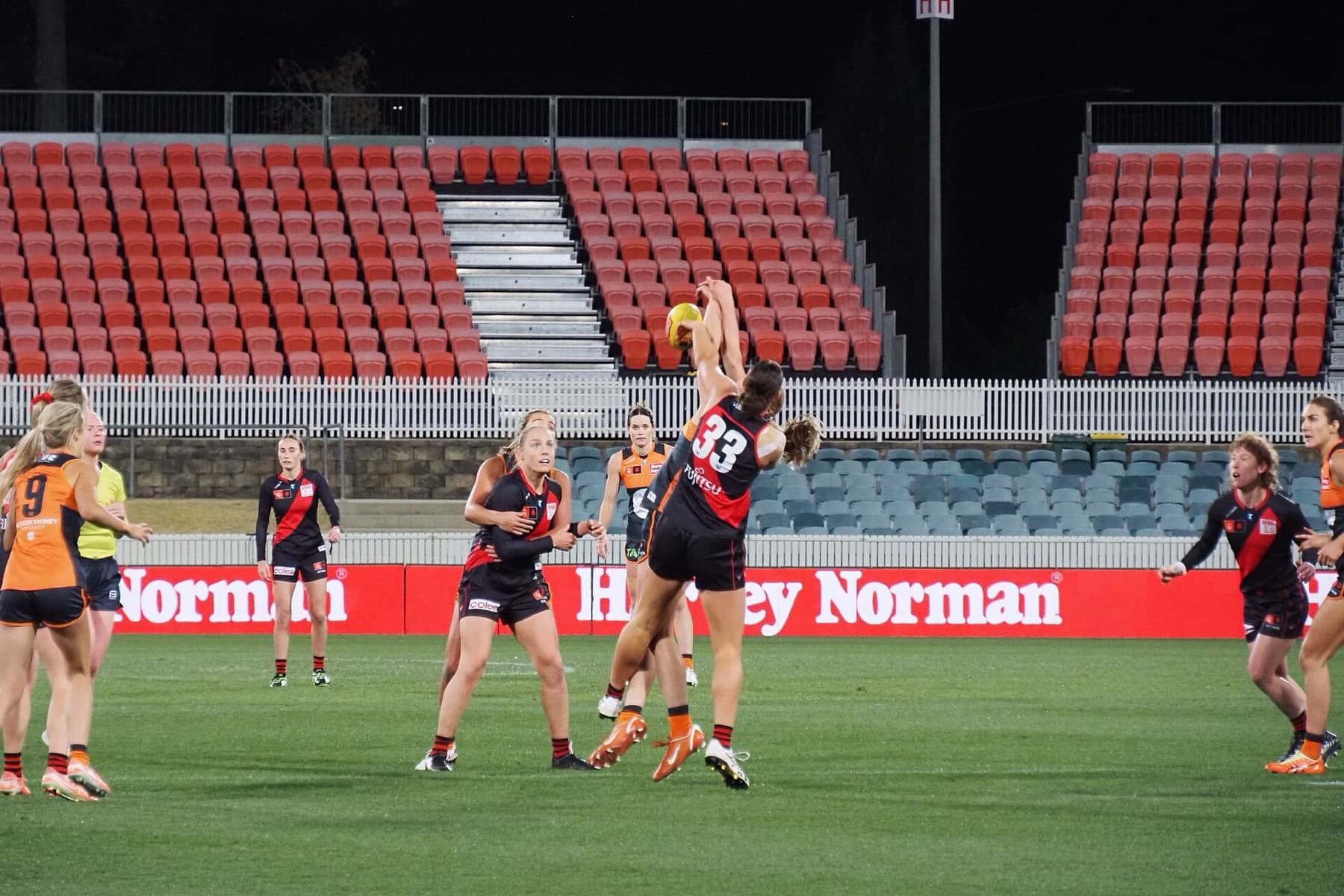
Greater Western Sydney Giants AFLW players contest the ball against Essendon in Canberra on August 16, 2025 — the orange-and-charcoal Giants identity that Super Netball’s Western Sydney franchise has shared since 2017 and will leave behind under new ownership.
Photo: 4TheWynne / CC BY-SA 4.0
Netball New South Wales is handing its second Super Netball licence to Sports Entertainment Group. Control shifts on October 1. The franchise stays in Western Sydney and plans to keep playing at Sydney Olympic Park. What does not travel with the sale is the name on the kit.
For nearly a decade, the side has been GIANTS Netball — orange and charcoal borrowed from the AFL’s Greater Western Sydney Giants under a strategic partnership that began when the league expanded in 2017. That partnership ends on September 30. A new name, logo, and colours will land before the 2027 season. The Giants brand stays with the football club.
SEG already owns the Melbourne Mavericks, the Super Netball side that replaced Collingwood’s Magpies after the AFL club exited in 2023. When this deal closes, both of the league’s former AFL-linked licences will sit under the same private operator. Netball NSW keeps the NSW Swifts. The Giants football club publicly backed the exit, saying the netball program needed more resources than the alliance could keep supplying.
Day-to-day continuity is the part fans can hold onto first. Head coach Nerida Stewart and assistant Jen Wright remain under contract through 2027. The club still intends to call Sydney Olympic Park home. SEG chief Craig Hutchison told SEN radio the company is “all in” on winning Sydney over and that Giants members will be part of how the rebrand evolves. Promise language is cheap in August. October’s roster and next year’s brand will show whether it sticks.
The timing is not accidental. A 12-month bridging collective players agreement landed the same week, opening the 2027 contracting window with multi-year deals available for the first time and a higher salary floor. SEG assumes the licence just as every club has to rebuild lists. Buying before that window closes is how a new owner avoids inheriting a season already lost in the market.
Private capital is the real thesis. State associations can protect pathways and keep a flagship like the Swifts upright. They are not always built to fund a second elite franchise, fill a commercial book, and chase a Western Sydney audience against every other code in town. SEG’s bet is the Mavericks model: media distribution through SEN, production through Rainmaker, and a women’s-sport portfolio that also includes the Bendigo Spirit and Perth Lynx in the WNBL. Scale is the pitch — shared admin, shared sponsors, shared airtime.
Separation from an AFL brand cuts both ways. Shared colours buy instant recognition and a ready junior pipeline in the west. They also leave a netball club looking like a sister act whenever football budgets tighten. Collingwood’s Magpies exit showed how quickly that sister-act status can sour. The Mavericks answered with a standalone identity and, in 2026, a first finals series plus club records in wins, membership, and attendance. Sydney is a harder market to win with a blank jersey.
There is a league-integrity question too. One private group will soon run two of eight Super Netball teams, and it already fields two WNBL clubs. SEG says it can keep clubs operationally independent. Netball Australia approved the transfer after reviewing governance and finances. Fans will judge that by whether Mavericks–Sydney matchups feel like sport or a house game.
Success here is not a packed Ken Rosewall Arena on opening night alone. It is whether the new brand can keep Western Sydney members through a name change, whether multi-year contracts land before rivals finish shopping, and whether sponsors buy a Sydney netball story that no longer borrows GWS equity. Attendance is the easy chart. Ownership that lasts is the harder one.