
Money & Media
Sponsorship categories that actually convert
Which sponsor segments align with sports audiences — and which are noise.
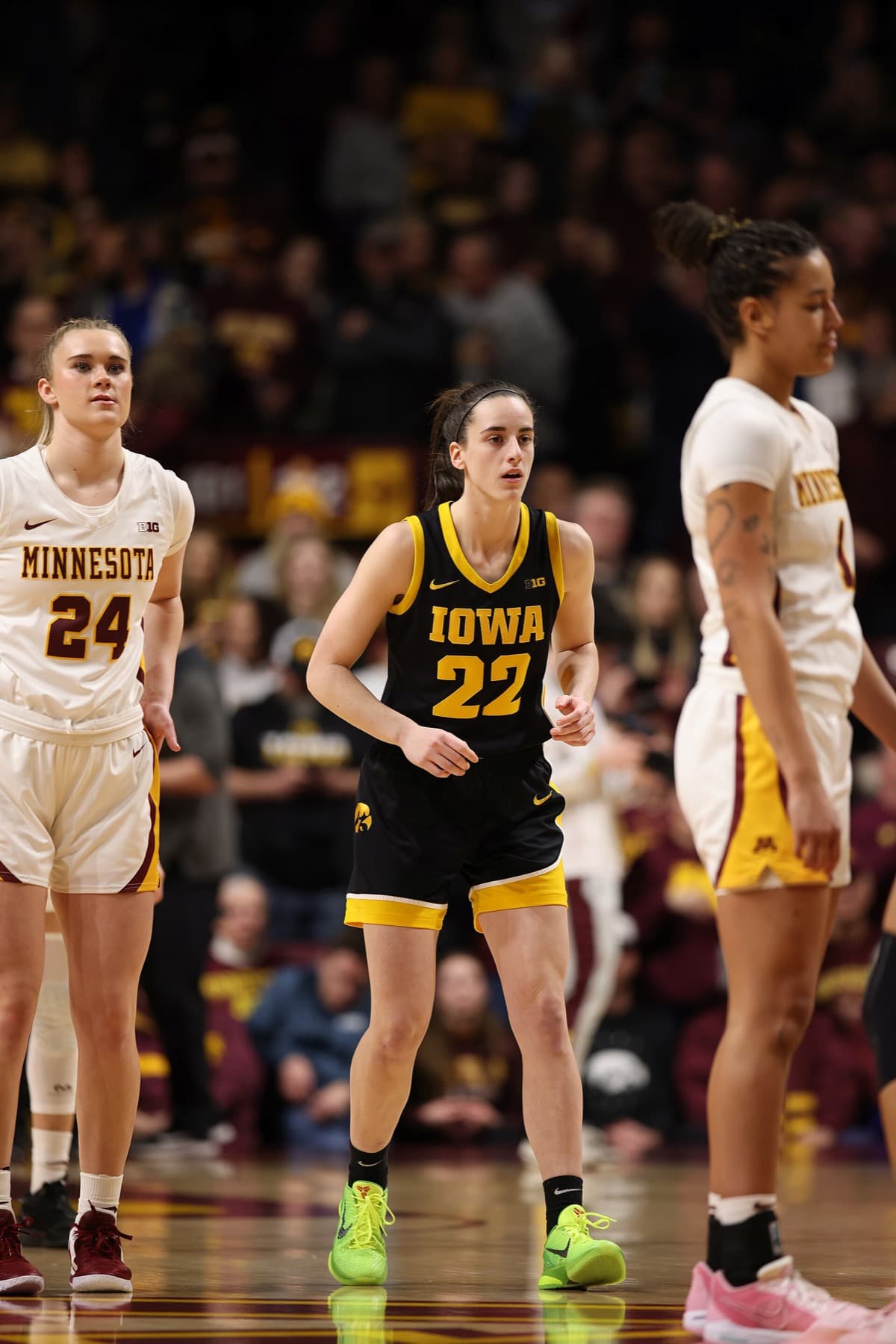
Caitlin Clark against Minnesota — athlete reach that turns sponsorship categories into measurable conversion.
Photo: John Mac / CC BY-SA 2.0
Caitlin Clark’s Minnesota nights were basketball first. For marketers they were also a category laboratory: which brands can turn athlete attention into preference, and which just rent a jersey patch for a press release? Conversion is the difference.
Categories that usually have a path to purchase sit closest to fan behavior. Soft drinks, snacks, QSR, and sporting goods can link game-day emotion to a next buy with codes, retail media, and athlete content. Financial services and insurance sell trust and lifetime value — credit cards, banking apps, and insurtech that want share of wallet more than a one-time click. Tech and streaming use sports to acquire subscribers. Betting and alcohol convert where regulations allow and brand risk is priced in. Emerging sellers chase AI services, financial wellness tools, and recruiting budgets — categories Sports Business Journal partners have flagged as rising inventory — but they still need a clear business aim beyond logo wallpaper.
Categories that struggle are the ones with no natural next action or with trust problems the sport cannot fix. Vague “awareness” B2B logos without a sales motion, crypto experiments that arrived as fashion and left as compliance headaches, and mismatched lifestyle brands that ignore the actual audience demographics. Reach without a product fit is noise.
Athlete-led deals often convert better than static boards because authenticity and engagement beat raw impressions. Women athletes’ commercial NIL volume — more brand deals per athlete in several SponsorUnited cycles — showed marketers that participation and content can outperform collective football spend on certain brand goals. Measurement has to grow up with that: unique codes, first-party CRM, brand-lift studies, and incrementality tests rather than media-equivalency theater.
How to choose a category: name the business outcome (trial, LTV, recruiting, cultural credibility), pick a property or athlete whose audience overlaps that outcome, and design an activation fans can do — not only see. Clark-scale reach is rare. Conversion design is available to anyone willing to treat sponsorship as a product, not a decoration.