
College Court
How NIL changed college sports
Athlete endorsements opened the door; direct school payments, roster limits, and a new compliance system changed the whole operating model.
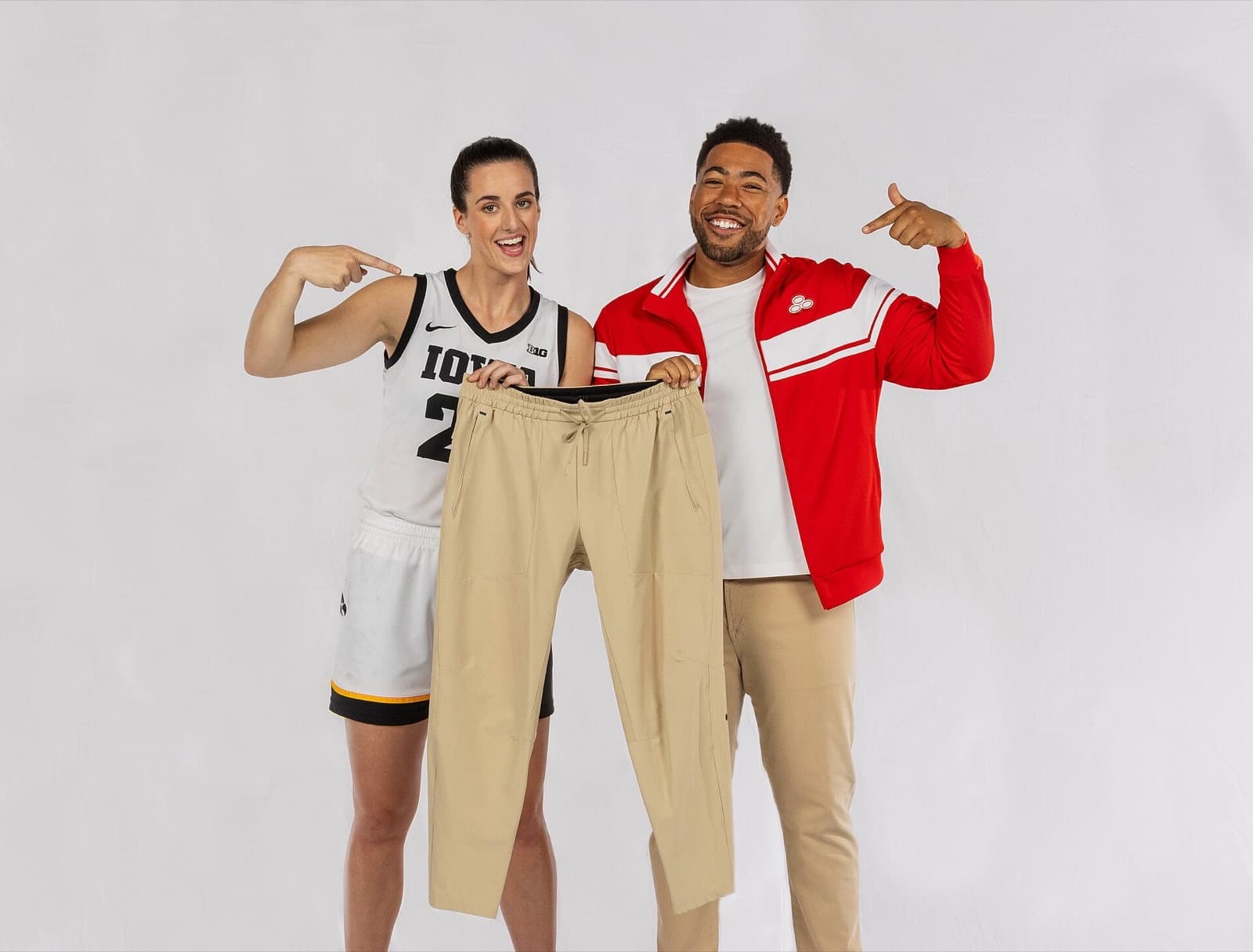
Iowa guard Caitlin Clark appears with Jake from State Farm in the company’s October 2023 announcement of its first collegiate athlete partnership.
Photo: State Farm / CC BY 2.0
NIL began with a simple right: a college athlete could be paid when a business used the athlete’s name, image, or likeness. That could mean a sponsored social post, an autograph session, a local advertisement, a camp, or a product endorsement. When the NCAA’s interim policy took effect on July 1, 2021, athletes gained access to commercial rights that had long been available to almost everyone around them.
How we got here
State NIL laws threatened to give athletes different rights depending on where they enrolled, and the Supreme Court’s unanimous NCAA v. Alston decision held that NCAA limits on education-related benefits violated antitrust law. Alston did not directly create NIL rights or authorize salaries, but it made clear that college-sports compensation rules were subject to ordinary antitrust scrutiny. The NCAA adopted its interim NIL policy days later.
Two payment systems
The first NIL market was third-party commerce. Brands paid athletes for real promotional work; booster-backed collectives pooled donor and business money to arrange opportunities; agents and marketplaces helped negotiate deals. Schools initially had to keep their distance, but Division I rules later allowed them to identify opportunities and facilitate agreements while athletes retained authority over the terms.
The House settlement created a second payment system. Approved in federal court on June 6, 2025, it permits participating Division I schools to provide direct financial benefits to athletes under an annual cap. The first cap was $20.5 million per school for 2025–26, calculated from a share of average power-conference athletics revenue. Schools choose how to allocate that pool; third-party commercial NIL remains separate from it.
| Payment type | Who writes the check | Counts toward House cap? |
|---|---|---|
| School revenue-share payment | Athletics department under House settlement | Yes — institutional benefits cap |
| Third-party commercial NIL | Business paying for promotion, camps, endorsements | No — separate commercial transaction |
The first is an athletics-department roster expense. The second is tied to the athlete’s audience, reputation, or creative work.
Compliance and pay-for-play rules
Third-party deals now pass through more formal compliance. Division I athletes must report agreements worth $600 or more in aggregate through NIL Go within five business days. The College Sports Commission reviews whether a deal has a valid business purpose and whether compensation sits within a reasonable market range. A deal may be cleared, flagged for more review, revised, canceled, or challenged through arbitration.
- Pay-for-play remains prohibited: a permissible deal needs defined work or deliverables.
- Payment cannot simply reward statistics, participation, or enrollment at a particular school.
- Prospects and transfer candidates may discuss and sign genuine commercial deals before enrolling, and schools may assist them.
- Compensation for work that will never be performed is still outside the rule.
Recruiting became financial planning
Coaches are no longer selling only minutes, development, facilities, and a scholarship. A serious roster conversation can include the school’s direct-payment allocation, credible third-party opportunities, the athlete’s role, and what happens if the athlete transfers. Programs need front-office coordination among coaches, general managers, compliance staff, fundraising arms, and outside commercial partners.
Roster construction after the settlement
Sport-specific scholarship limits were replaced at participating Division I schools by roster limits, and schools may provide scholarships to any athlete on the declared roster. That can expand aid, particularly in women’s and equivalency sports, while also making every roster place more explicit. Retaining a productive player now has a budget cost; replacing one can require a new package of direct benefits, commercial opportunity, and playing time.
Women’s sports: two different markets
Football and men’s basketball receive most projected school-payment allocations, while women athletes often perform especially well in commercial campaigns because of audience engagement and social reach. Women’s basketball, volleyball, softball, and gymnastics can create strong brand value even when their institutional revenue-share allocations are smaller.
What athletes need to know about the money
- Cash is taxable, and so are many noncash benefits such as merchandise, gift cards, or use of a vehicle.
- Third-party NIL earners are often treated as independent contractors — recordkeeping, estimated tax payments, self-employment tax, contract review, and decisions about agents or business entities.
- A headline valuation is not the same thing as guaranteed, after-tax income.
The regulatory picture is still moving
The House settlement governs revenue sharing for a ten-year term, the College Sports Commission enforces settlement-related compensation rules, state NIL laws remain uneven, and Congress has not enacted a single federal framework. Questions about Title IX, athlete employment, collective bargaining, antitrust protection, and state-law conflicts continue to shape the next round of litigation and legislation.