
Transfer portal economics: who gains, who pays
Congress wants one free transfer, federal NIL rules, and voluntary media-rights pooling. The SEC and Big Ten say the draft still fails the tests that matter.
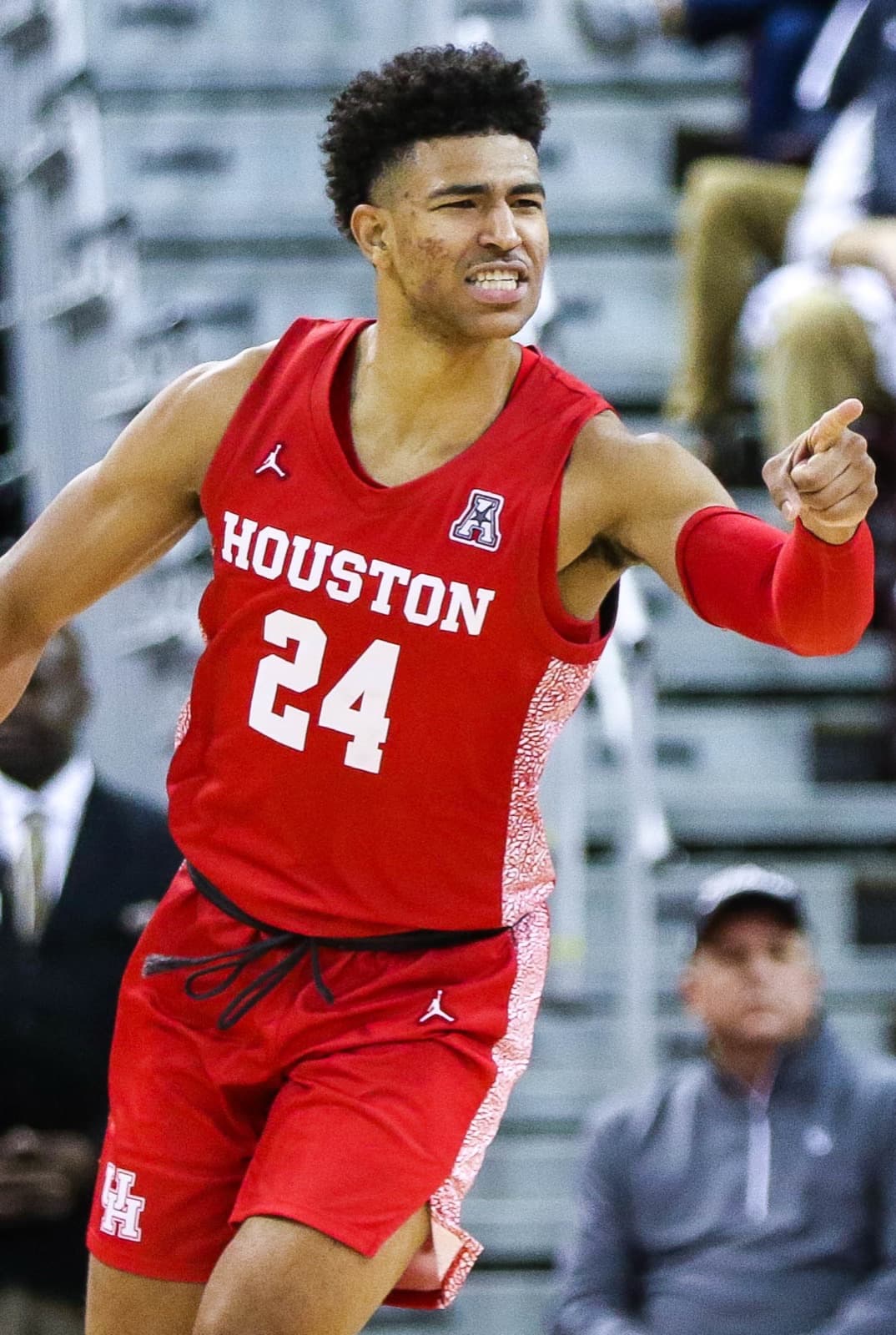
Quentin Grimes plays for Houston against South Carolina in December 2019, during the season after his transfer from Kansas.
Photo: Gamecock Central / CC BY 2.0
The transfer portal stopped being a niche compliance story the moment roster churn became a budget line. Athletes move for minutes, coaching changes, and NIL packages. Schools treat retention as a competitive strategy with a price. Congress is now trying to freeze that market into federal rules — and the two richest conferences are saying not like this.
The Protect College Sports Act
The Protect College Sports Act of 2026 (S. 4668), led by Sens. Ted Cruz and Maria Cantwell with Sens. Eric Schmitt and Chris Coons, is the bipartisan vehicle. The Senate Commerce Committee advanced it in June. Sponsors describe a package that pairs athlete protections with enforceable roster and NIL rules.
- A federal NIL right and national standard
- Clearer agent rules with a fee cap
- Scholarship and medical guarantees
- Eligibility framed as five years from age 19 or high-school graduation, with narrow exceptions
Transfer rules families feel first
The bill guarantees one unrestricted transfer without losing eligibility. A second move generally requires sitting a year, with exceptions that include sport discontinuation and certain harassment cases; sponsors have also discussed coach-departure carve-outs as drafting continues.
Mid-season football coaching jumps would be curbed so a staff cannot leave one FBS program midstream to rebuild another in the same competitive season. The antitrust shield is meant to let the NCAA and conferences enforce those limits without the next lawsuit erasing them overnight.
Money and media rights
The bill would extend House-settlement style revenue sharing under a national frame, tighten pay-for-play scrutiny of third-party NIL, and require more transparent deal terms.
Separately, it amends the Sports Broadcasting Act so schools can voluntarily pool and jointly negotiate media rights — the NFL-style collective Congress keeps citing — if a large FBS majority opts in. Draft language has used a 75% FBS participation trigger. Women’s and Olympic sports would get maintenance requirements tied to pooled revenue so football arms races cannot quietly erase non-revenue roster spots.
Why the SEC and Big Ten pushed back
The SEC and Big Ten issued a joint statement saying they do not support the bill as drafted. They want stronger federal preemption of conflicting state NIL laws, clearer dispute resolution, less congressional micromanagement of evolving rules, and they argue the current text risks more litigation rather than less. They also say House-settlement revenue-share tweaks could leave fewer athletes with direct payments.
The ACC and Big 12 have been warmer. Cruz and Schmitt have pushed for a floor vote before the August recess; Schmitt has floated that sixty Senate votes may exist even while talks continue on voluntary pooling language, conference expansion, and a private-equity super-league bar.
Reading the economics
| Model | Winners | Cost to others |
|---|---|---|
| Unlimited free movement | Athletes with leverage; programs that can re-recruit every winter | Smaller and mid-major programs seeking continuity |
| One free transfer, friction on the second | Programs valuing roster continuity | Athletes priced out of a second move without sitting |
| Pooled media rights (75% FBS trigger) | Schools currently living on broadcast scraps — if power conferences join | Weaker product and weaker check if Big Ten and SEC stay outside |
Until a floor vote lands, the portal keeps pricing itself the old way: opportunity cost, roster budget, and whichever conference can still make a credible offer. The Protect College Sports Act is trying to rewrite those incentives in statute. Whether it becomes the new market, or another draft the richest leagues wait out, is the story of this summer.