
Women's college sports: the market catching up to performance
Attendance, media, and NIL are aligning with decades of under-covered excellence.
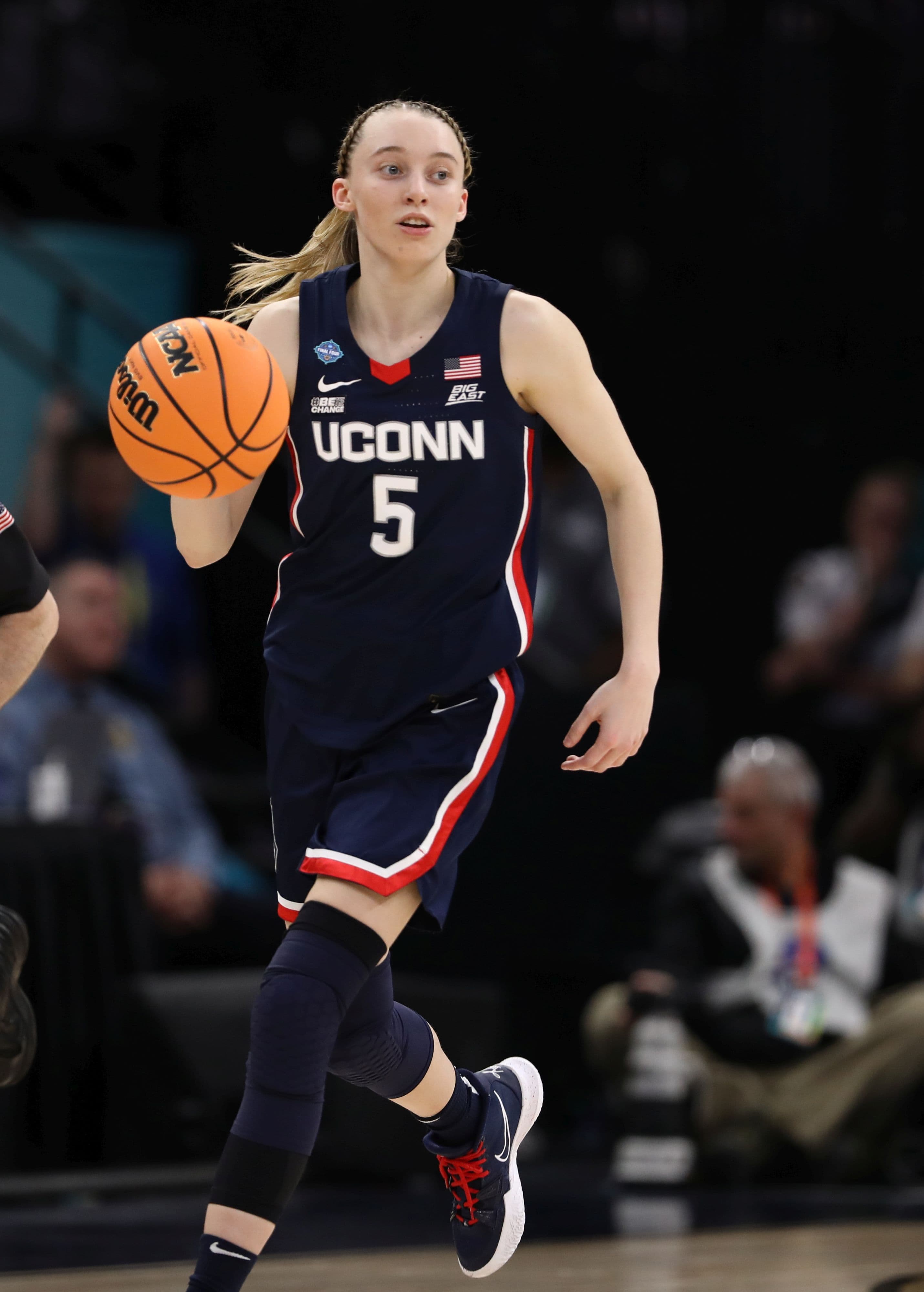
Paige Bueckers at the 2022 NCAA Women’s Final Four in Minneapolis, where UConn defeated Stanford to reach the championship game.
Photo: John Mac / CC BY-SA 2.0
Paige Bueckers’ Minneapolis Final Four night in 2022 was already a sold-out hometown stage — UConn over Stanford, 18,268 at Target Center — in a sport that had been excellent for decades. The market story since then is not that women’s college athletes suddenly learned how to play. It is that television, brands, and ticket buyers finally started pricing the product closer to the product’s quality.
Basketball is the clearest ledger. ESPN’s women’s March Madness package now sits inside an eight-year, roughly $920 million NCAA championships deal whose consultants and NCAA leadership have valued the women’s tournament alone around $65 million a year — more than half that bundle, and a jump of several times over the prior rights era. Title games on ABC became appointment television. The 2024 Iowa–LSU final and later championship windows repeatedly cleared multi-million and, at peaks, near-10-million viewer ranges that would have sounded like fantasy in the mid-2010s. Regular-season ESPN audiences kept rising after the Caitlin Clark–Angel Reese spotlight years; the 2025–26 campaign was ESPN’s most-watched women’s college basketball regular season since 2008–09, with tournament averages still sitting on the high end of history even when they trail the absolute 2024 spike.
Attendance and secondary sports widen the map. Packed conference arenas, volleyball gyms that sell out midweeks, and softball Super Regionals that feel like baseball weekends are not “crossover curiosities” anymore — they are recurring inventory. Brands noticed. SponsorUnited and other NIL trackers have shown women athletes averaging more commercial brand deals per athlete than men in recent cycles, with volleyball and softball among the fastest-growing deal categories even while football still dominates collective dollar volume. Stars convert social reach into endorsements; programs convert that attention into season-ticket urgency and portal recruiting leverage.
The honest second paragraph of the boom is the athletics-department ledger. Many flagship women’s basketball programs still run multimillion-dollar operating deficits on NCAA financial reports even as ticket sales and local revenue climb — South Carolina, Arizona State, and peers included in public filings — because expense bases rose with investment and because campus TV distributions still favor football and men’s basketball. The NCAA’s expanding women’s basketball enhancement fund and tournament “units” help conferences, but they do not by themselves flip a Power program into profit. Market catch-up and departmental surplus are related; they are not identical.
Revenue sharing under the House settlement adds another filter. Schools that opt in can pay athletes from a capped institutional pool that started near $20.5 million in 2025–26. Most models still route the majority toward football and men’s basketball. Women’s basketball sits in a middle tier — more commercially visible than Olympic sports, less automatically funded than the two cash sports — so the next competitive edge may be which administrations treat the women’s boom as a retention and recruiting budget line rather than a press release. Third-party NIL remains a parallel path where women’s stars have already proven they can out-hustle men on brand-deal volume.
What changed, then, is the bargaining position. Audiences showed up. Advertisers paid NBA-Finals-adjacent rates for championship inventory. Rights fees reset. Athletes monetized attention. The unfinished work is translating that into sustainable campus economics and equitable share of the new payment systems — without pretending the excellence was invented in 2023. Bueckers in Minneapolis was proof of product. The years after are the market learning to keep up.