
Kylie Sakaida keeps dinner simple without ditching familiar foods
The Honolulu-raised dietitian behind So Easy So Good starts with what you already cook, then adds protein, produce, or a freezer shortcut.
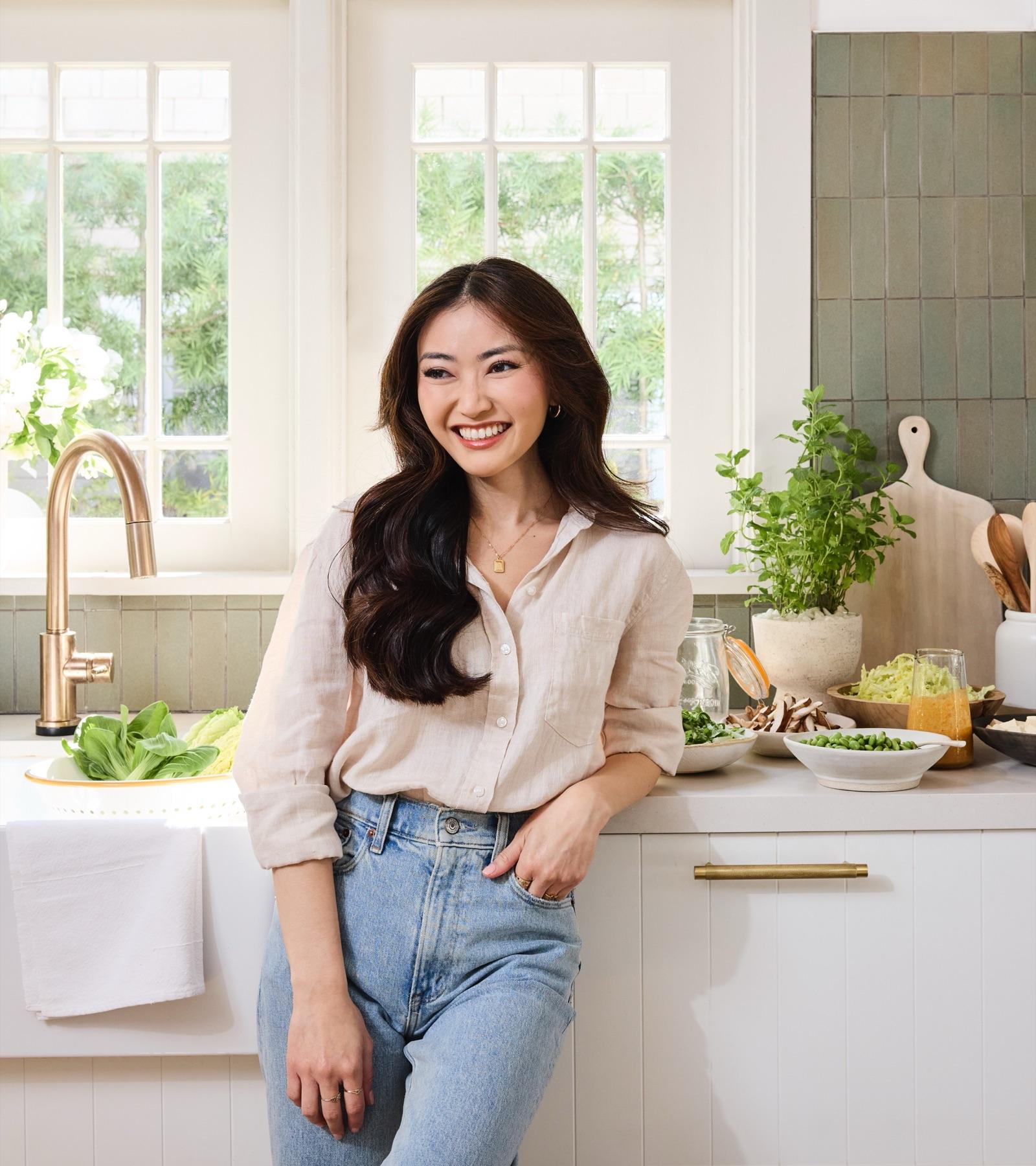
Kylie Sakaida in the kitchen. Her cookbook So Easy So Good is built for weeknights that still have to get dinner on the table.
Photo: Kristin Teig
Kylie Sakaida’s dinner advice starts at a tired fridge. The Honolulu-raised registered dietitian and author of So Easy So Good, which hit No. 2 on the New York Times bestseller list in April 2025, does not ask people to rebuild their kitchens around kale salads they will abandon by Thursday. She asks what they already cook, what they grew up eating, and what can be added — a little more protein, some fiber, a bag of frozen vegetables — without turning dinner into a second job.
She learned that the long way. Born and raised in Honolulu, of Japanese and Okinawan descent, she grew up on local food that mixes Hawaiian, Japanese, Filipino, Chinese, Korean, and Portuguese influences: rice, noodles, Spam, soy-based sauces, and a table that usually meant company. At Boston University, where she earned bachelor’s and master’s degrees in nutrition science, the coursework looked more like the internet’s wellness feed: bright salads, Mediterranean templates, heaps of greens. “I always craved the comfort of Asian and cultural dishes that I was raised on, but I just didn’t really know how or where they fit into the idea of health,” she told TODAY. For a while she believed there was no room in a “healthy” diet for the foods she knew.
Her dietetic internship fixed that faster than any textbook. Working in a hospital that primarily served low-income, non-English-speaking communities, she watched patients get handouts full of foods they neither wanted nor could find. The work became listening first: what they liked, how it was cooked, why it mattered, then folding those dishes into the plan. “This experience was a big turning point,” she told TODAY. “I realized that my cultural background wasn’t something that I had to push aside to be a good dietitian. It was actually a strength.” She put her own rice, tofu, and fish back on the plate and stopped treating the Mediterranean diet as the only respectable script.
Before that, food had already been a fight. As a child she saw a dietitian for avoidant/restrictive food intake disorder, or ARFID, a pattern of sensory fear and extreme restriction that left her malnourished and stripped of hunger cues. The clinician who helped her recover also redirected her career. Food became something she could teach other people to trust again, which is why she spends so little time moralizing a single meal. “One food, one meal, won’t make or break your progress for your health,” she told PopSugar. The choices that hold up for years matter more than a perfect week.
So Easy So Good, published by Simon Element, is that idea written as a kitchen book: nutrition basics, pantry and plate guides, then recipes meant for real calendars, from freeze-ahead soups and sheet-pan dinners to bowls and shortcuts with frozen vegetables or a convenience food that still carries nutrients. Many dishes pull Asian flavors from her upbringing. She talks through white rice versus brown without shaming the staple that shows up on so many Hawaiian and Asian tables. On @NutritionbyKylie, the same rule keeps showing up: add, don’t subtract. Frozen soup dumplings get broth, mushrooms, carrots, spinach, and maybe tofu or edamame. Instant ramen gets the same treatment. “There’s zero shame in choosing convenience foods, or low-cost foods, because healthy eating isn’t about perfection or organic produce or cooking every single meal from scratch,” she told KHON in Honolulu. “It’s really about finding what’s realistic and what’s doable.”
For someone trying to train through a busy week, that rule is the useful part. Dinner does not need a new cuisine. It needs to show up often enough that the week still has protein, produce, and a starch you will eat when you are tired. Canned beans, rotisserie chicken, frozen vegetables, and pre-cut produce are fair game, she told CNBC Make It when she walked through stress-free eating. The point is a plate that keeps you fed for the next session or the next late night, without needing a show kitchen to get there.
Her own plate, when she can keep it tidy, looks like the balance she teaches: about half produce, a quarter protein, a quarter starch, often tofu, chicken, beef, or fish with white or brown rice and vegetables. Breakfast and lunch stay deliberately convenient, she told Make It, because dinner is where people already feel the squeeze. Meal planning, for her, is a shopping list built from a few recipes, with ingredient swaps so one bunch of greens covers two dinners. On local-inspired nights that can mean a stir-fry, fried rice, or yakisoba with tofu, edamame, or eggs; a rice-cooker dump of canned salmon and edamame; or a short-ingredient shoyu chicken or kalua chicken.
You do not need the whole brand to take the method home. Start with a dinner you already like, add protein or vegetables, and use the freezer when fresh produce will wilt in the drawer. Aim for a balanced plate most nights, and let a messy one go. If white rice is the starch that makes the meal happen, it can stay. Sakaida leaves the food you already know on the plate, then nudges it until the week still works.