
Pick-and-roll explained
Basketball's foundational two-man action — and why every league runs variations of it.
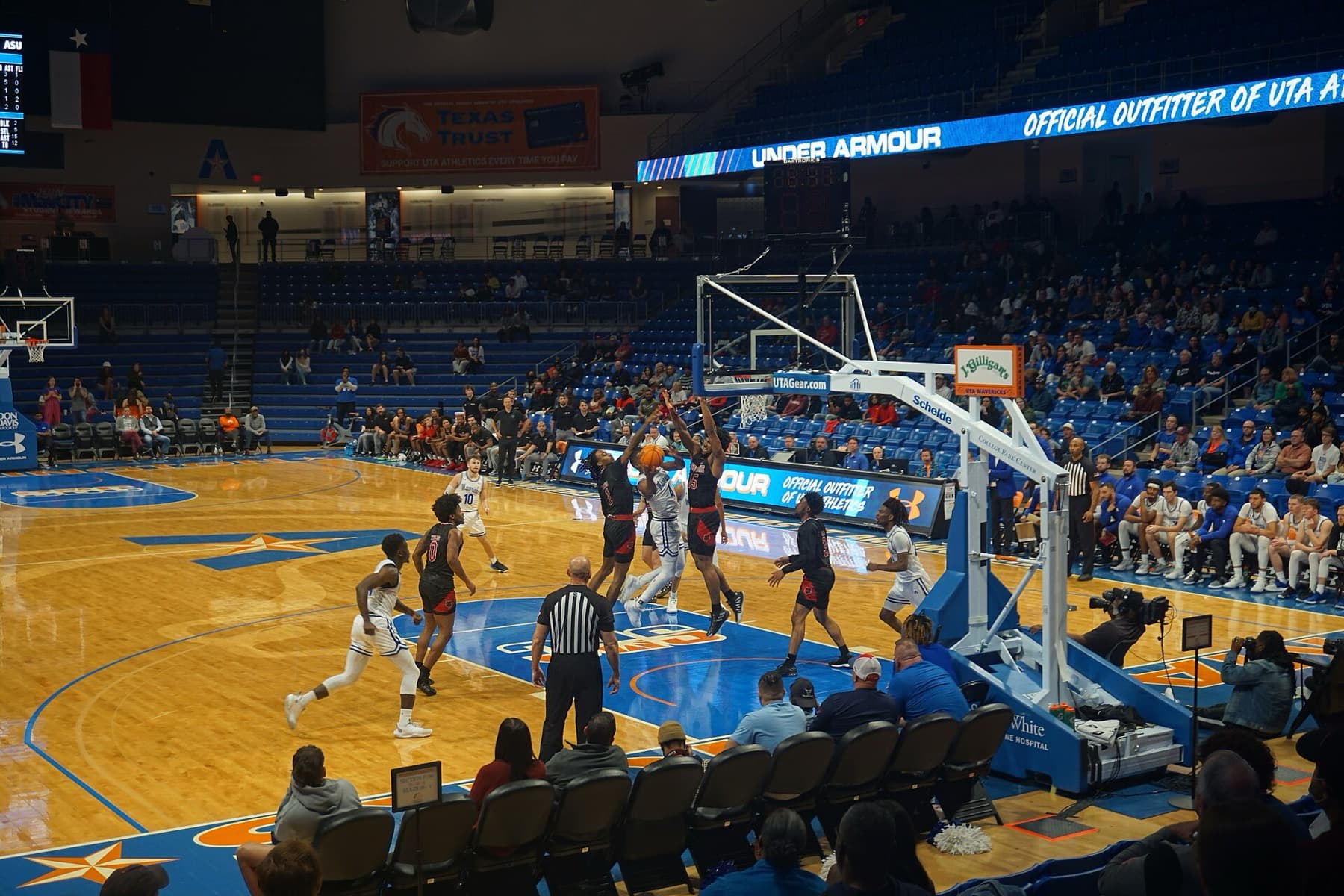
College basketball action between Arkansas State and UT Arlington — the screen-and-roll still runs through every level of the game.
Photo: Michael Barera / CC BY-SA 4.0
The pick-and-roll is basketball’s basic two-man read. A screener sets a legal screen; the ball handler decides whether to reject, turn the corner, or freeze the defender; the roll man becomes a lob threat, a short-roll passer, or a pop shooter.
Coverage dictates the next action. Drop keeps the big near the rim and gives up midrange. Hedge and recover tries to disrupt the handler without surrendering the roll. Switching removes the mismatch for a moment and creates one somewhere else. Ice and blunt force the ball away from the screen.
College offenses often live on the short roll: the screener catches between the foul line and the nail, then finds a weak-side shooter or dunker. Defenses tag the roll with the nearest help and rotate late — which is where March games break open when legs are gone.
Watch the second side, not just the ball. The best tournament teams punish the helper who tags the roll a half-step late, or the corner defender who helps one pass too far. The action is old; the spacing around it is what wins first weekends.