
Money & Media
An NPB club just out-earned a dozen MLB teams — without their media machine
SoftBank Hawks posted ¥50.9 billion (~$340M) in the fiscal year through February — enough to rank 19th in MLB’s 2025 revenue table. The mix tells the real story: gate, sponsors, and a owned dome, not national TV.
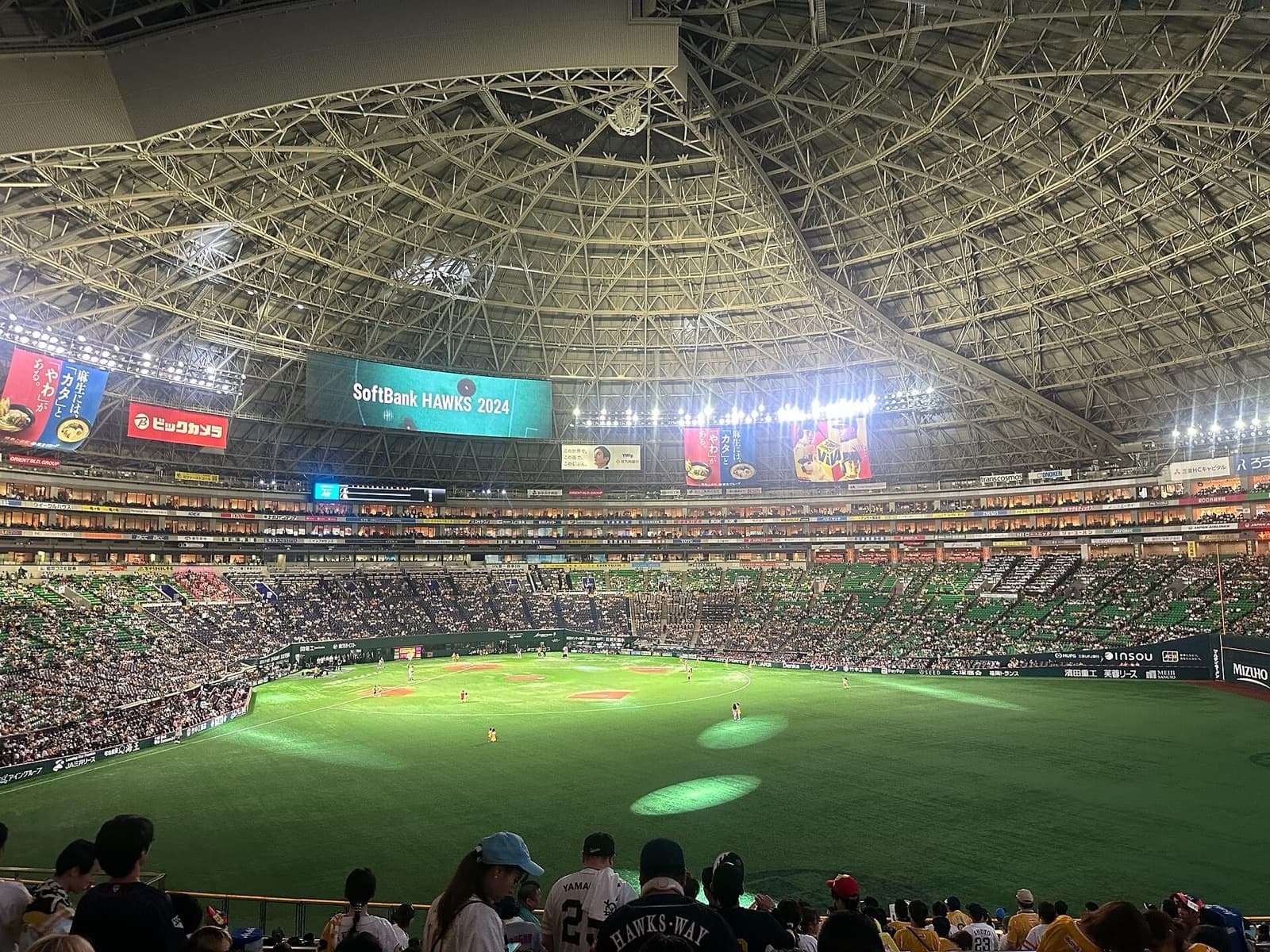
Mizuho PayPay Dome Fukuoka in September 2024 — the SoftBank-owned home that turns tickets, naming rights, concerts, and adjacent entertainment into an NPB balance sheet MLB clubs would recognize.
Photo: Nesnad / CC BY 4.0
Sportico’s July comparison put a clean number on what Fukuoka already felt at the turnstiles. The SoftBank Hawks booked ¥50.938 billion in revenue for the fiscal year ended February 28, 2026 — just under $340 million at the year’s average exchange rate, up about 11% in dollars from the prior period. Against Sportico’s 2025 MLB club estimates, that sat 19th in the league, between the Washington Nationals (~$342 million) and the Cincinnati Reds (~$334 million). Twelve big-league clubs finished below an NPB franchise that does not share MLB’s national-media trough.
Operating profit told the same story more sharply. The club’s disclosed operating income rose about 24% to ¥7.978 billion (~$53 million), the best mark in the eight years of public filings Sportico reviewed. Net profit landed at ¥5.72 billion. Those are Japan corporate filings, not MLB’s opaque club books — which is part of why the comparison travels. SoftBank Group’s baseball subsidiary has to publish; many American franchises do not.
The mix is the Money & Media point. On an earlier fiscal-year breakdown Sportico cites, more than 40% of Hawks revenue came from tickets, premium seats, merchandise, and food and beverage; roughly a third from sponsorship and advertising; just under 20% from concerts, the adjacent entertainment complex, and other ancillaries (including an e-sports team); and less than 10% from broadcasting. MLB clubs, by Sportico’s estimate, still take about 37% of top-line from local and national media combined. Fukuoka’s machine runs on people in the building. MLB’s still runs, heavily, on people watching elsewhere — even as regional sports networks fray.
Owning the building made that possible. SoftBank bought the club out of Daiei’s early-2000s distress for roughly ¥20 billion in 2005, then purchased the Fukuoka Dome back in 2012 for about ¥87 billion and ended a lease that had been costing nearly ¥5 billion a year. The venue now carries Mizuho and PayPay on the facade; club sales staff have put annual naming-rights inventory around the dome near ¥1.1 billion. Nearly three million fans came through for Hawks games in 2025, with another 1.5 million for other dome events in the fiscal year. Membership scale sits in the hundreds of thousands of paying accounts — Sportico cited about 880,000 — while the club’s broader Club Hawks and Taka Point totals have crossed a million. SoftBank’s adjacent BOSS E・ZO Fukuoka complex keeps the site open when the schedule does not.
Pacific League clubs are not fully atomized. Since 2007 they have sold digital and overseas rights together through Pacific League Marketing, and they package streaming with partners such as DAZN and SoftBank’s Baseball LIVE. Central League clubs still mostly sell local TV one by one. None of that equals MLB’s shared national pie. The Hawks’ 2025 Japan Series win over Hanshin — SoftBank’s eighth title since 2011 — sells tickets and sponsors; it does not mint a Dodgers-scale media check.
Read the ranking that way. Out-earning a dozen MLB clubs is not proof NPB has caught American franchise finance. It is proof that a SoftBank-backed, dome-owning, Kyushu monopoly can build a mid-market MLB revenue line with Japanese tools: gate, sponsors, membership, and year-round real estate. Posting fees and Ohtani-era exports still flow toward MLB’s bigger media machine. The Hawks’ ledger argues the opposite direction can work too — if you own the roof and fill it.