
Money & Media
Japan’s women’s volleyball league opened in Bangkok. Here’s what it was selling.
Saga Hisamitsu Springs beat Aleeza Aichi in the first SV.League regular-season matches outside Japan. Months earlier, Volleyball World, Jas, and Mono put the league on screens in five Southeast Asian markets. Bangkok asked those viewers to buy a ticket.
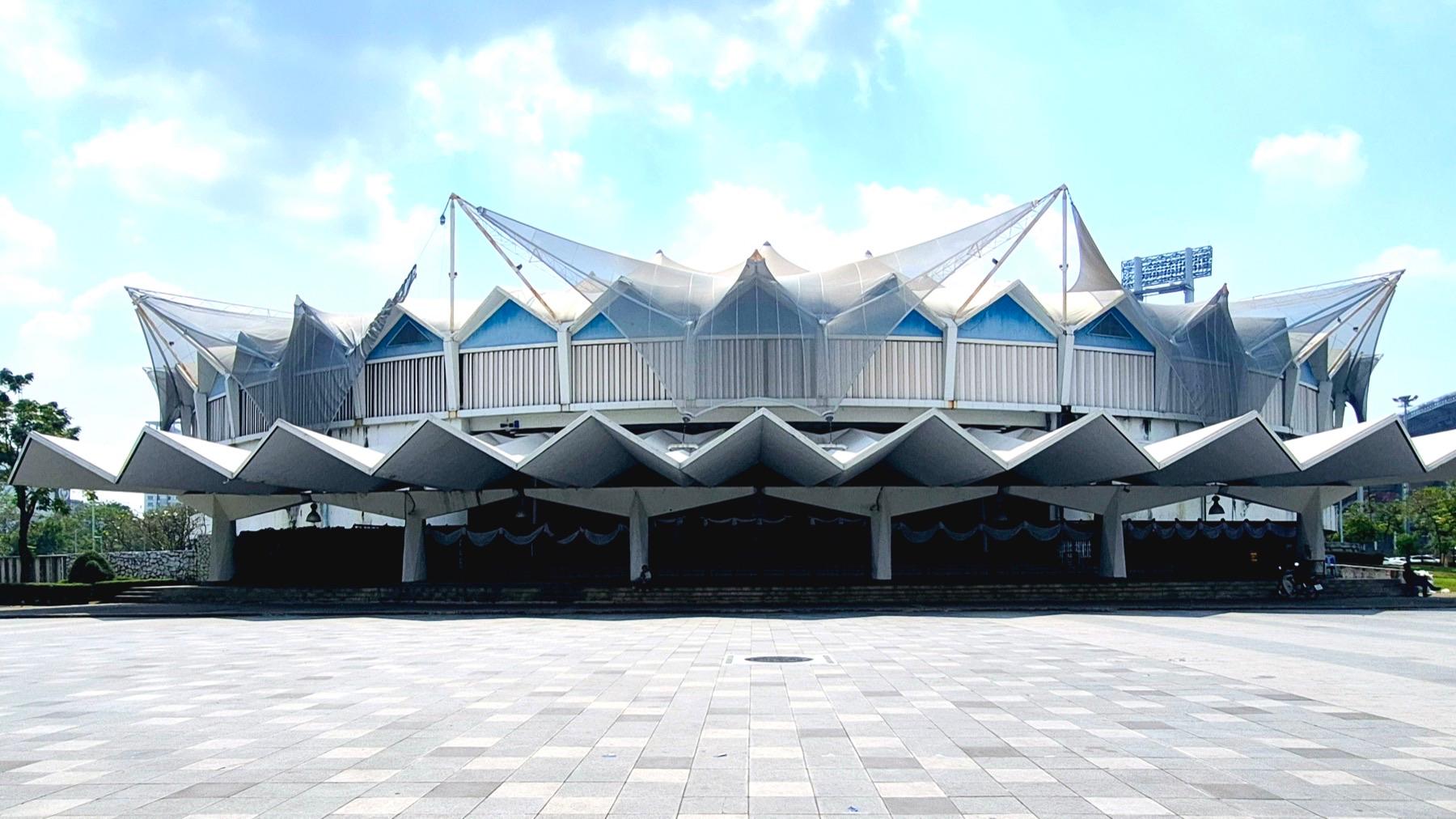
Indoor Stadium Huamark in Bangkok, Feb. 6, 2026. The arena hosted the SV.League’s first overseas regular-season matches on Oct. 10–11.
Photo: Medelam
On Oct. 10 at Indoor Stadium Huamark in Bangkok, Japan’s women’s SV.League opened its season with a match that counted in the standings and happened outside Japan. Defending champion Saga Hisamitsu Springs beat Aleeza Aichi 3-1 — 23-25, 25-21, 26-24, 27-25 — in the first of two official games billed as the Thailand Games presented by Hisamitsu. The next night Saga won again, 3-2. For a league built around Japanese arenas, the weekend was a test of something bigger than the box score: whether a Southeast Asian audience already watching on television would pay to sit in the building.
That audience had a way in before tip. On April 1, SV.League announced that matches from the 2025–26 season would be broadcast and streamed in Thailand, Vietnam, Cambodia, Laos, and Myanmar through Volleyball World’s partnership with Thai companies Jas and Mono. In Thailand, the package ran free-to-air on Mono29 and on MONOMAX streaming, with short-form digital clips around the matches. The five-country map is what the league could confirm. What it did not publish, then or around the Bangkok opener, was a verified size for that audience — no official ratings dump, no claimed household reach for the Thailand Games weekend.
Bangkok put the two moves next to each other. Thai fans who had been following Japanese club volleyball on Mono screens could walk into Huamark and see the same competition in person, with familiar names attached to both clubs. Aleeza Aichi brought veteran Thai setter Nootsara Tomkom. Saga’s championship roster included Thai middle blocker Hattaya Bamrungsuk. The league’s English match report framed the opener as a setting duel between Saga’s Erika Sakae — player of the match — and Nootsara. Latvian opposite Marta Levinska led Saga with 34 points; Sae Nakajima added 20. American Lindsey Ruddins paced Aichi with 19.
The commercial packaging was local as well as Japanese. Hisamitsu sat as the event’s presenting partner. Thailand-based Berli Jucker joined as an Event Platinum Partner days before tip. Tickets sold through Thai Ticket Major, Japan’s TICKET V, and SISTIC in Singapore. Event accreditation materials listed MONOMAX for Southeast Asia, J SPORTS On Demand in Japan, and Volleyball World internationally. The league did not invent a Thai market from scratch. It stacked partners who already sell volleyball there onto a weekend that put official points on the board.
The turnout was quieter than the milestone. Sankei Sports reported 1,909 spectators for the Oct. 10 match and 1,717 for Oct. 11 in a configuration of about 6,000 seats, with empty sections visible. The same column described September flooding in Bangkok that damaged systems at the venue, cut into promotion time, and left a typhoon forecast hanging over match day. Those figures are reported attendance, not a league release about broadcast reach. Huamark still drew fans who stayed for shirt signings and a five-set finish on Sunday.
Takeshi Kubota, SV.League’s executive director for international strategy, told Sankei that the league is starting to show up as a named product in Thailand the way the Premier League owns soccer conversation there, and that men’s interest already runs hotter — Osaka Bluteon preseason games in Bangkok have sold out 5,000 seats before. Men’s SV.League matches are lined up for Bangkok in January 2027. The women’s opener was the first official step into that plan.
So what was Bangkok selling? On the distribution side, five Southeast Asian markets, Mono29 and MONOMAX in Thailand, and Volleyball World as the rights bridge — announced in April for the prior season’s matches and still the frame for how Thai fans find the league. On the live side, Saga against Aichi, Nootsara against Sakae, regular-season points in a VNL venue, with a Japanese sponsor and a Thai retail partner on the bill. Audience size on the screens remains something the league has not put in public numbers. The attendance reports and the 3-1, 3-2 results are what went on the record.
SV.League opened abroad after it had already built that five-country distribution, then asked Thailand — the market with the densest free-to-air footprint on the deal — to show up in person for the defending champion and a Thai legend in Aichi’s jersey. Whether January’s men’s weekend and the next women’s road dates grow the gate is the next test. October answered the first one: the league will spend a regular-season weekend outside Japan to make the broadcast story feel local.