
3.3 million watched the first Game 7. What can the league repeat?
Golden State’s title clincher over Atlanta is the WNBA’s most-watched playoff broadcast. A winner-take-all night, two first-title teams, and cable plus streaming each did different work.
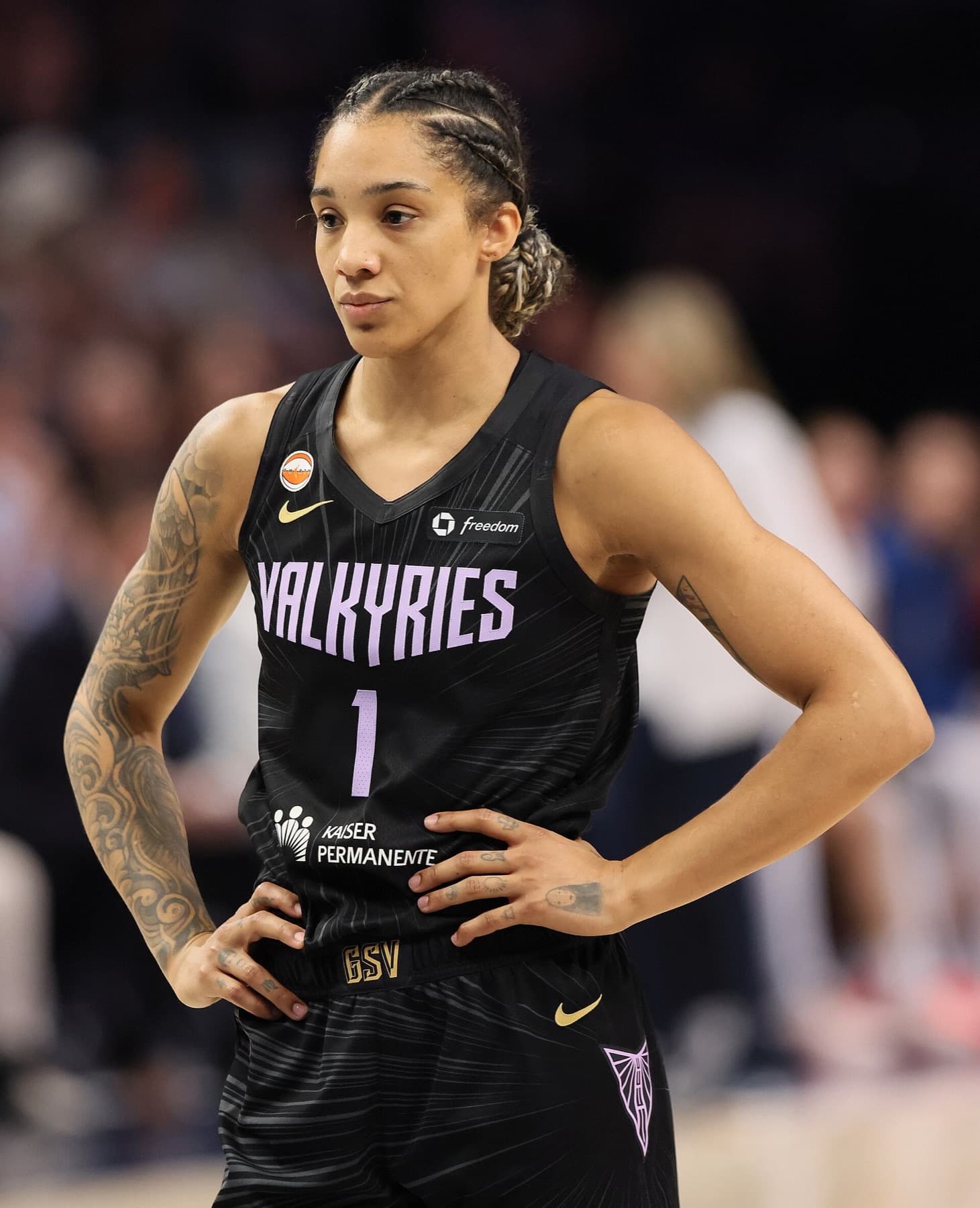
Gabby Williams of the Golden State Valkyries against the Minnesota Lynx at Target Center on Aug. 24, 2026. She scored 30 in Game 7 of the Finals on Oct. 31, when 3.3 million people watched.
Photo: John Mac
On Halloween night in San Francisco, 3.3 million people watched the Golden State Valkyries beat the Atlanta Dream 68–63. It was the first Game 7 in WNBA history, and it became the most-watched playoff broadcast the league has ever had. The number landed this week from the league and from USA Sports, built from Nielsen’s Big Data + Panel on USA Network and CNBC and from Adobe Analytics on Peacock. What the league can try to build again starts with the parts that made the night.
A winner-take-all tip made people clear Saturday night, and a Finals between two franchises still hunting a first title kept them watching for seven games. Cable and streaming put the clincher in more living rooms than one channel could. Change any of those and the audience moves; leave one out and 3.3 million gets harder to hold.
The format came first. The Board of Governors expanded the Finals to best-of-seven for 2025, after two decades of best-of-five. Last year’s first seven-game series never needed Game 5 — Las Vegas swept Phoenix, and the clincher drew nowhere near this. This year Atlanta forced Game 7 with an 80–69 win in Game 6, then the series returned to Chase Center for one Saturday. Sports Media Watch put the Game 7 audience 53 percent above the last winner-take-all Finals game, Minnesota–New York Game 5 on ESPN in 2024. A deciding night still does the oldest job in sports TV: it gathers people at the same hour. The league cannot put Game 7 on the calendar in March. It can keep a format that makes one possible, and hope the basketball lasts that long.
The teams gave that night a reason to stay. Both were playing for a first championship. Golden State was in its second season under Natalie Nakase, the league’s first Asian American head coach, who had already swept the defending champion Aces to get here. Atlanta was in its fourth Finals and still looking for its first title. All seven games sold out, and the series set Finals records for total attendance at 123,553 and for average crowd at 17,650. In Game 7, Gabby Williams scored 30 points — 28 after halftime — and took Finals MVP while Jordin Canada answered with 18 for Atlanta. The score stayed inside a possession for long stretches. Viewers who came for the stakes got a half that turned and a finish that stayed tight.
That series will not arrive on cue every October. An expansion club’s novelty fades, and injuries rearrange the bracket. What the league can still chase is two good teams in a long format, with a public reason to care — a first title, a coach’s second year, a second half like Williams’s. When the basketball is dull, the format alone will not carry 3.3 million.
Where people could watch was the third part, and the one that looked most like a media deal doing its job. Games 1 and 4 aired on NBC and Peacock. Games 2, 3, and 5 through 7 ran on USA Network with CNBC simulcasts and Peacock streaming — USA Sports’ first Finals window under an 11-year Versant deal that runs through 2036. Game 7 on that cable-and-stream stack outdrew Game 1 on NBC. The series opener had averaged 2.1 million and peaked near 3 million; the clincher cleared the previous series high by roughly 59 percent, per Sports Media Watch. It was also the most-watched WNBA game ever measured on cable, and the top program on cable that Saturday against a college-football slate.
Peacock sat inside the same 3.3 million total. Across the regular season, CNBC’s simulcasts had already introduced about a million people who had not watched a WNBA game earlier in the year, according to USA Sports — a season-long reach figure, separate from Game 7, that still helps explain why stacking channels mattered. The playoff record did not wait for every Finals tip to sit on over-the-air NBC. The deciding night only had to be easy to find for cable homes with USA and CNBC, and for streamers already on Peacock.
The whole series climbed with that night. The seven games averaged 1.88 million viewers, the most for a WNBA Finals since 1999 and up 30 percent from 2025. The full postseason averaged 1.49 million, up 27 percent, the highest since the league’s first year. Game 7 is still second among all WNBA telecasts since the 1997 opening weekend, behind an August Fever–Sky game on NBC and Peacock that averaged about 3.31 million. The playoff record and the all-time list measure different things. Only the playoff mark required Halloween, cable football competition, and a Game 7.
Next season the best-of-seven Finals stays. The USA–CNBC–Peacock stack stays in years when Versant has those games; other windows will sit with other partners. First championships will come and go. What the league can keep aiming for is a real series on a night people can find, with basketball worth staying for. Saturday’s 3.3 million needed the format, the matchup, and the distribution working together.