
Why a one-third Asian city doesn't mint more athletes
San Francisco is 35% Asian. Santa Clara County runs hotter. The Bay Area ships kids to Stanford and Berkeley by the busload — and still treats a varsity letter like optional noise.
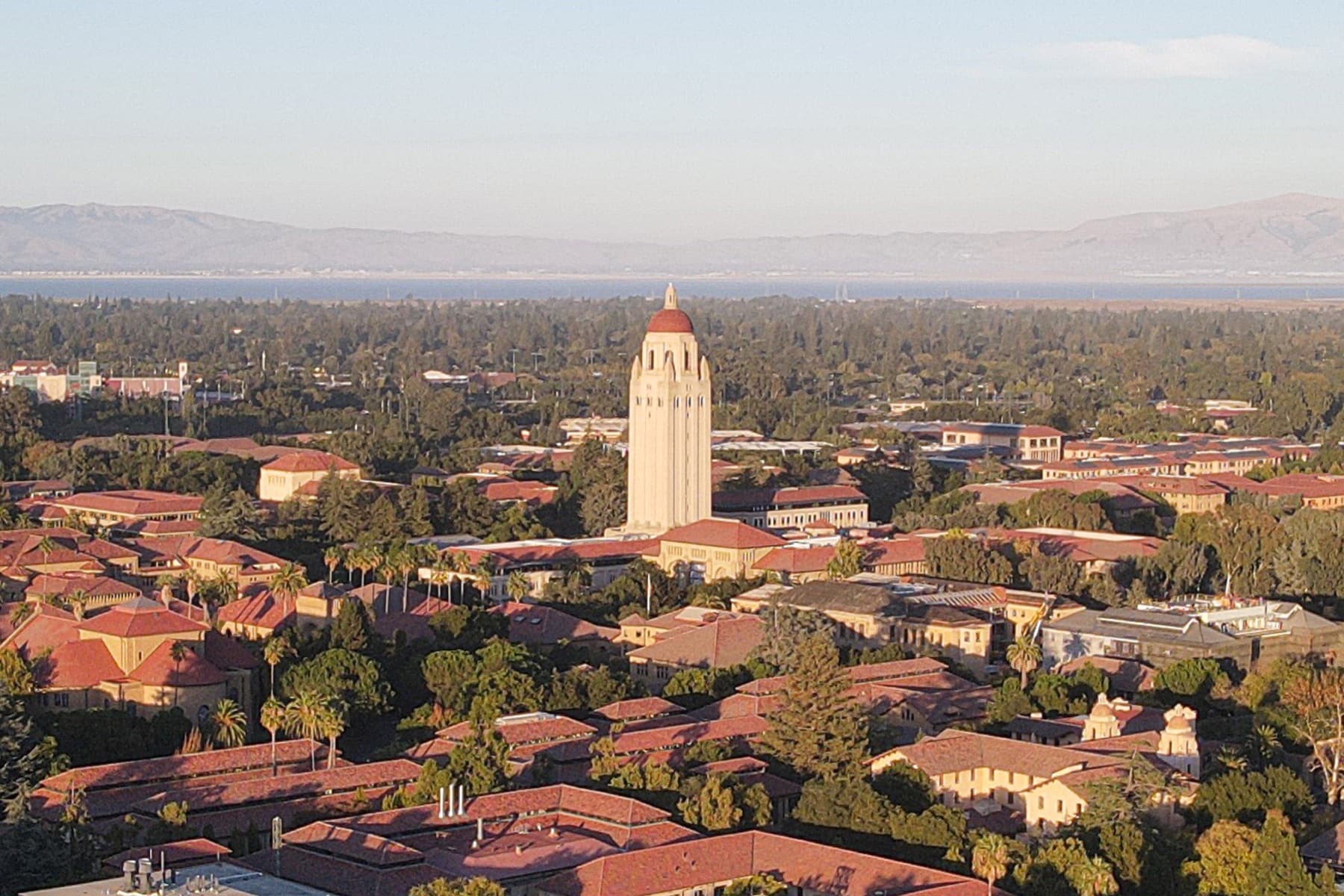
Stanford University from the air, with Hoover Tower and the Bay beyond — October 2024.
Photo: Mark Leschinsky / Stanford University / CC BY 4.0
From Hoover Tower you can see the Bay. Underneath it, Stanford’s red roofs look like the prize every Cupertino and Fremont family has been aiming at since middle school. San Francisco itself is 35.2% Asian on the Census Bureau’s latest count. Santa Clara County runs near 40%. The nine-county Bay Area holds more than two million Asian Americans. That map shows up everywhere except the places American sports still builds its rosters.
What the region does produce, on schedule, is college admission. Lowell High in San Francisco — still about half Asian — leads the city on selective UC placement; its Reach Score, a measure of how many top-UC options a senior class earns, triples the California median. Mission San Jose in Fremont is roughly 87% Asian. Monta Vista and Lynbrook in Cupertino sit around three-quarters Asian or higher. Gunn High in Palo Alto belongs in the same conversation — SAT averages north of 1400, crowded AP sheets, destination lists that name Stanford, MIT, Berkeley, and the Ivies without clearing their throat. Families moved for that.
Sports lose the calendar fight. Tufts sociologist Natasha Warikoo spent years in an affluent East Coast suburb she called Woodcrest for Race at the Top — Chinese and Indian immigrant parents next to U.S.-born white ones, same money, different hours. Immigrant parents pushed more APs and after-school math. White parents guarded time for club sports and theater, sometimes capping advanced classes so the travel team could stay intact. One Indian mother of a varsity swimmer told her son to quit the pool when homework slipped. He still made a top-twenty college. Cupertino and Fremont families will recognize the bargain without the pseudonym.
The national numbers line up. Aspen Institute’s Project Play put Asian youth sports participation at 56.8% in 2024, behind white youth at 65.5%. AANHPI athletes are about 2.5% of the NCAA; Division I women’s basketball runs thinner. Bay Area Asian kids do play. The ones still on a varsity sheet as juniors are usually fighting tutors, SAT calendars, and an admissions theory borrowed from countries where athletics do not buy a seat.
When the Bay does mint Olympians of Asian descent, check the sports with clubs dense enough to survive homework season. Three of four U.S. table tennis players in Paris grew up here — Lily Zhang from Palo Alto, Kanak Jha from Milpitas, Rachel Sung from San Jose. Alysa Liu skated out of Oakland. The clubs and coaches were already on the map. Leave those individual Olympic lanes for Friday-night football, scholarship basketball, or a college soccer roster, and the Bay’s Asian faces thin out fast.
A kid who might have been a regional midfielder or a conference guard becomes another AP Physics section instead. Sometimes that is a cold, correct read of selective admissions. Sometimes it is anxiety with a planner. Either way, talent that stops getting coached at fourteen does not reappear at Stanford’s practice gym, a Valkyries tryout, or a CIF final. Girls feel the squeeze early. Southeast Asian and working-class families inside the “Asian” label feel it harder than the averages say.
Keep sending kids to Berkeley. Just stop treating the varsity letter like a distraction from the only ladder that counts. The Bay already knows how to schedule excellence. It could leave a few of those hours on the court — before the next kid decides the Common App is the only scoreboard in town.