
How Chloe Chambers Got From American Karting to F1 Academy
F1 Academy closes the season on the Las Vegas Strip this weekend. Chloe Chambers won Race 2 there last year. She started at a New York outdoor track — here’s how a U.S. student looks up the same first steps.
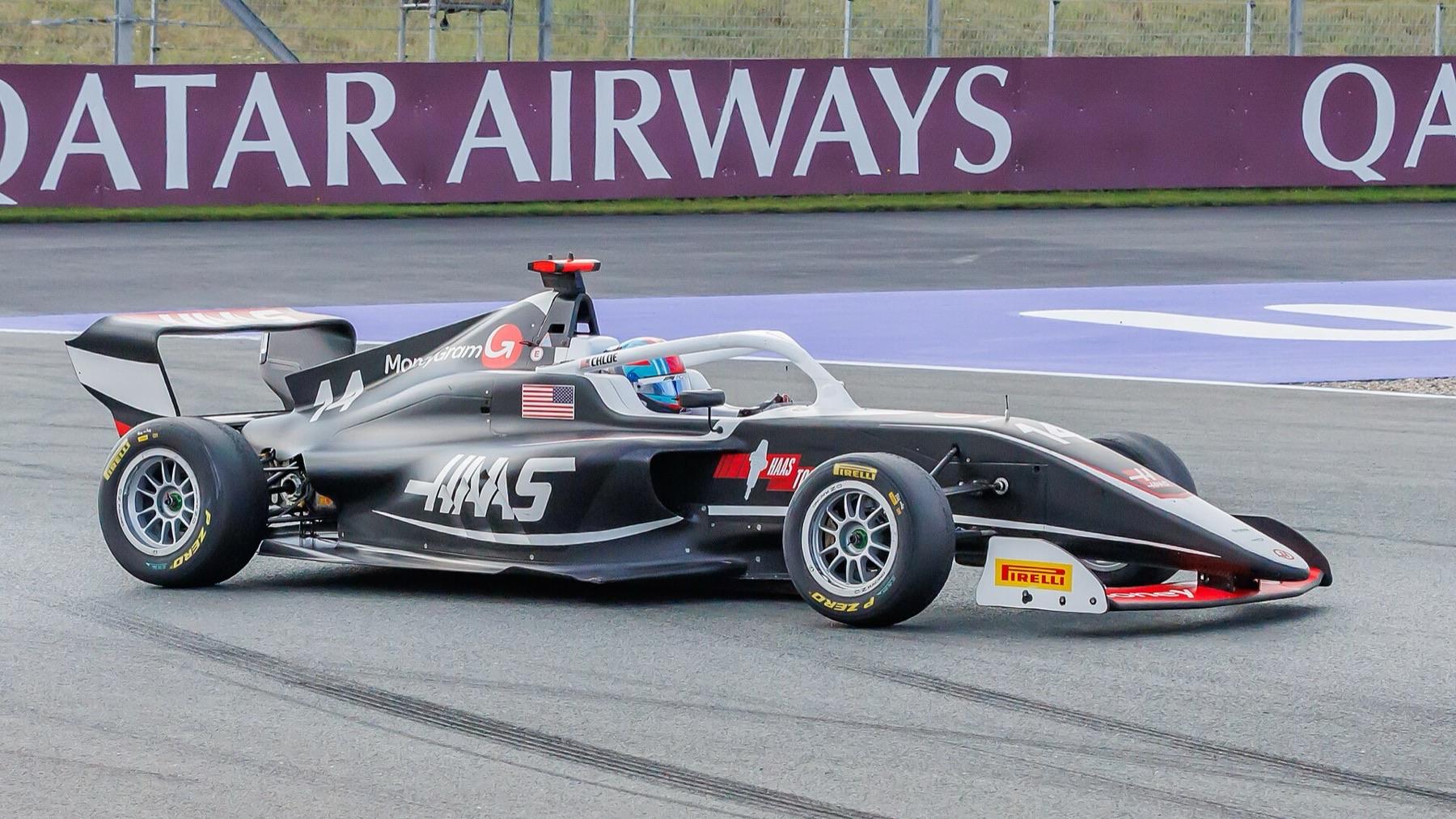
Chloe Chambers in the Haas-backed Campos F1 Academy car at Zandvoort in August 2024. She won Race 2 of last year’s Las Vegas finale; the series returns to the Strip this weekend.
Photo: Steffen Prößdorf / CC BY-SA 4.0
F1 Academy is back on the Las Vegas Strip this weekend for the 2026 season finale — free practice and qualifying Thursday, the reverse-grid race Friday, the feature Saturday. Last November, on that same street circuit, Chinese American driver Chloe Chambers won Race 2 from pole, set the fastest lap, and finished third in the championship with 127 points. It was her last weekend in the series. Drivers get two seasons, and she had used both.
What a U.S. student can actually copy starts earlier and closer to home. Chambers was born in Guangdong, adopted as an infant by a family that settled in Monroe, New York, and first sat in a kart at seven after watching her dad at autocross and club track days. By spring 2012 she was racing at Oakland Valley Race Park in Cuddebackville. In her first year she won the Kid Kart championship. That outdoor club track is the line on her résumé a parent can still look up by zip code.
Her karting years stayed mostly in North America. She raced Rotax Micro, Mini, and Junior Max at club and regional level in the Northeast and Canada, then stepped into national X30 and KA100 Junior events. In 2019 she finished third at SKUSA SuperNationals in Las Vegas in X30 Junior. She kept working on the kart with her father as tuner. Only in 2021 did she move into cars, with a partial Formula 4 United States season for Future Star Racing — one point, a tenth at Mid-Ohio, 26th in the standings. When F1 Academy came later, it still rested on seat time she had built without moving full-time to Europe.
For a first month, start with seat time you do not own. Indoor rental leagues are fine for fun. If you want the outdoor racing ladder Chambers used, look for a club circuit that runs Kid Kart, Cadet, or LO206 classes and will rent or coach before you buy. Directories that list tracks by state — USKarting, One Stop Karting, the World Karting Association master track list — are where to search. Filter for outdoor asphalt, rental or intro programs, and a published club race calendar. Oakland Valley’s Intro to Karting package for Kid Kart or Micro/Mini is listed at $200 for four sessions, and first-time Kid Kart renters have to take the training before they turn a wheel in a rental. Other clubs price differently. Pay for supervised laps before you pay for a chassis.
Watch a practice day before you write a check for a season. Ask which class actually has beginners on the grid — LO206 Sportsman and Kid Kart are common entry rooms; a sealed Rotax or IAME X30 program costs more to run and rebuild. Ask whether the club rents a kart or helmet for the first weekends, what a practice day and a race entry cost for members versus walk-ups, and which sanctioning card you need (WKA, SKUSA, ROK, or a regional series). Ask how many drivers your age raced last season in that class. An empty grid is a warning even if the flyer looks polished. Ask who tunes engines locally, whether used packages turn over in the paddock, and what a realistic first-year budget looks like once tires, fuel, entries, and travel are counted. Club LO206 seasons often land in the mid four figures to low five for a full calendar. Cadet packages sit lower. National travel doubles it.
Do not buy a kart because a YouTube class looks fast. Buy into the class that fills at your home track. Northeast Karting Challenge’s starter page puts it simply: race rental leagues first, then consider ownership. Ohio Valley Karting Association’s intro manual puts ready-to-race Kid Kart packages roughly in the mid-two-thousands used and LO206 Sportsman higher — prices that move with the market, which is why the club conversation matters more than a national average. Chambers’ family did the long version: years of club weekends, Canadian and Florida winter events, then nationals. Copy the club first. The SuperNationals podium came later.
The car years after that get expensive and selective. Chambers tested into the 2022 W Series, raced Formula Regional Oceania in 2023 — first woman to take pole and win in that series — won eight races in a partial 2023 Porsche Sprint Challenge season as a Porsche junior, then landed F1 Academy with Campos for Haas in 2024 and Red Bull Ford in 2025. Three Academy wins, eleven podiums across two seasons, a farewell Vegas victory. In 2026 she is racing Lamborghini Super Trofeo North America with RAFA while the Academy field she left behind closes the year on the Strip without her. A middle-schooler cannot schedule that stretch. She can schedule the Kid Kart and club seasons that made it possible.
This weekend, watch the Academy cars on the Strip. Chambers’ 2:06.538 pole from a year ago is still listed on the series’ Las Vegas sheet. Then open a track directory, find the outdoor club within a few hours of home, and book an intro or rental day. Before you pay for a season, leave with answers on class depth, first-year cost, and whether anyone else your age will be on the same grid. Chambers’ path to F1 Academy was long and funded. The first step she took is still one a U.S. student can schedule without a passport.