
Alex Eala leaves Nagoya with bronze — and no regrets
She skipped the China Open for a shot at gold, took the first set from Wang Xiyu, then lost 6-3, 3-6, 2-6. Same bronze as Hangzhou. Same answer afterward: she would do it again.
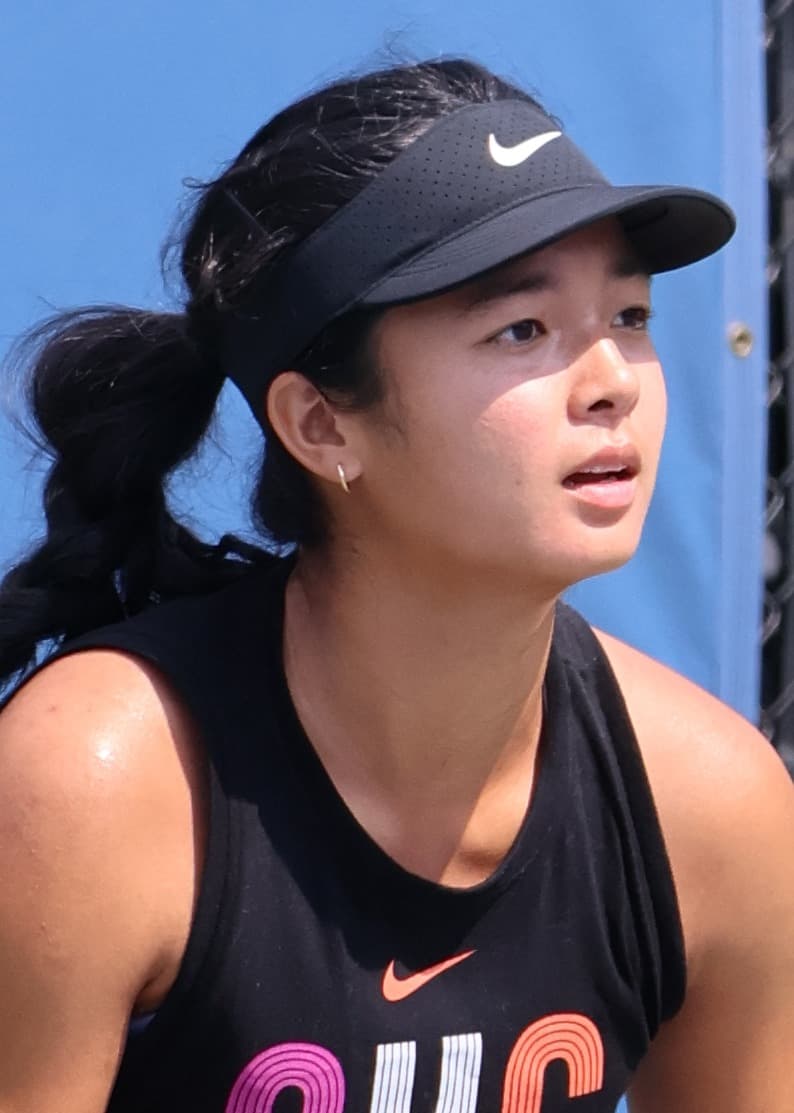
Alexandra Eala practicing at the 2024 US Open.
Photo: Hameltion / CC BY-SA 4.0
On Thursday at Higashiyama Park, Alexandra Eala raced to 5-0 in the first set against China’s Wang Xiyu — world No. 85, the fourth seed — and looked like the player who had skipped Beijing for this. Then the afternoon turned. Wang came back to win 3-6, 6-3, 6-2 in two and a half hours, and the Philippines’ top seed left the Asian Games with bronze. Same color as Hangzhou three years ago, when she was 18 and ranked No. 190.
Gold was the reason she came. No Filipina has won Asian Games women’s singles; Desideria Ampon’s silver in 1958 is still the country’s best finish. The singles champion here also earns an ITF continental path toward Los Angeles 2028 if the ranking and country-max rules hold. Eala can still reach LA28 through the WTA rankings. The Nagoya shortcut is gone. Wang will play China’s Zhang Shuai in Friday’s final.
The numbers explain the slide. Eala converted only four of twelve break points. Unforced errors stacked once Wang settled. By 4-1 in the third, the comeback window had closed; Wang served out the last game at love. At one point Eala turned toward her father, Mike, in the stands as if asking what she was doing wrong. Afterward she kept it plain. “I think she was more consistent,” she said. “I had a couple of ups and downs during the match, and that’s something I have to talk with my team about and process.”
Wang, 25, had been looking forward to the test. “It wasn’t so much nerves,” she said. “I was really looking forward to this match and was keen to see how I’d fare against her.” She had dropped sets earlier in the week. Against Eala she found a level that held when the favorite’s did not. For a player ranked sixty-seven spots below the world No. 18, that is a career afternoon. For Eala, it is the tape she will watch on the way to Wuhan.
The cost of the week was on the calendar before a ball was struck. The China Open — a mandatory WTA 1000 — was awarding up to 1,000 ranking points while Games tennis awards none. Miss Beijing and the ranking can take a zero that still counts, plus a possible fine Philippine reporting has put near $10,000. A second-round loss in Singapore the week before had already knocked her out of a realistic WTA Finals chase. She came to Nagoya anyway, beat Joanna Garland to lock a medal, lost in doubles with Shaira Rivera, and put the whole bet on singles gold. Asked whether she regretted that trade, she said no. “I’m really happy to have experienced this… to be with the team and to compete for the country,” she said. “I feel like I have no regrets.”
Hangzhou is the comparison she cannot shake. Zheng Qinwen beat her in a three-set semifinal there; bronze felt like arrival. This week she arrived as the favorite — SEA Games gold last December, a first WTA title in Washington in August, world No. 18, the highest-ranked Southeast Asian woman in history. She said she is better physically, more mature, more experienced. The medal color stayed the same.
What changed is the size of the bet. In Hangzhou she was the prospect chasing a first podium. In Nagoya she was the country’s first real WTA title-holder, still choosing a national-team afternoon over a 1000-point week. Philippine tennis has spent a year watching what that star does to ticket demand and court time at home. This week answered a quieter question: she still shows up when the calendar punishes the jersey.
She leaves with bronze, a loss to a player she was supposed to beat, and a clear next stop. “I’m going to Wuhan and continue the tour,” she said. The ups and downs on Thursday’s tape will get worked through with her team. The choice to put the Philippine jersey on is the part she already settled.