
What actually happens when a high-school gymnast signs with a college?
Signing opened Nov. 11 for the Class of 2027. What a verbal means, what the aid agreement actually locks in, and how to read this week’s Confirmed posts before enrollment is even on the calendar.
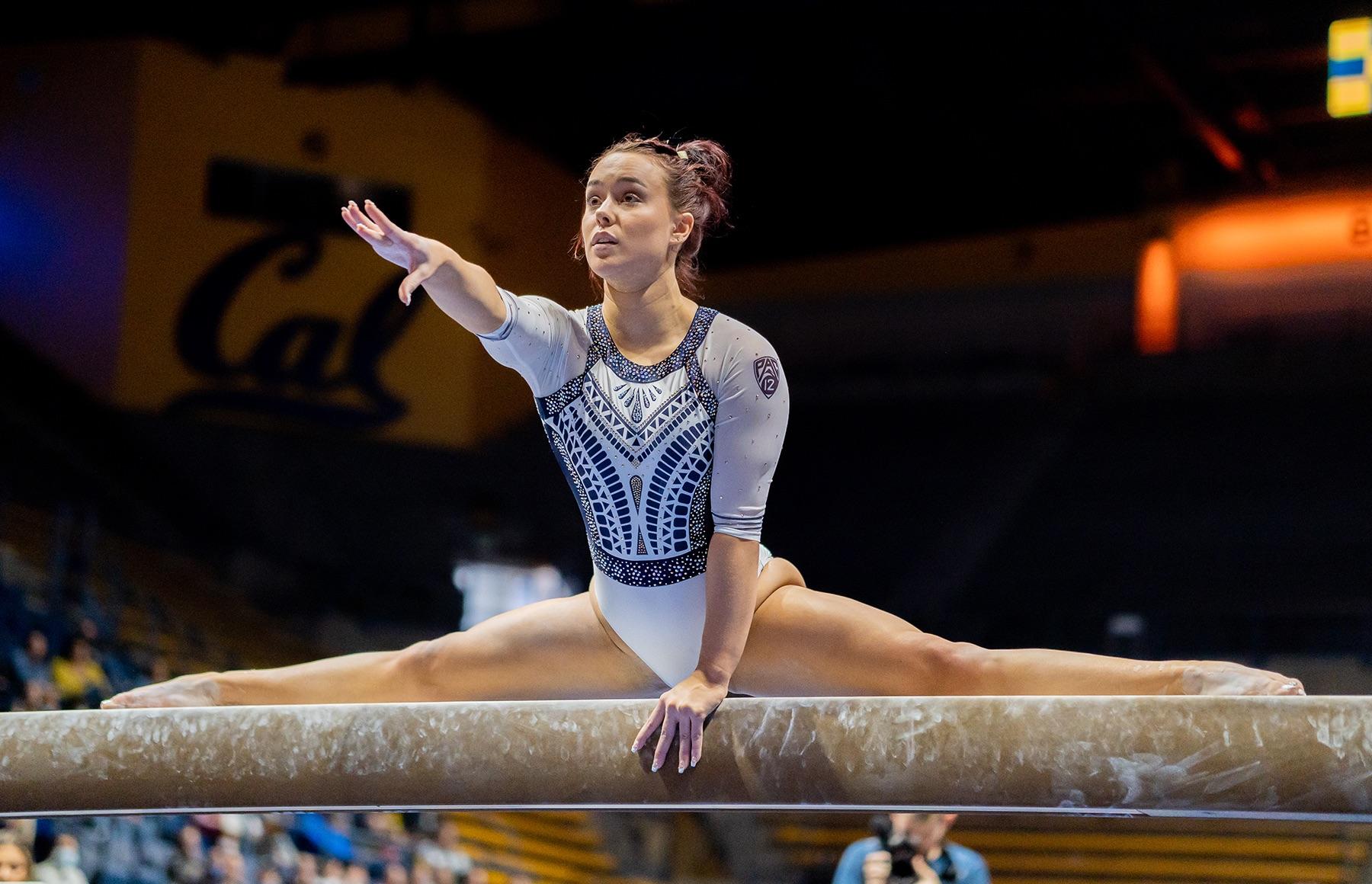
Cal’s Milan Clausi on beam at Haas Pavilion in March 2022. Most Class of 2027 gymnasts who signed this week will not set foot on a college apparatus until fall 2027, with a first competition season in 2028.
Photo: Theo Wyss-Flamm / The Daily Californian
On Wednesday, Nov. 11, the NCAA’s signing window opened for Division I and II sports outside football and basketball. Women’s gymnastics programs started posting the photos parents have been waiting for: a table, a pen, a jersey with a number that does not yet belong to her. San José State put out a release the same day for Keira Gontkosky, Kaira Nguyen of Pearland Elite, and Abigail Williams. Arizona’s tracker line for Ava Jen of Desert Devils flipped to Confirmed. College Gym News opened its Class of 2027 signing sheet and kept updating it as team posts and athletics releases came in.
The November photo sits in the middle of a longer path. NCAA Eligibility Center guidance and the women’s gymnastics signing tracker spell out what each step actually does — and what a public announcement still leaves open.
Club gym to verbal to paper
Most of the names on this week’s lists still train Level 10 or elite at a club — Pearland Elite, Desert Devils, San Mateo, WOGA. The high-school team is rarely the recruiting path. Scores, regional and national meets, campus visits, and recruiting contact under the NCAA calendar come first. When a gymnast and a coach agree she will go there, that is a verbal commitment. College Gym News’ recruiting guide is clear about the limit: a verbal binds neither side. Either can walk away before the paper is signed.
The paper changed in 2024. Division I dropped the National Letter of Intent. Schools now send an athletics aid agreement — also called a financial aid agreement — for the first academic year of aid. Once she signs and returns it, the NCAA’s Eligibility Center guidance says the school confirms the signature in her account, and athletics staff at other NCAA schools that offer scholarships must stop recruiting contact with her and her family. USC’s compliance page says the same thing in plainer language: verbals are not binding; the signed athletics financial aid agreement is the recruiting commitment that triggers the contact ban.
Division II can still use an NLI in some cases. Division III does not award athletic scholarships; a celebratory signing form there is nonbinding after she is accepted. Ivy League programs such as Yale — where Eliana Wong of San Mateo is Confirmed on this week’s tracker via a club post — do not offer athletic scholarships at all. Need-based aid and admissions still decide the money. A Confirmed Ivy line means the club celebrated. The document that closes other NCAA recruiting at a scholarship school is a different piece of paper.
What “Confirmed” means on the tracker
College Gym News stopped splitting scholarship signings from walk-on ceremonies after the NLI ended and after House-settlement roster rules changed how aid works. Division I women’s gymnastics now sits under a roster limit of 20 for schools in the settlement, with no sport-wide scholarship cap up to that number. A coach can put a full grant, a partial grant, or no athletic aid on anyone inside the limit. The tracker’s answer is one status word: Confirmed, once there is evidence she signed paperwork or held a signing ceremony. That word does not publish the percentage on the aid line. For that, you need the school’s release, the family’s paper, or a direct question to the coach.
Most Class of 2027 athletes who sign now will start training with the college team in fall 2027 and first compete in the 2028 season. The tracker marks January 2027 joiners with a single asterisk, early graduates from the Class of 2028 with a double asterisk, and deferrals to 2029 with a triple asterisk. When you read a name this week, check those marks before you assume an August move-in.
How to read this week’s announcements
Start with the status. A club Instagram that says “committed” can still be a verbal. Confirmed on the College Gym News sheet, or an athletics-department release that says she signed, means paperwork or a ceremony already happened. Then look for the academic year on the aid language — often 2027–28 for this class — and whether any amount or percentage appears. Silence on money is common in public posts. It does not mean a full ride.
Next comes the calendar. Fall 2027 training and a 2028 first season are the default for seniors. Midyear joiners and early grads move on a different clock, which is why the tracker asterisks matter. Source strength matters too. An official athletics release — SJSU’s Nov. 11 note for Nguyen and her classmates — carries more weight than a club story alone. A team social post that the tracker links is usually enough for Confirmed; open the release anyway if you need aid language.
The signing photo still leaves a list unfinished: university admission, Eligibility Center academic and amateurism certification, final transcripts, and the enrollment deposit. Walk-ons and preferred walk-ons have to register with the Eligibility Center and meet the same initial-eligibility standards. The pen does not clear those steps.
After the pen: Eligibility Center and campus
Keep the Eligibility Center account current — sports participation history, every high school on the education list, and official transcripts after each year and at graduation. For fall enrollees, the NCAA tells students to request final athletics certification beginning April 1 of the graduation year; winter and spring enrollees start that request Oct. 1. She can sign an aid agreement before certification is finished. If she is later ruled a nonqualifier, that agreement will not hold the spot the way families hope.
Apply to the school on the admissions calendar the coach gave you. Athletic interest can support a file; acceptance still belongs to admissions. Once she is admitted, certified, and enrolled full time, she can practice and compete under that school’s and the NCAA’s rules. The college beam is years of club work plus a senior-year checklist that runs well past Signing Day.
If you are scrolling this week’s posts for a daughter still in Level 9, use them as reference material. Note which clubs feed which schools, which releases name an aid agreement, and which tracker rows stay blank. When her turn comes, the sequence stays the same: club results, recruiting contact, a verbal she can still leave, a signed aid agreement that closes other NCAA recruiting, then Eligibility Center and enrollment. The pen photo is one step in that chain — the one that finally shows up on Instagram.