
The college sports Asian American women actually play
AANHPI women are 28 percent of NCAA fencing and about 2 percent of NCAA soccer. Soccer still has 650 of them. Swimming has 645.
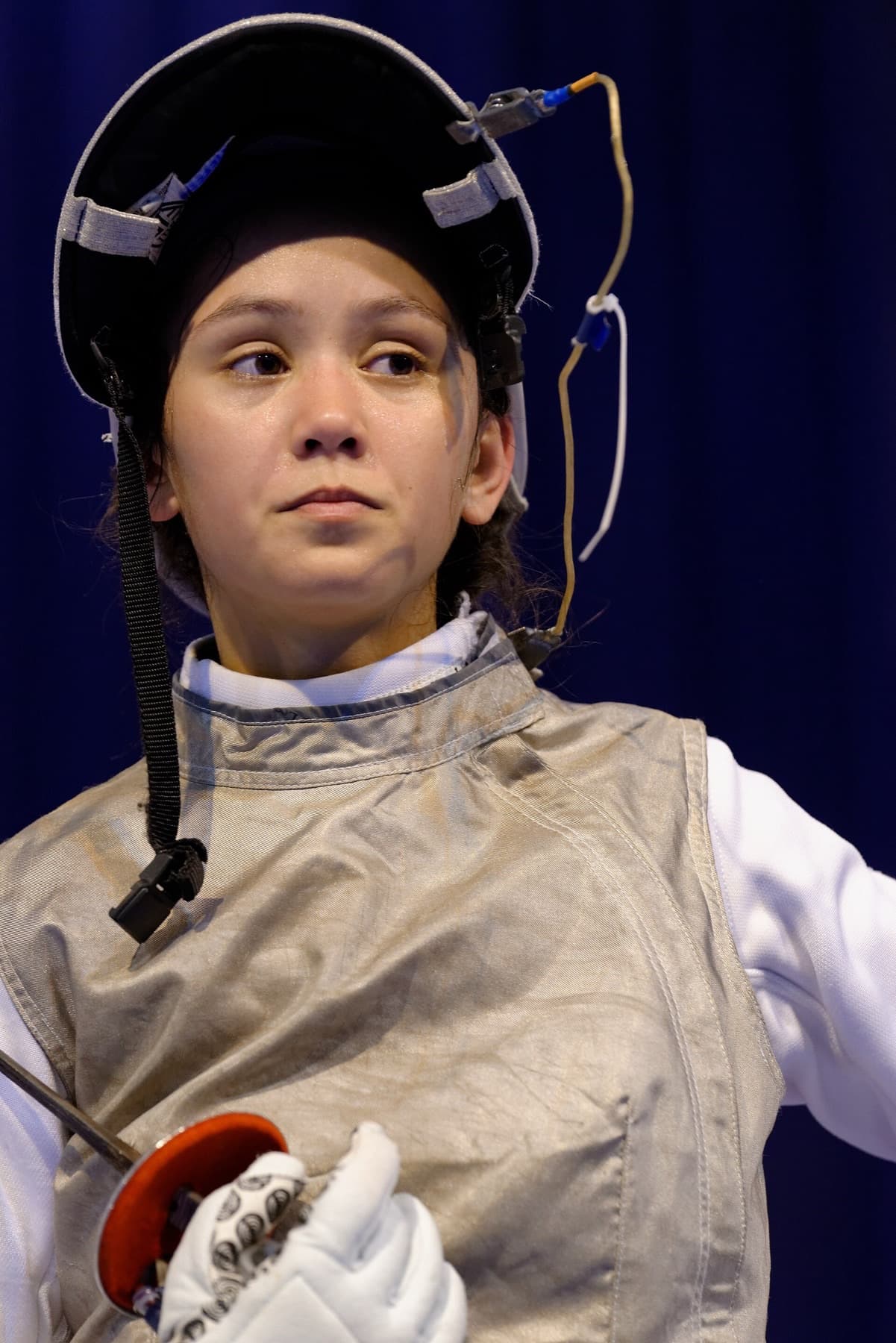
Lee Kiefer at the Saint-Maur women's foil World Cup in November 2014, during her Notre Dame years.
Photo: Marie-Lan Nguyen / CC BY 3.0
The NCAA's 2024-25 demographics sheet counts Asian plus Native Hawaiian and Pacific Islander athletes together. On the women's side, fencing is 28 percent AANHPI — 213 athletes, about 44 teams. Soccer is about 2 percent, and that 2 percent is 650 people.
Soccer had the most AANHPI women of any sport on that list, and they were still only about 2 percent of 31,200 college soccer players. Basketball had 310.
| Sport | AANHPI women | Share of the sport |
|---|---|---|
| Fencing | 213 | 28% |
| Golf | 588 | 10% |
| Tennis | 623 | 8% |
| Gymnastics | 136 | 8% |
| Swimming and diving | 645 | about 5% |
| Soccer | 650 | about 2% |
| Basketball | 310 | about 2% |
Fencing looks huge as a percentage because the sport is small. The New York Times wrote in 2022 that serious junior fencing can run into six figures for families aiming at the Ivies and Notre Dame, which is where the NCAA meet already sits. Lee Kiefer came out of Lexington, Kentucky, fenced at Notre Dame, and won Olympic foil gold in Tokyo and Paris. She is Filipino American.
Golf is 10 percent AANHPI. Tennis and gymnastics are 8 percent each. Rugby, an emerging sport with 939 women in all, is also 8 percent. Those are the sports that already come up when someone talks about Asian American girls and college.
Soccer's 650 is three times the fencing count. Swimming is right there with it — 645 women, about 5 percent of a 13,000-person sport. Stanford's Mia Bhuta is one of the soccer players. At 16 she became the first Indian American in a FIFA tournament, a co-captain for the U.S. at the 2022 U-17 World Cup in India. Most of the other 649 play ordinary college soccer.
Women's basketball has 310 AANHPI players across all three divisions, about 2 percent of 16,823, up 58 percent in a decade. Division I is thinner. October 2024 NCAA data had about 80 among 5,000. That is why you can watch a lot of Power conference nights and still not see one.
Tennis and golf look more Asian when you walk a roster than when you read the AANHPI percentage. The NCAA often puts international students in their own box, so a first-year from Seoul or Shanghai can be counted as International, not Asian. NCAA research from 2022 had Division I women's tennis around two-thirds international and women's golf around 40 percent. The 8 and 10 percent AANHPI shares are mostly domestic.
The 2.5 percent overall NCAA figure is still true. It averages a 28 percent fencing strip with a 2 percent soccer field. Hundreds of AANHPI women are already on soccer and swim teams. Fencing is 28 percent because the sport is small.