
LA Knight Riders win MLC title by one run on the final ball
Sunil Narine broke Washington’s top order; Shadley van Schalkwyk survived a 12-run final over to deliver Los Angeles its first championship.
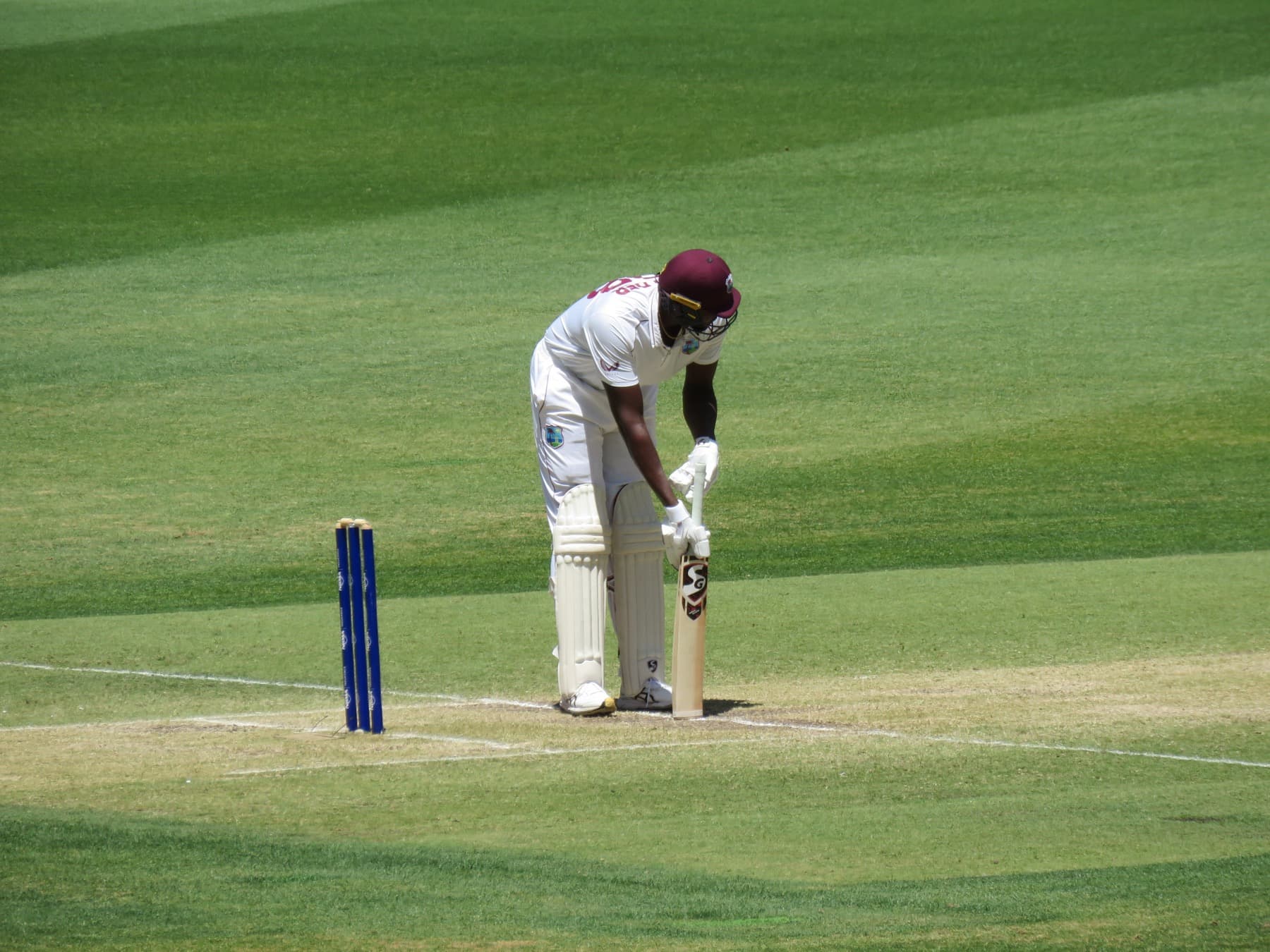
Jason Holder bats for West Indies in Perth in 2022. As Los Angeles captain in the 2026 MLC final, he took 3 for 31 and trusted Shadley van Schalkwyk with the decisive over.
Photo: Calistemon / CC BY-SA 4.0
Los Angeles Knight Riders won their first Major League Cricket championship by the distance between one completed run and a second that never arrived. Washington Freedom needed three from the final ball at the Oakland Coliseum. Lahiru Milantha pushed Shadley van Schalkwyk’s yorker into the leg side, completed one, and was run out trying to return for the two that would have forced a Super Over. Los Angeles won by one run: 164 all out to 163 for nine.
The last over compressed the whole final into six balls. Washington began it needing 14. Obus Pienaar drove the first delivery for six to reach his first T20 half-century, then van Schalkwyk bowled him with the next ball. Ian Holland found captain Jason Holder at long-off immediately afterward. Lockie Ferguson’s four and single restored the possibility of a tie before van Schalkwyk, who had conceded 38 in his first three overs, helped complete the final-ball run-out with wicketkeeper Jahmar Hamilton.
The rescue was necessary because Pienaar had turned a controlled defence into a live chase. Washington had fallen to 29 for three inside five overs as Sunil Narine removed Mitchell Owen, Rachin Ravindra and captain Steven Smith for single figures. Andries Gous and Nikhil Chaudhary repaired the innings with a 65-run stand, only for Holder to dismiss Chaudhary, Ben Dwarshuis and Gous. At 109 for six in the 16th over, Los Angeles appeared to have separated itself from the finish.
Pienaar erased most of that distance with 53 from 24 balls, including three fours and five sixes. He took Washington from 109 for six to the edge of a title while targeting the weaker overs around Narine and Holder. His first ball of the 20th over reduced the requirement to eight from five, the kind of equation that usually belongs to the batting side. Van Schalkwyk’s response — yorker, wicket, wicket — changed it again.
Narine was the quieter reason Los Angeles had anything to defend. He finished with 3 for 13 from four overs and was named player of the match and the season’s most valuable player. The tactical wrinkle was his new-ball role: ESPNcricinfo reported that 15 of his tournament-leading 18 wickets came in the powerplay. Holder then attacked Washington’s middle order for 3 for 31, reaching 400 career T20 wickets when Chaudhary was caught in the 14th over.
Los Angeles had earlier made 164 after Washington won the toss and chose to field. Andre Fletcher’s 47 from 27 balls and Colin Munro’s 40 from 29 built a 66-run opening stand. The innings then lost shape: Andre Russell and Narine made ducks, and the Knight Riders lost their last eight wickets for 98. Matthew Tromp’s 39 from 21 kept the total defensible, while Dwarshuis led Washington with 3 for 31.
The championship completed a sharp change in the franchise’s results. Los Angeles had managed five wins across its first three MLC seasons and had never reached the playoffs. Under Holder and head coach Dwayne Bravo, it went 6–4 in the 2026 league stage, finished second on net run rate, and beat the San Francisco Unicorns by seven runs in the Qualifier. Its eighth victory of the season came in the final.
The roster also shows how an American league is being built through cricket’s existing global networks. Narine, Holder, Russell, Fletcher, Munro and Bravo arrived with deep experience across international cricket and franchise competitions. Knight Riders Group owns related teams in India and the Caribbean. That connection can supply instant expertise and recognition; the longer-term test for MLC is whether it also develops durable local players, venues and audiences.
There was evidence of an audience in Oakland. ESPNcricinfo reported more than 10,000 spectators at the former baseball stadium, while Cricket Australia put the crowd at 10,200. One final cannot settle the league’s economics or its place in a crowded U.S. sports market. It did provide the product in its clearest form: elite players, a local-market team, and a result undecided until the wicket was broken on the last ball.