
Olympic cricket has its dates — and women will play first
Women’s T20 runs July 12–20, 2028 in Pomona; men follow July 22–29. Six teams, one continental berth each, and a field small enough to leave heavyweights outside.
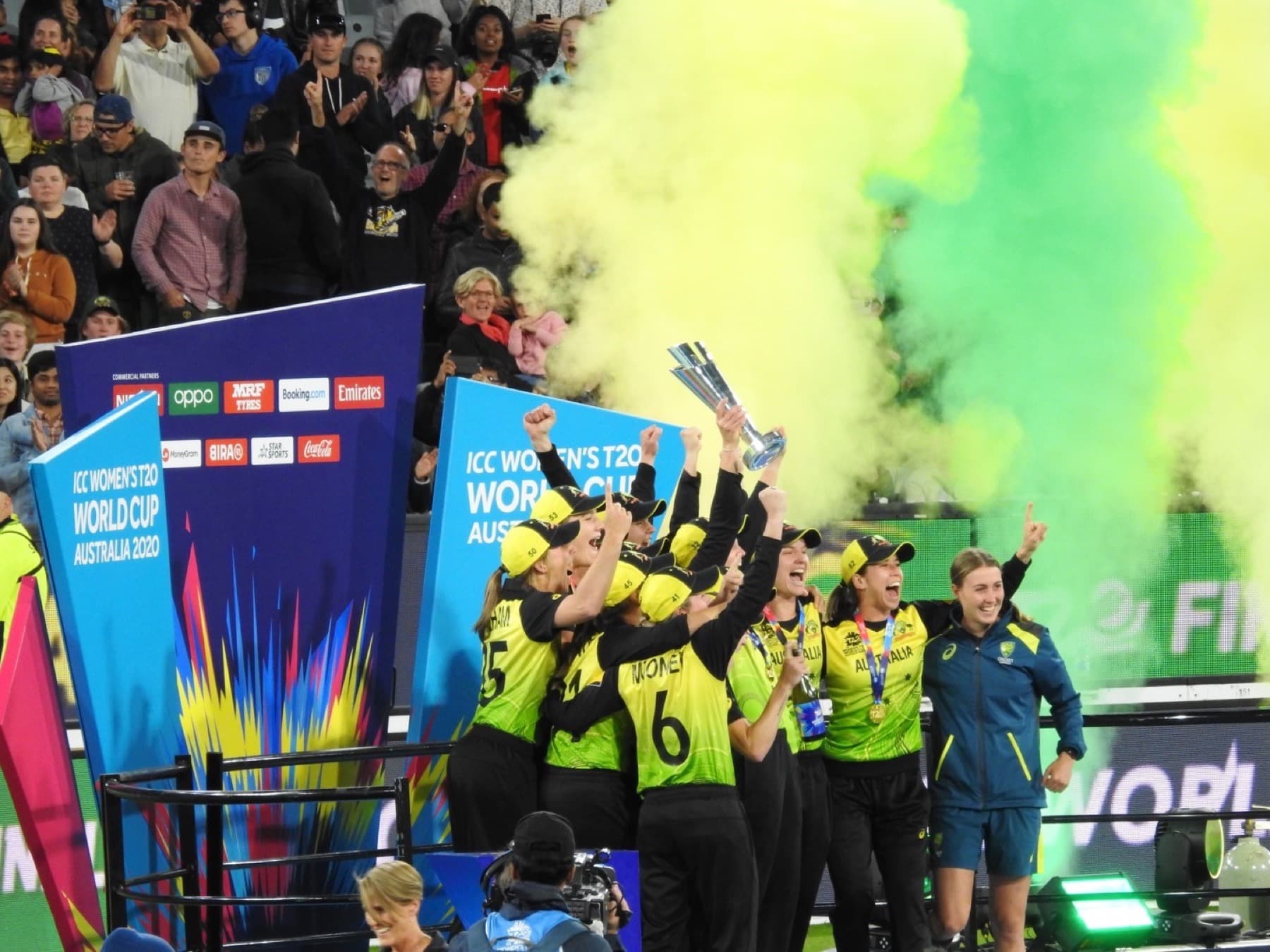
Australia celebrate winning the 2020 Women’s T20 World Cup at the MCG. At LA28, the women’s Olympic tournament opens July 12 — two days before the Opening Ceremony — with Australia already among the first four sides into the six-team field.
Photo: Storm machine / CC BY-SA 4.0
Cricket’s Olympic calendar is locked. At Los Angeles 2028, the women’s Twenty20 tournament runs July 12–20 at the Knight Riders Cricket Ground in Pomona’s Fairplex. The men follow July 22–29 on the same ground. Women’s gold is decided on the 20th; men’s gold on the 29th. The Opening Ceremony is still July 14 — which means the first Olympic cricket since Paris 1900 starts two days before the flame even arrives.
Most match days are doubleheaders, with sessions at 9:00 a.m. and 6:30 p.m. Pacific time. Those windows line up with Indian evening and morning TV slots, a reminder of why the IOC wanted the sport back. There are no cricket matches on July 14 or July 21 — ceremony day and the handoff between the women’s and men’s brackets.
Each gender gets six teams and 90 athlete places, so squads of 15. Across both events, organizers have scheduled 28 matches. The field is tiny on purpose: a short Olympic window, one venue about 30 miles from the village, and a product built for primetime, not a full World Cup draw.
The on-field format matches that squeeze. Six sides split into two groups of three. Inside each group, everyone plays everyone once. Then each team plays two more games against the sides from the other group that finished in different places — so a second-place team faces the first- and third-place sides from the opposite pool. After that multi-phase table settles, the top two go straight to the gold-medal match. Third and fourth play for bronze. There is no long knockout tree. Lose the wrong league game and you can fall out of medal range fast.
Qualification is where the six-team math gets sharp. Africa, Asia, Europe, and Oceania each get one direct berth — the highest-ranked eligible side from that continent, not the four best teams in the world. For women, those four places are already filled through the 2026 Women’s T20 World Cup: Australia, Great Britain (via England), India, and South Africa. For men, the continental cut is the ICC T20I rankings on Dec. 31, 2026. Hosts United States take a fifth spot in each event if they appear in the top 15 of the relevant rankings during the June 30–Dec. 31, 2026 window. If they do not, that berth rolls to the next-highest non-qualified nation. The last ticket in each gender is a new eight-team ICC Olympics Qualifier in 2027.
That design can leave major cricket nations outside the Olympics. Asia’s direct place is one seat — India and Pakistan cannot both claim it; the other has to win the global qualifier or miss. Oceania’s seat is the same fight between Australia and New Zealand. Bangladesh, Sri Lanka, Afghanistan, and other strong T20 sides are competing for that single leftover berth once the continents and host are locked. The West Indies cannot enter as a composite ICC member at all; if Caribbean rankings are high enough, a separate Caribbean Qualifier picks which National Olympic Committee can chase the 2027 event.
Women’s cricket gets the first week and the first medals. What national boards will argue about through 2027 is the other half: a six-team Olympics that can still leave a full-strength Test nation watching from home.