
Athlete nutrition for young Asian girls: dos and don'ts
Protein at every meal, rice that stays on the plate, lactose workarounds, vitamin D, and the family table talk that can quietly underfuel a budding athlete.
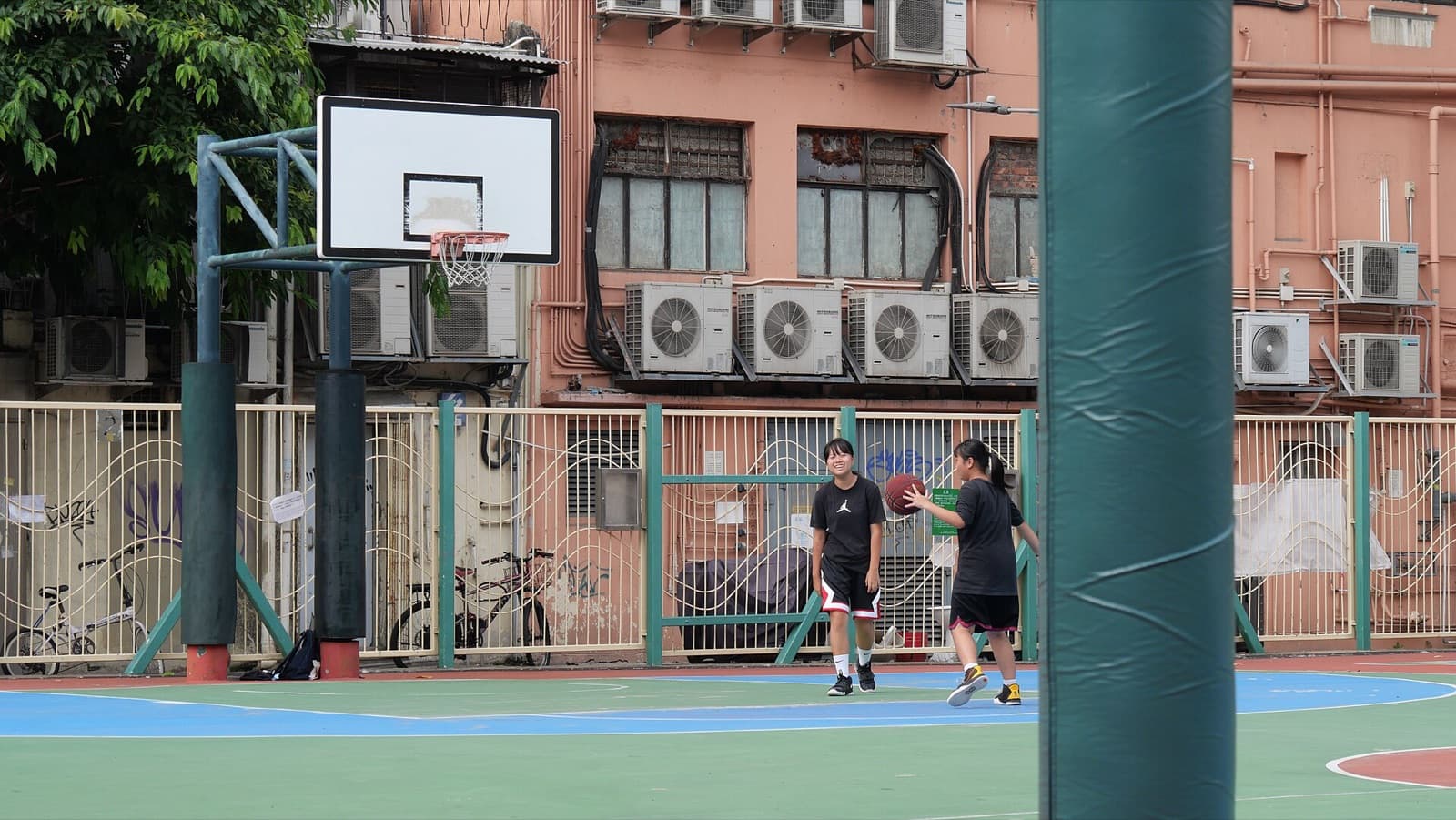
Two girls play basketball on a neighborhood court in Yuen Long, Hong Kong, on May 6, 2021 — the after-school hour that still needs lunch and a water bottle.
Photo: Peachyeung316 / CC BY-SA 4.0
She comes home from school, drops the backpack, and has ninety minutes before practice. Someone asks what she wants to eat. If the answer is "I'm fine" — or a rice bowl with almost no protein, or a skipped snack because dinner felt heavy last night — that is where a young Asian athlete's fueling usually goes sideways, not in some exotic biology chapter.
The basics still match every other training adolescent. She needs enough total food for growth and practice, carbohydrates matched to the day's work, protein spread through the day, and water that actually gets drunk. Sports dietetics guidance commonly lands protein near 1.4 to 2.0 grams per kilogram of body weight when energy intake is adequate, spaced across meals and snacks instead of dumped into one dinner. Carbohydrate needs scale with training load — roughly 3 to 5 g/kg on lighter skill days, and higher when practice runs long or hard.
Underfueling relative to training is the real injury risk. Relative Energy Deficiency in Sport (RED-S) can stall puberty, disrupt periods, thin bones, and stack soft-tissue problems. Those outcomes track workload and growth, not whether her grandparents cook rice, or whether she is Filipino American, Korean Canadian, or Singaporean. What does change is how often families get steered off a good kitchen plan — by lactose myths, thin-body talk at the table, indoor-sport vitamin D gaps, and the idea that Asian meals are somehow wrong for sport.
Population patterns do show up in digestion and a few micronutrients. Treat them as averages, not destiny for every child. Lactase non-persistence — the usual reason milk upsets an adult stomach — is common across East Asian ancestry groups, often cited near 90 percent in places like China, Japan, Korea, and Vietnam, and much lower in many Northern European populations. Dairy can still stay on the menu: lactose-free milk, yogurt, hard cheese, smaller servings with meals, or fortified soy and calcium-set tofu. Forcing a glass that makes her skip breakfast helps no one. Calcium still matters in the bone-building years — about 1,300 mg a day for U.S. adolescents — and it can come from more than milk.
Vitamin D is the other quiet gap. Indoor sports, winter months, heavy sunscreen, and limited outdoor time all cut how much the body makes from sunlight. Studies of Asian athletes in equatorial Singapore have found high rates of suboptimal vitamin D, especially in indoor sports, and clinicians already watch adolescent female athletes more broadly. Fatty fish and fortified milk or alternatives help; status still belongs in a blood-test conversation with a pediatrician, not a cart of mystery pills from the sports aisle.
Iron deserves the same seriousness once she menstruates. Reviews put iron deficiency in a large share of female adolescent athletes — often above a third, higher in some cohorts — from menstrual losses, growth, and training-related turnover. Heme iron from meat and fish absorbs well; plant iron from tofu, lentils, and greens pairs better with vitamin C. If she is tired for weeks, pale, or fading in the last third of practice, ask for ferritin and a clinician's plan. Guessing with high-dose iron on your own is how families create a second problem.
Protein is where rice-forward kitchens get unfairly blamed. A typical Asian meal already brings the carbohydrate engine training needs — rice, noodles, bread, or potatoes. The miss is usually portion and timing: a small piece of fish or tofu at dinner, almost none at breakfast, and a protein bar after practice that still leaves the day short. Aim for a palm-sized protein at each main meal — eggs, chicken, fish, lean pork, tempeh, tofu, dal, Greek yogurt if she tolerates it, or lactose-free milk — and keep the rice. Cutting carbs to "eat clean" while she still has late practice is one of the fastest ways to underfuel a growing athlete.
Culture sits at the table whether anyone names it. Studies of Asian and Asian diaspora young women often describe pressure to stay thin at home, plus Western fitness talk that can push skinny and shredded at the same time. In sport that can sound like praise for looking "small," worry when strength training adds muscle, or a house full of festival food while weekday breakfast disappears. A budding athlete needs adults who say out loud that fueling practice is not greed — and that missing periods, or living on rice and anxiety, is a health problem.
Do this in plain kitchen terms. Keep breakfast real on early-practice days. Put protein on the plate at lunch and dinner, not only in a shake. Treat rice and noodles as training fuel. Plan a carb-plus-protein snack within about an hour after hard sessions. Make water the default; save sports drinks for long, hot, or multi-hour days. If dairy hurts, swap sources — do not delete calcium. Watch indoor seasons for vitamin D, and ask about iron when fatigue sticks. Call a sports dietitian (CSSD) or pediatrician when growth stalls, injuries stack, or a coach's weight talk starts sounding like a meal plan.
Skip the traps that look like discipline. European dairy habits are not the only healthy template. A classmate "cutting" carbs is not a training plan for a school-aged girl. Adult protein tubs are a poor substitute for three meals. BMI charts — including adult Asian cutoffs built for metabolic risk — are a weak report card for a girl who is getting stronger and faster; energy, performance, and regular periods matter more than a single ratio. And strong grades do not cancel RED-S warning signs.
Balance you can cook is the whole job. Apply the same fueling rules to the meals her family already knows — room for lactose workarounds, vitamin D and iron when the season demands it, protein at every meal, and a household that treats training hunger as part of the work.