
NCAA eligibility runs five years. New F-1 rules stop at four.
A DHS rule effective September 15 caps most student admissions at four years — just as Division I adopts a five-year athletic window. For international roster sports, those clocks no longer match.
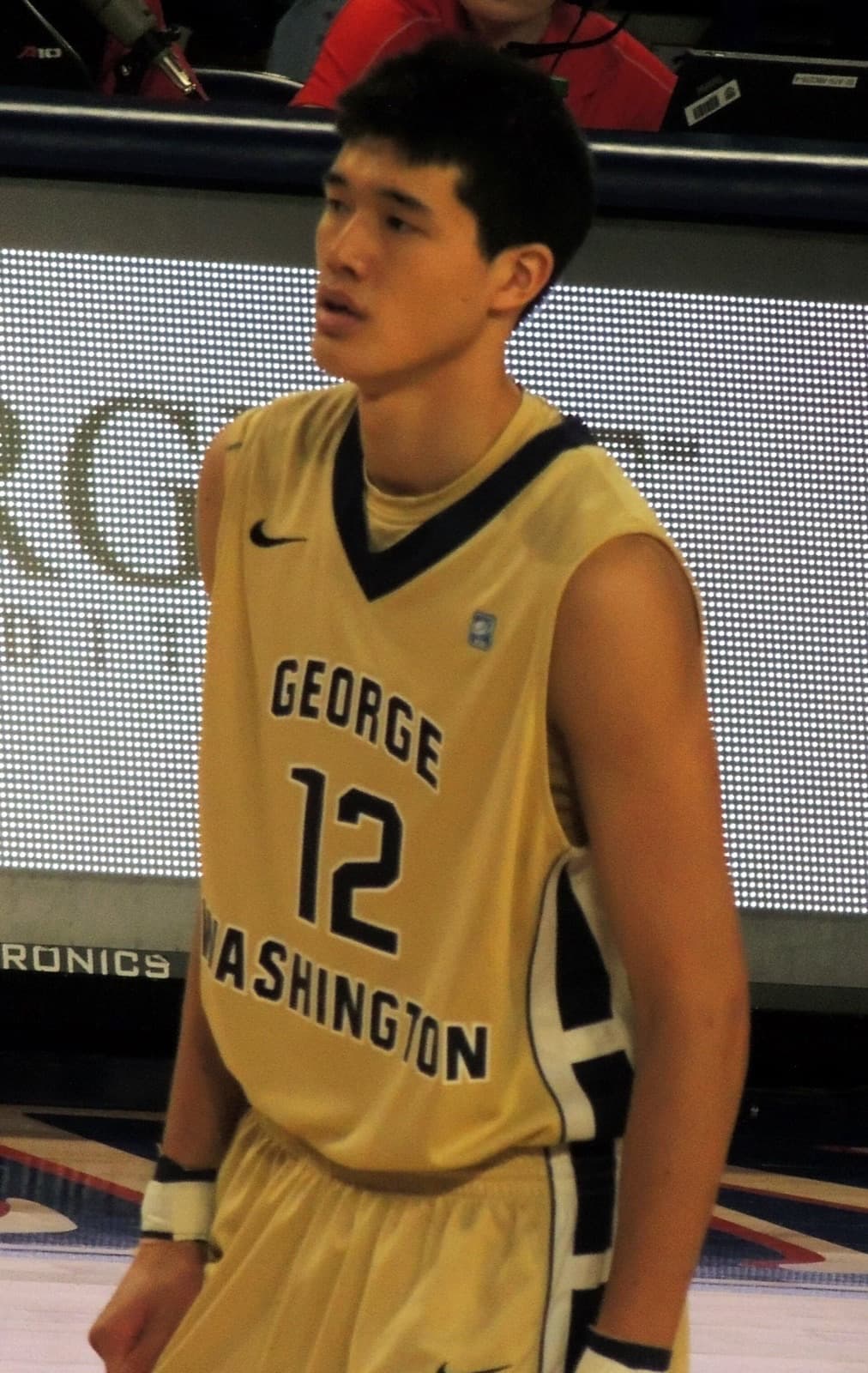
Yuta Watanabe in a George Washington uniform in February 2015 — the Japanese wing who became the first Japan-born men’s basketball player on an NCAA Division I scholarship.
Photo: Rikster2 / CC BY-SA 4.0
On July 17, the Department of Homeland Security published a final rule that ends “duration of status” for most F-1 students and J-1 exchange visitors. Starting September 15, 2026, those students are generally admitted for the length of the program on their Form I-20 or DS-2019 — capped at four years — plus a shorter grace period. For decades, international student-athletes could stay as long as they kept a valid SEVIS record and full-time enrollment. That open-ended clock is closing.
The operational mismatch
Nearly 25,000 international student-athletes compete across NCAA sports, almost all on F-1 visas. Under the new rule, needing a fifth year, a graduate transfer, or time past the I-20 end date generally means a timely Extension of Stay with U.S. Citizenship and Immigration Services — fees, biometrics, discretionary review — not just a Designated School Official updating SEVIS.
Athletic lawyers are already telling compliance offices to audit every F-1 and J-1 roster: projected graduation, remaining eligibility, and admit-until dates, then flag anyone whose athletic plan outruns the immigration plan.
Olympic sports feel it first
The densest exposure sits in Olympic sports that already run on global recruiting. Those are the same sports where Asia’s junior pipelines — Japan, China, Korea, Thailand, India — keep feeding U.S. campuses with golf and tennis commits alongside European and Latin American talent. A Japan-to-George Washington path like Yuta Watanabe’s still works; the paperwork after year four just got heavier.
| Sport | Approx. international share |
|---|---|
| Men’s tennis | 60%–64% |
| Women’s tennis | Similar range to men’s |
| Men’s golf | Near 25% |
| Soccer, track, swimming, volleyball | Large international shares |
Transfers and the portal
- Undergraduates generally cannot change majors or schools in their first academic year without a SEVP exception for extenuating circumstances.
- Graduate students face broader bars on changing objectives and transfers.
- The F-1 post-completion grace period shrinks from 60 days to 30.
In a portal market that already prices midyear movement, an international athlete’s “free” transfer can collide with an immigration calendar that no longer moves when the coach does.
NIL and revenue sharing — still a separate fog
The new DHS rule does not clarify when F-1 athletes can take third-party NIL or school payments without unauthorized-work risk — a question that has hung over international locker rooms since 2021. Athletic departments are being told to keep evaluating those deals case by case with immigration counsel while they rebuild visa tracking next to eligibility monitoring.