
Japan targets a record medal haul at its home Asian Games
Chef de mission Kosei Inoue named Hiroshima’s 218-medal record as the target. That is thirty more than Japan won in Hangzhou, and only some sports can supply the difference.
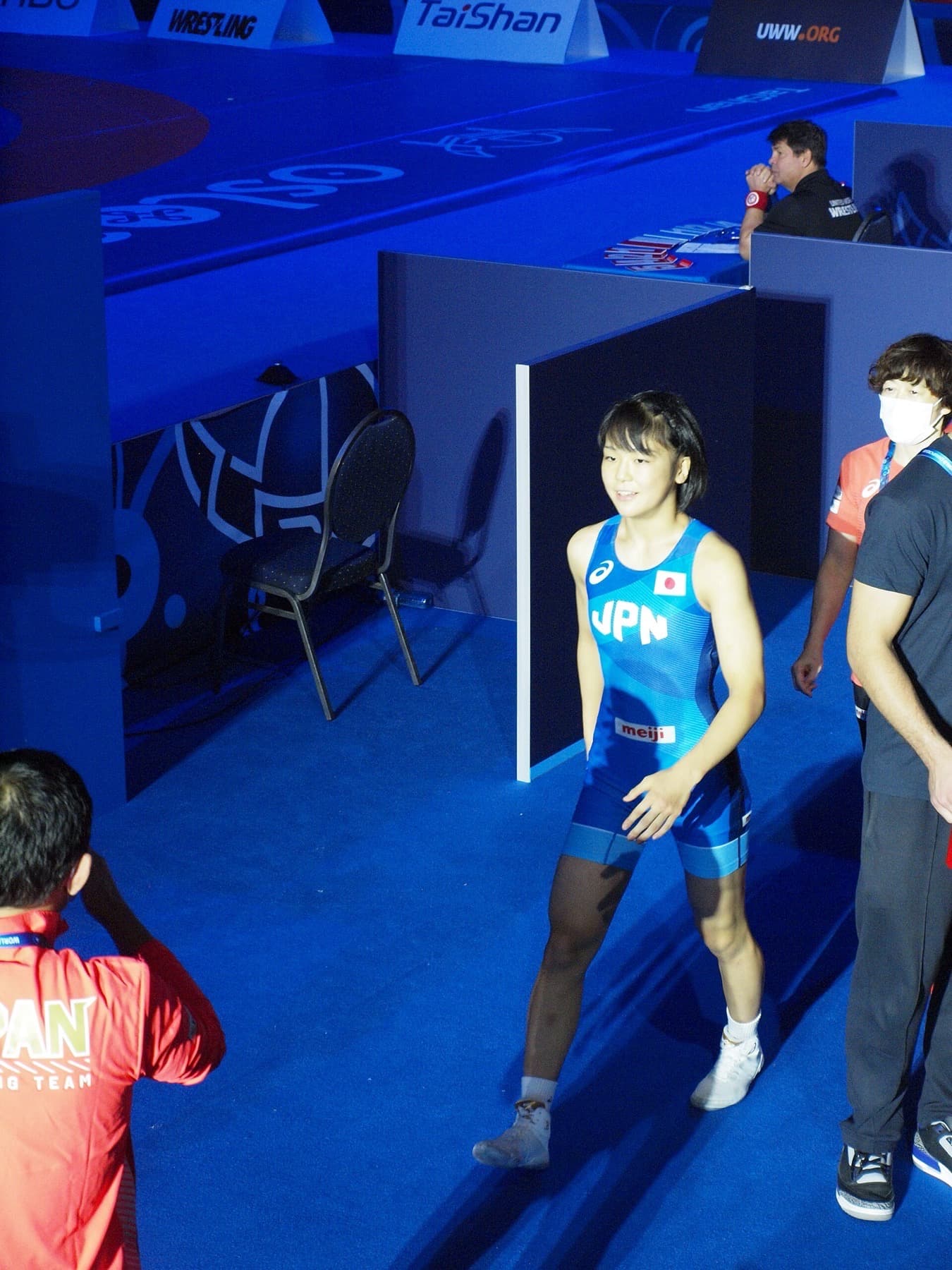
Akari Fujinami, Paris Olympic wrestling champion at 53 kg. She carries Japan’s flag into the Aichi–Nagoya opening ceremony on Sept. 19 alongside BMX freestyle rider Rim Nakamura.
Photo: Jørgen Løken / CC BY-SA 4.0
A month before the Opening Ceremony at Paloma Mizuho Stadium, Team Japan held its inauguration in Tokyo and put a number on the fortnight. Chef de mission Kosei Inoue — Olympic judo champion, Asian Games gold medallist in Bangkok in 1998 — pointed at Hiroshima 1994: 218 medals, 64 of them gold, Japan’s biggest Asian Games haul and the last time the country hosted. “It is a very high hurdle,” he said. “We want to do everything we can to at least match that level and, if we can, surpass it.”
The delegation behind that target is the largest Japan has ever sent to these Games: about 932 athletes inside a party of roughly 1,430, competing from Sept. 19 to Oct. 4 across Aichi Prefecture, Nagoya, and a handful of venues in neighboring prefectures. Hangzhou 2023 returned 188 medals and 52 golds for second place. China, hosting, took 201 golds and 383 medals overall. Asia’s depth has moved since 1994, and matching Hiroshima means finding medals Hangzhou did not.
Japan has recent evidence about what hosting does. At Tokyo 2020 it won 27 golds, fifteen more than in Rio, in stadiums with nobody in them. Olympic studies generally find hosts pick up a few percentage points of medal share. Continental Games swing harder, because the host also helps shape the programme and enters more athletes: China added close to 70 golds between Jakarta 2018 and Hangzhou, and Indonesia’s best-ever finish in 2018 leaned on the debut of pencak silat. Crowds are only part of it. Automatic entries, no long flight, and months of access to the actual competition venues do at least as much.
Start with the sports where Japan already wins without any of that. In Hangzhou, cycling delivered 11 golds — more than a fifth of the national total — and swimming produced 30 medals across the colours while China took the headlines. Wrestling and judo brought five golds each. Soft tennis and softball sit in a narrower Asian circle where Japan has been deep for decades; Japan has won six of the nine Asian Games softball titles and defends this one. None of that depends on a home crowd. It is the floor, and it is high.
The ceiling is where the buildings and the programme start to matter. Judo runs at Aichi International Arena, which puts Inoue’s old sport in a room that will sound Japanese from the first morning session. Wrestling rewards aggression, and Akari Fujinami — the Paris champion at 53 kg, and one of the two athletes carrying Japan’s flag into the opening ceremony — will be scoring points in front of a crowd that knows exactly what it is watching. Gymnastics is judged, and Paris all-around champion Shinnosuke Oka competes as a home name on apparatus he has trained on all year.
Timed sports are colder about all this. Haruka Kitaguchi’s javelin still has to land where it lands. A swimming final at the Tokyo Aquatics Centre still has a clock on the wall, however familiar the blocks feel to Japanese swimmers who raced there at the Olympics. That split — rooms where atmosphere can tilt a decision, versus events where it cannot — is most of what separates a good home Games from a record one.
The programme itself has quirks worth knowing. Baseball and softball play on Aichi diamonds that Japanese clubs use year-round. Soft tennis remains a regional specialty. Skateboarding, sport climbing, surfing and BMX freestyle — the event of Rim Nakamura, who carries the flag beside Fujinami — give Japan depth that did not exist in Hiroshima’s era. And cricket returns as a T20 event at Kōrogi Sports Park in Nisshin, where a host berth gets Japan into a draw with India, Pakistan and Afghanistan and almost certainly no further.
Inoue’s other warning was about the field rather than the target. Central Asian programmes have thickened, China remains the default gold factory, and Hangzhou showed how far second place can sit from first. China will win its 200 golds again; that is not the comparison Japan is making. Reaching 218 means the sports Japan owns behaving like home sports, the combat and apparatus halls paying for the travel its rivals still have to make, and a lot of silver and bronze that never makes a highlight reel.
Fujinami said at the inauguration that she wants every teammate to produce a best performance and to lift the others while doing it. The arithmetic underneath is plainer: Inoue needs about thirty more medals than Hangzhou produced. Most of them will come from mats, velodromes and pools where Japan was already winning. The crowd’s real job is to make the close ones fall the right way.