
Kuriyama’s Hall of Fame plaque is about permission, not percentage
Japan’s Baseball Hall of Fame took Hideki Kuriyama by one vote above 75 percent — for letting Ohtani stay two-way, then finishing the WBC title that made the bet look inevitable.
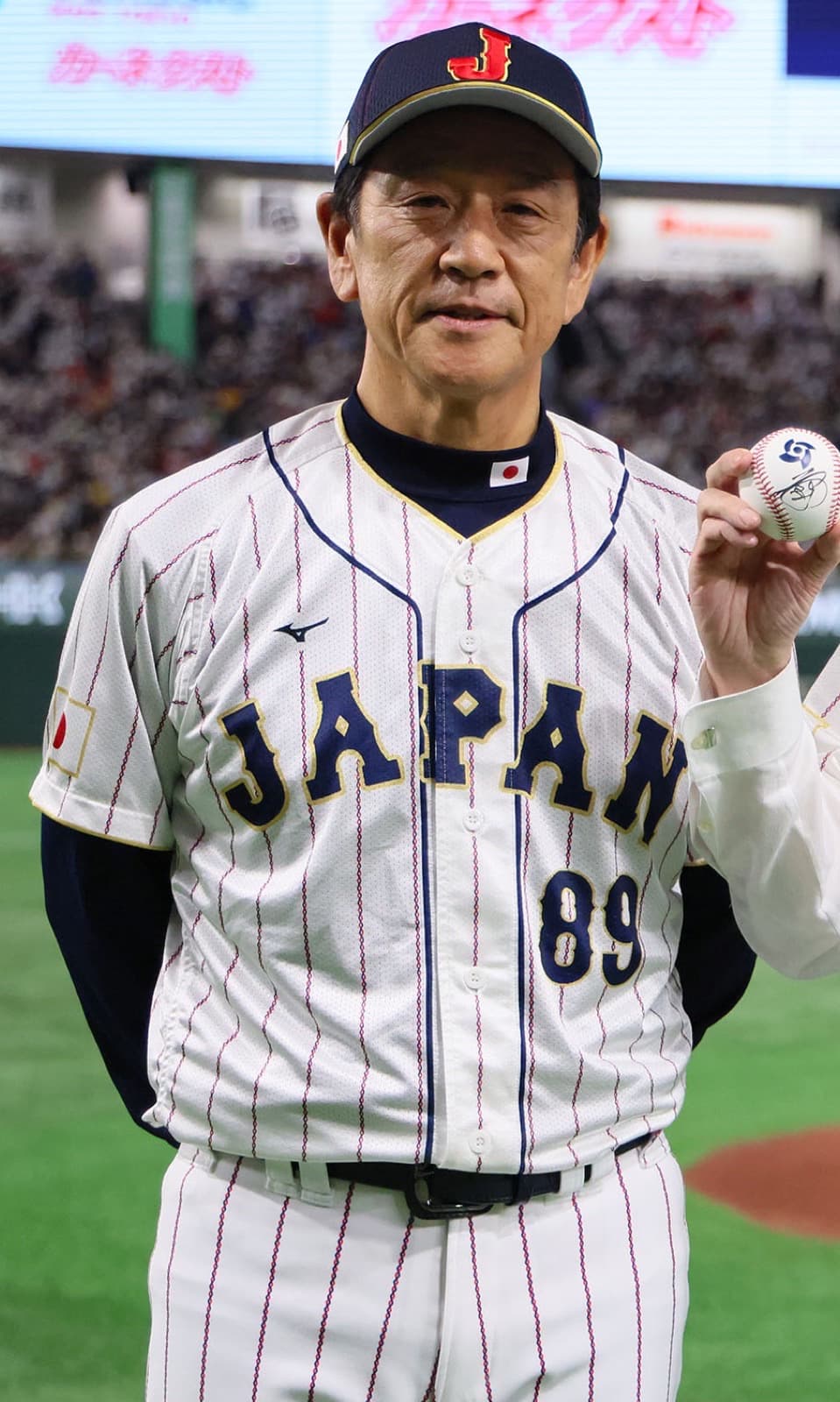
Hideki Kuriyama as Samurai Japan manager at the World Baseball Classic ceremonial first pitch in Tokyo on March 10, 2023 — months before Japan’s title run, years after he protected Ohtani’s two-way path in Hokkaido.
Photo: Cabinet Public Affairs Office, Cabinet Secretariat (Japan) / CC BY 4.0
On Tuesday night at Tokyo Dome, before the first NPB All-Star Game of 2026, Hideki Kuriyama will receive the bronze relief that makes January’s election visible. Japan’s Baseball Hall of Fame Museum already voted him in on January 15 as the sole Class of 2026 inductee — Expert Division, 114 of 150 valid ballots, 76 percent, one vote over the 113 needed to clear 75 percent. Players and Special Awards produced nobody. The plaque arrives three days from now; the argument it enshrines has been running since a high-school pitcher in Iwate said he was going straight to America.
Kuriyama’s Cooperstown-adjacent story does not travel on a managerial winning percentage. In ten seasons with the Hokkaido Nippon-Ham Fighters (2012–2021) he went 684–672 with 54 ties — a .504 mark that would not open a Hall door by itself. What the Expert Division rewarded sits beside the ledger: a 2012 Pacific League pennant in his first year as a first-time manager, a Japan Series title in 2016 over Hiroshima (and the Matsutaro Shoriki Award that followed), and the institutional decision that still remakes baseball’s global product — keeping Shohei Ohtani as a two-way player when specialization was the safer Japanese instinct.
The origin story is almost too neat to trust, which is why the details matter. Ohtani left Hanamaki Higashi intending to go undrafted into MLB; eleven NPB clubs stayed away. Nippon-Ham drafted him anyway. Kuriyama, who had interviewed the teenager as a broadcaster before he ever managed him, helped sell a stay-in-Japan case that included permission to pitch and hit. The Fighters built a workload frame around that bet. By 2016 Ohtani was a 10-win pitcher with 22 home runs and Best Nine honors as both a pitcher and a designated hitter — the first time that double had been awarded — while Kuriyama’s club finished the Series. The Hall vote is not a claim that Kuriyama invented Ohtani. It is a claim that Japanese pro baseball’s highest honor now treats the refusal to force a choice as a contribution worthy of bronze.
The 2023 World Baseball Classic closed the public case. Kuriyama took Samurai Japan undefeated through Tokyo and Miami, used a deep pitching staff that included Ohtani, Yu Darvish, Yoshinobu Yamamoto, and Roki Sasaki, and finished the United States 3–2 with Ohtani on the mound striking out Mike Trout for the last out. Tournament MVP went to Ohtani; the managerial afterimage went to a skipper who had already lived the two-way experiment in Hokkaido and then staged it on the biggest national stage Japan baseball has. His national-team contract ended May 31, 2023. Hirokazu Ibata succeeded him; after this spring’s WBC quarterfinal exit, Tadahito Iguchi now holds the dugout through Los Angeles 2028. Kuriyama’s plaque sits upstream of that succession — the WBC title that still defines the job’s standard.
Japan’s Hall is not Cooperstown. Expert Division voters are Hall members, committee officers, and long-tenured baseball writers; candidates can be former managers and coaches six months removed from the dugout, or players twenty-one years past their last game. Kuriyama entered as a tryout signee with Yakult who won a 1989 Golden Glove, left early with injury and Ménière’s disease, spent two decades in media, then managed without a prior dugout apprenticeship. At the January notification ceremony he said he still wondered whether someone like him belonged — and treated the honor as a message to keep working for future players. Ohtani’s written congratulations called the Fighters years and the 2023 Classic “precious treasure.”
Read Tuesday’s ceremony that way. The relief will hang in the museum next to Tokyo Dome from Wednesday. The special exhibition runs through October 4. The useful Hall of Fame question is not whether Kuriyama’s career looked like Sadaharu Oh’s or Tatsunori Hara’s. It is whether Japanese baseball’s memory now includes the manager who expanded what a roster was allowed to try — and then won the Classic that made the expansion look like destiny. One vote above the line said yes.