
Money & Media
MLB is selling baseball to India through cricket’s biggest stage
Suryakumar Yadav as India ambassador, a renewed JioStar rights deal, and Reliance’s RISE Worldwide — baseball’s India strategy now runs through cricket’s distribution machine.
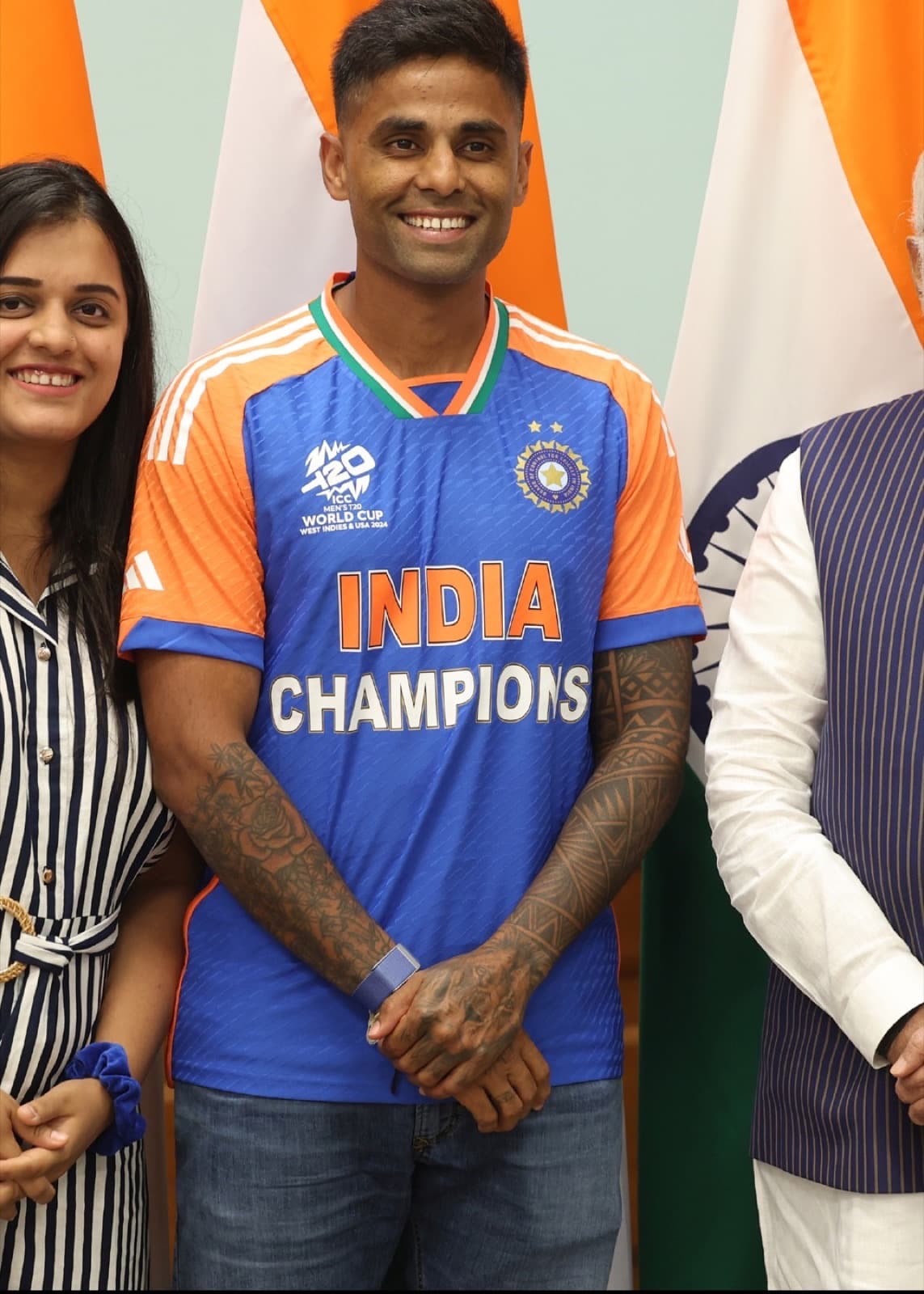
Suryakumar Yadav in India’s Champions jersey at the Prime Minister’s Office in New Delhi after the 2024 Men’s T20 World Cup — the national profile MLB is hiring for India.
Photo: Prime Minister's Office (India) / GODL-India
Major League Baseball is not trying to invent a baseball culture in India from a cold start. On July 8 it hired the culture that already owns the country’s attention. Suryakumar Yadav — SKY to Indian fans, captain of India’s 2026 Men’s T20 World Cup winners, and one of the IPL’s most watchable batsmen — became MLB’s official ambassador for India. The same announcement renewed the league’s broadcast partnership with JioStar across linear and digital platforms.
The commercial logic is blunt. India is among the world’s largest sports audiences, and almost none of that attention begins with the pitcher’s mound. Cricket saturates television, streaming, fantasy, and sponsorship. MLB’s bet is that a cricket star can translate bat-and-ball spectacle faster than another clinic series or another American player tour. Yadav’s brief includes fan events in India and the United States, original content aimed at Indian viewers, and a visible presence at All-Star Week in Philadelphia from July 10–14 — baseball’s midseason showcase as a soft onboarding product.
Jeremiah Yolkut, MLB’s senior vice president of global operations and events, called India one of the most vibrant sports cultures in the world and framed Yadav as a connector to millions of fans. Yadav’s own line stayed in the language of discovery: learning the game while helping fans find baseball’s energy. Financial terms of the ambassadorship were not disclosed. They rarely are. The signal is the pairing itself — athlete reach plus distribution — not a single appearance fee.
Distribution is the other half of the deal. JioStar remains MLB’s official India broadcast partner for the All-Star Game, select regular-season games, the postseason, and the World Series. Terms and length again went undisclosed. What matters for market-building is continuity: live inventory on the platforms that already hold cricket rights, fantasy audiences, and sports advertising budgets. Without that pipe, an ambassador is a press release. With it, highlight packages and late-night World Series windows can sit next to the content Indian fans already open every evening.
The announcement also sits on MLB’s growth partnership with RISE Worldwide, the Reliance Industries sports arm. Reliance’s media and sports stack — of which JioStar is the broadcast face — is the infrastructure MLB cannot replicate alone. Together, RISE and JioStar give the league a path through media distribution, original programming, fan experiences, and year-round programming rather than a one-off exhibition. That is a different India strategy from MLB’s Japan model, which leans on NPB stars, posting economics, and an existing baseball-literate public.
None of this makes baseball India’s next domestic league overnight. Participation, youth facilities, and a credible local pathway still decide whether curiosity becomes a talent pipeline. What July’s package does change is the go-to-market order: lead with cricket’s biggest contemporary star, keep games on the country’s dominant sports screens, and let Reliance’s commercial machine carry the brand between October series. For a league that has spent decades treating Asia primarily as a Japan story, that is a meaningful rewrite of the map.