
Neeru Dhanda ends a 48-year wait for Indian trap gold
Ten days after a hospital bed, the Army shooter from Jind hit 28 of 30 in the rain — the first Indian woman onto an Asian Games trap podium, and India’s first individual trap gold since 1978.
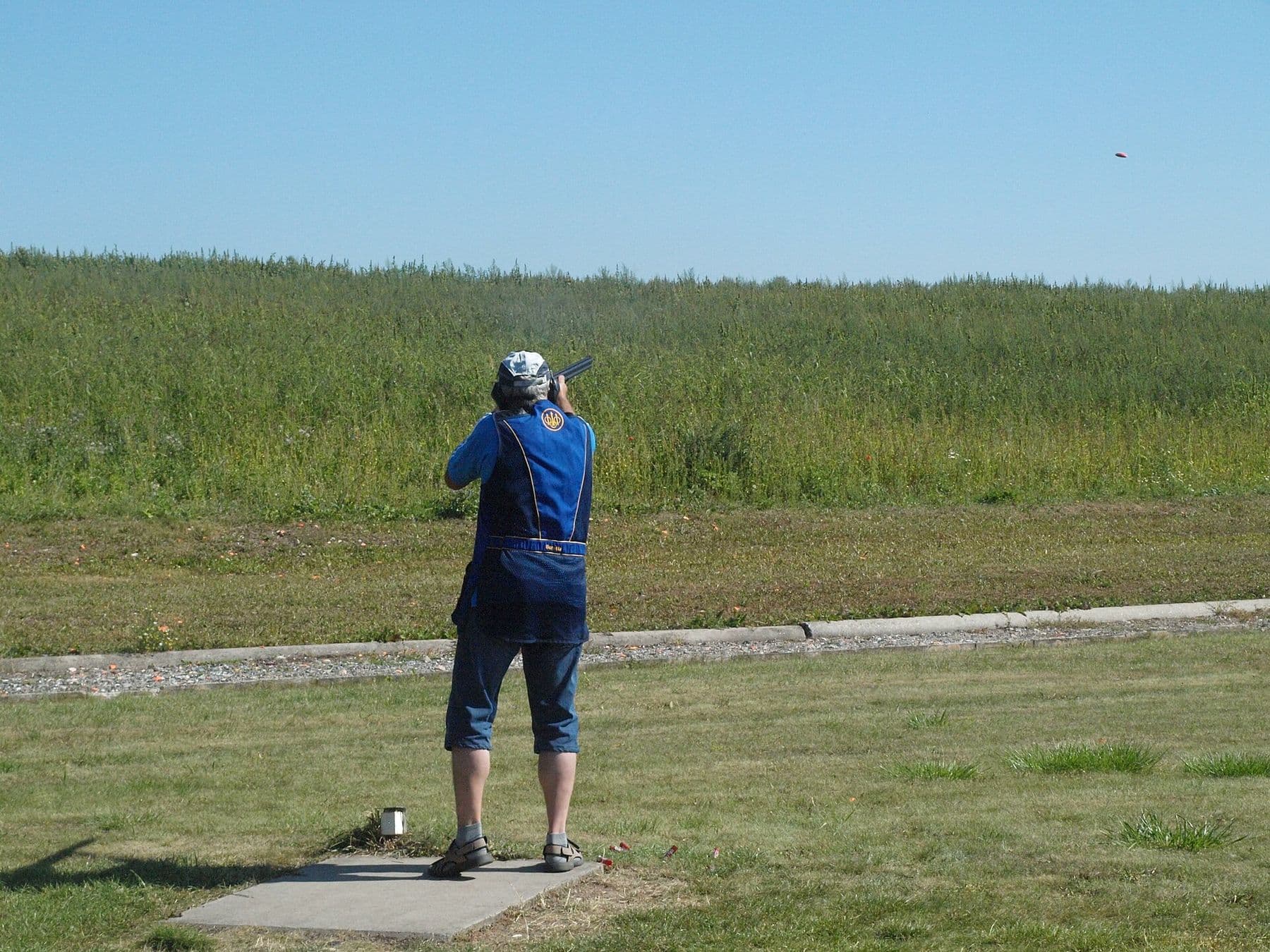
A trap shooter tracks a clay target on an outdoor range — the shotgun event Neeru Dhanda won in the rain at Aichi–Nagoya.
Photo: Martin Kotačka / CC BY-SA 3.0
Rain kept finding Neeru Dhanda’s hands at the Aichi Prefectural General Shooting Gallery on Tuesday. The drops were loud enough to pull the mind off the next clay. She kept telling herself the same thing she had practiced in wet Bhopal sessions: look up, stay in the process. By the end of the women’s trap final she had hit 28 of 30 targets — an Asian record, two clear of China’s Sun Yunong — and given India an individual trap gold it had not held since 1978.
No Indian woman had ever stepped onto an Asian Games podium in women’s trap, an event first contested in 1990. China had taken the gold in every edition but one. No Indian shooter of any gender had won individual trap gold at the Games since Raja Randhir Singh in Bangkok in 1978. Dhanda, 26, a Naib Subedar from Sangatpura in Haryana’s Jind district, closed both gaps in one rainy afternoon in rural Toyota. Kuwait’s Hajar Abdulmalik took bronze on 21.
Ten days earlier she had been in a hospital bed. A severe infection during the national camp in New Delhi left her unable to eat for five days, and India’s trap coach Peter Wilson said she had not trained for three and a half weeks. He called it touch and go whether she would travel at all. She arrived in Japan late, shot for two days, and still topped a three-day qualification on 118 of 125 — a Games record, shared with Qatar’s Ray Bassil before Dhanda won the shoot-off for first. Earlier Tuesday she had already helped India to women’s team silver with Aashima Ahlawat and Manisha Keer.
The final looked cleaner than it felt. She opened with a perfect five, dropped one, then stacked clean series until the lead was two over Sun. She finished with another five. “This was not easy,” she said afterward. She wanted juniors still training in trap to see the score and think they could do it too. She dedicated the medal to Indian soldiers and to Randhir Singh, who died earlier this year. “I wish he was alive to see this medal,” she said.
The path to that podium started with someone else’s silver. In 2018 her cousin Lakshay Sheoran took Asian Games trap silver; his parents put a gun in her hands when she still knew nothing about the sport. She shot tin cans with a family double-barrel to learn the recoil, then used a borrowed gun before the Madhya Pradesh State Shooting Academy in Bhopal offered free equipment and ammunition. Coach Mansher Singh, an Olympian, kept calling through the hospital week. “Nothing happens, even if you don’t train for four-five days,” she remembered him saying. “You are super, and you will remain a star.”
The Indian Army is how that path stayed funded. After women were opened to rank-and-file recruitment, she joined the Corps of Military Police and trains at the Army Marksmanship Unit in Mhow. Shotgun in India still carries an old association with clubs and inherited kits. Her year keeps answering that: Asian Championship gold in Shymkent in 2025, then the first Indian woman to win an ISSF World Cup trap title in Lonato in July — national-record 121 in qualification, 27 in the final.
On Wednesday she added the mixed team. Paired with Kynan Chenai — Randhir Singh’s son-in-law — she won gold with an Asian record 34, India’s first medal in an event that debuted in Jakarta and sat out Hangzhou. That made her the first Indian shotgun shooter with two titles at a single Asian Games: two golds and a silver in three days. They came from fourth in qualification and beat Qatar in the final.
A farmer’s daughter who learned the sport on tin cans got sick at the wrong time and still broke an Asian record while rain hit her hands. Women’s trap at these Games no longer has a blank Indian line on the medal sheet. The juniors she was talking about now have a concrete score to chase — and a World Championships and Los Angeles cycle that starts from something higher than hope.