
Event Guide
October Classic Guide
When the season becomes a market
Twelve-team October — bye leverage, bullpen math, NPB pipelines, and the new Wild Card media map.
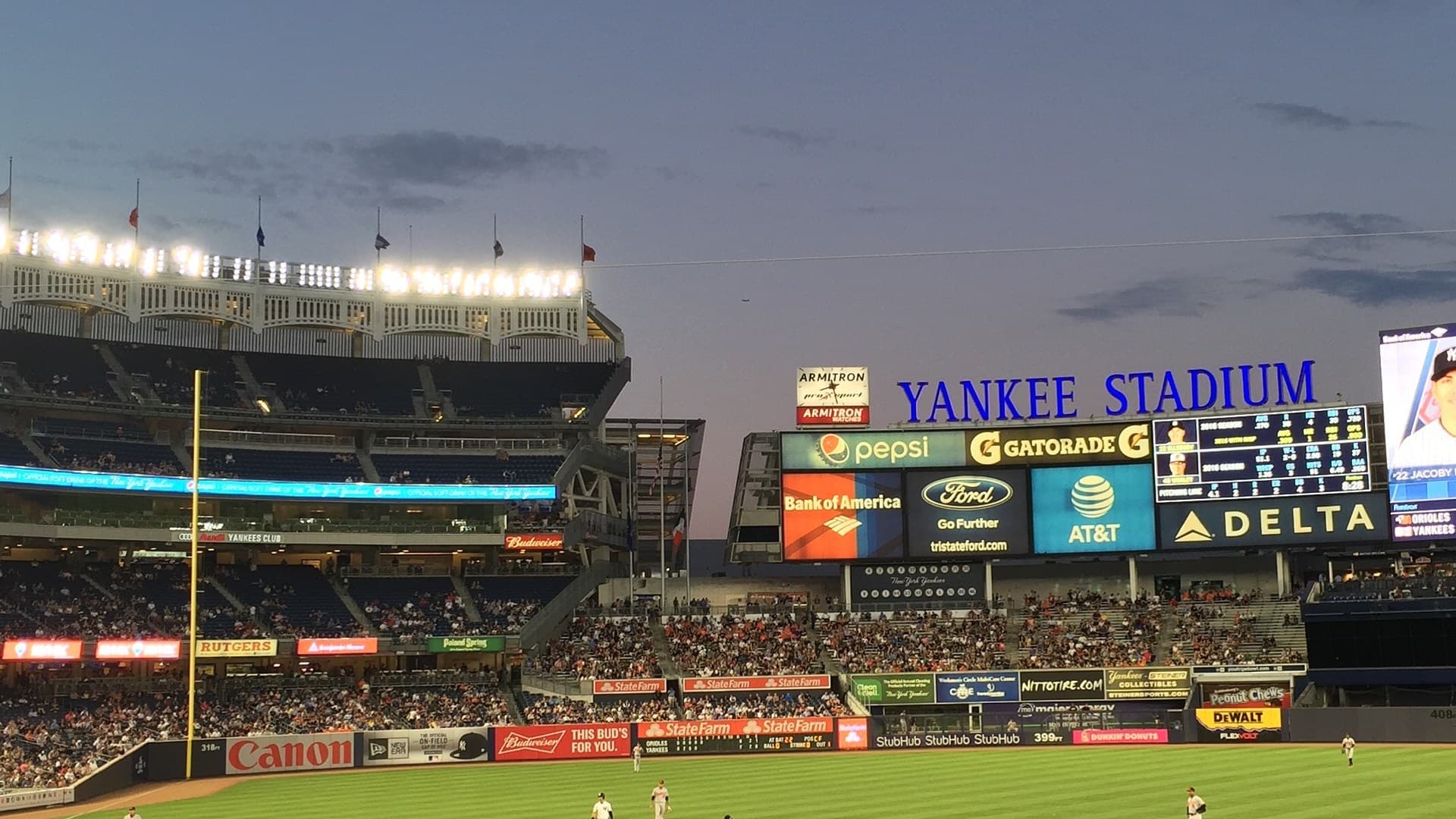
Yankee Stadium under the lights — October baseball’s biggest stages turn markets as much as matchups.
Photo: Jason Moy / CC BY-SA 4.0
Overview
This guide is built for the 2026 MLB postseason — a 12-team October that still starts with a best-of-three Wild Card round, then LDS, LCS, and a World Series window opening October 23. It is not a live odds board. It is the context layer: how bye leverage works, why bullpens decide short series, and how Japanese talent and media rights now sit inside every deep run.
Midseason snapshot (July 18): the Dodgers own the majors’ best record (62–36) and a runaway NL West; Milwaukee (60–37) and Atlanta (56–40) lead their divisions; Tampa Bay sits atop the AL East with the Yankees chasing without Aaron Judge. The White Sox lead a tight AL Central. Contender lists will move at the trade deadline — the guide’s job is to explain the structure those races feed into.
October is also a pipeline month. Dodgers repeats with Ohtani and Yamamoto already rewired how NPB stars are valued. New AL arrivals via posting — and the next winter’s candidates — make every deep run a scouting tape for clubs still building Japanese infrastructure.
Key Dates
Trade deadline
Buyers finish rotations and bullpens; sellers reset for 2027 — October depth is largely locked here.
Regular season ends
Division titles, Wild Cards, and seeding clinch in the final weekend.
Wild Card Series
Four best-of-three series; higher seed hosts all games. NBC/Peacock exclusive in 2026.
Division Series
Best-of-five LDS — Fox/FS1 on the NL side, TBS on the AL side under the current split.
League Championship Series
Best-of-seven pennants; rest and travel start to compound for clubs that played the Wild Card.
World Series Game 1
Best-of-seven on FOX; potential Game 7 window runs through October 31.
How This Tournament Works
12 teams, two byes
Six clubs per league: three division winners and three Wild Cards. The top two division winners in each league sit out the Wild Card and open in the LDS — rest that often outweighs a weaker October roster.
No reseeding
Bracket paths are fixed. The No. 1 seed meets the winner of 4-vs-5; the No. 2 seed meets the winner of 3-vs-6. Home-field advantage follows regular-season record into the World Series.
Short-series variance
Best-of-three Wild Cards and best-of-five LDS amplify bullpen nights, platoon splits, and one hot starter. Byes help — they do not erase a three-game coin flip.
Athletes & Teams to Watch
Shohei Ohtani
Baseball · Japan / Dodgers
Two-way MVP gravity on the majors’ best team — knee management and second-half pitching starts are the October variables.
Yoshinobu Yamamoto
Baseball · Japan / Dodgers
Postseason ace profile after World Series MVP work; every deep Dodgers run is also an NPB export case study.
Tampa Bay Rays
Baseball · USA
AL East leaders into the second half — pitching depth and home splits that travel into a bye chase.
Milwaukee Brewers
Baseball · USA
NL Central cushion and run prevention that play in best-of-five; the clearest Midwestern title path midseason.
Next posting class
Baseball · Japan
October tape still moves winter markets — Itoh, Sato, and peers will be watched against how Murakami, Imai, and Okamoto adjusted in Year 1.
Strategy & Rules
History & Context
The modern 12-team format (since 2022) replaced the one-game Wild Card with a best-of-three and added a third Wild Card per league. Critics said it diluted pennant races; clubs learned that a first-round bye is often the real prize — especially when travel and bullpen innings stack through November calendars that no longer exist, but October still does.
Japanese influence on October is no longer a subplot. Ichiro-to-Ohtani-to-Yamamoto is a continuous line: posting fees, language staff, and Pacific scouting budgets now show up in World Series payrolls. When Los Angeles repeats with Japanese stars, NPB clubs and MLB front offices both update their models.
Defensive positioning rules still shape postseason strategy. Extreme infield shifts are constrained; managers win with outfield positioning, catcher framing, and high-leverage relief more than with four infielders on one side of second.
Business & Media
2026 is the first postseason under MLB’s reshuffled national deals: NBC, NBCSN, and Peacock own the entire Wild Card round; Fox/FS1 keep NLDS/NLCS and the World Series; TBS keeps ALDS/ALCS. ESPN’s long Wild Card run ends — October’s first week is now an NBC tentpole.
Local RSNs and team app deals still hinge on deep October runs. A division title is a ratings event; a World Series berth is a franchise-valuation event. That’s why deadline buyers spend like the next three weeks are a capital campaign.
Posting fees (tiered percentages of guaranteed MLB contracts) turn winter signings into NPB revenue. October exposure for Japanese stars — and for clubs that integrate them well — feeds the next posting auction as much as any highlight reel from Tokyo Dome.
Related Guides
Update Log
- Full midseason package: 12-team format, July standings context, NBC Wild Card rights, NPB pipeline, Yankee Stadium hero.
- Preseason posting market preview scaffold.
The Medalist Briefing
Weekly intelligence on global sport, pathways, and the stories behind the scores. No noise. No betting picks.