
Money & Media
Seiko spent a decade in Japan with Ohtani. Now it wants the world.
From a 2016 Nippon-Ham image deal to global Seiko ambassador — and a one-of-one Star Time built around his question about how much career he has left.
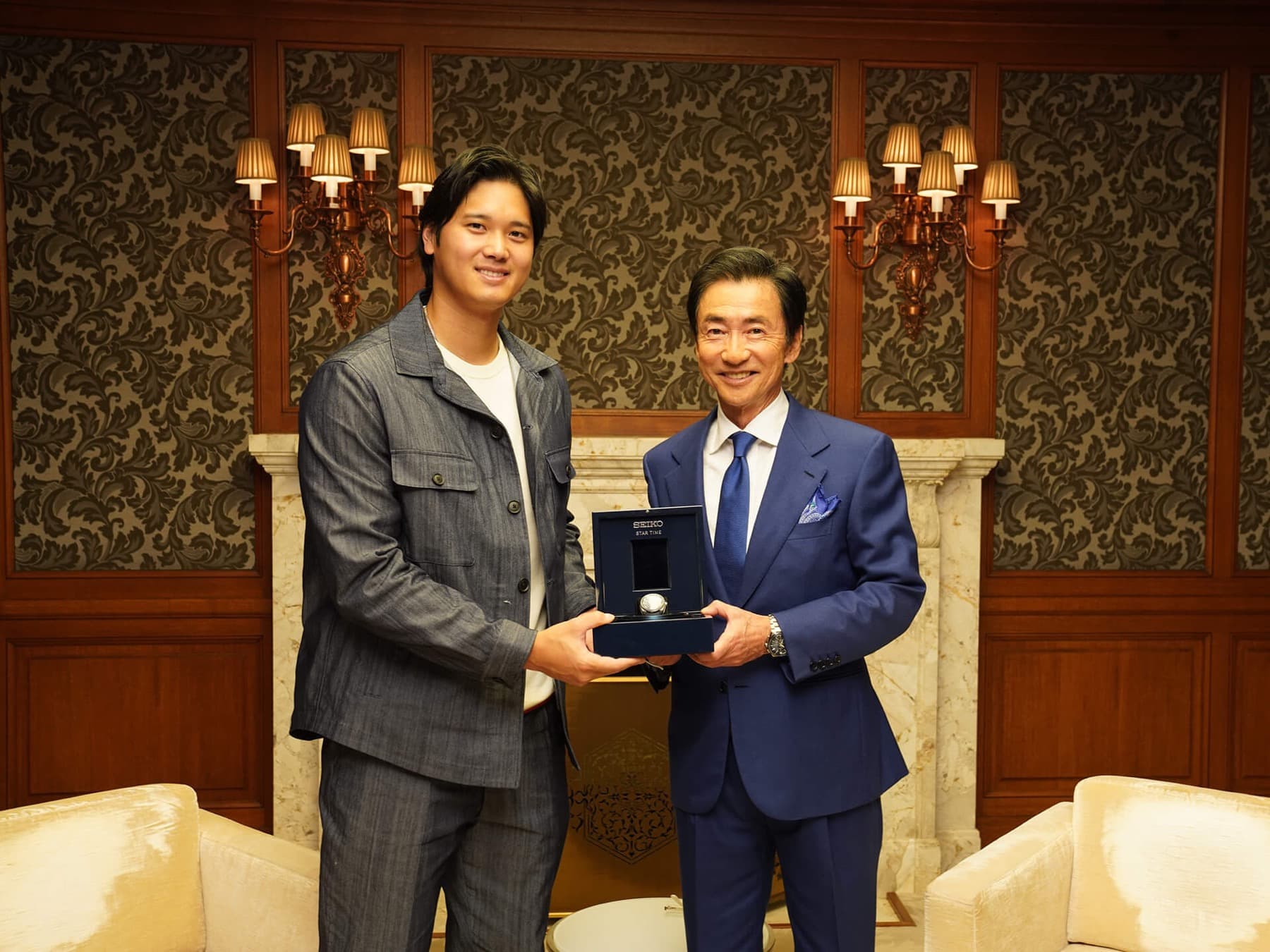
Shohei Ohtani with Seiko Watch Corporation Chairman Shinji Hattori and the one-of-a-kind Seiko Star Time — the 10th-anniversary piece Seiko built after Ohtani asked how much time he still has in baseball.
Photo: Seiko Watch Corporation
Seiko did not discover Shohei Ohtani in a Dodgers clubhouse. It signed him in spring 2016, when he still wore Nippon-Ham blue and the company needed a men’s-watch image character who looked like a Japanese challenger, not a finished American product. Ten years later, Seiko Watch Corporation has flipped the same relationship outward: in April 2026 it named Ohtani global ambassador of the Seiko brand, and in early July it handed him a one-of-a-kind mechanical watch — the Seiko Star Time — built over roughly three years around a question he posed about how much time he still has left in baseball. The Money & Media read is not another endorsement announcement. It is a Japan-origin brand using the athlete who already went global to finish the trip.
The timeline is the argument. Seiko’s April 4, 2016 release cast Ohtani as a Fighters two-way star and tied his “challenger” posture to the company’s “always one step ahead” line dating to Kintaro Hattori’s 1881 shop. Astron GPS-solar commercials followed that summer. Limited Prospex and Astron pieces later tracked his Angels and Dodgers eras — jersey colors, caseback serials, Japan-market runs measured in the low thousands. Through it all the ambassadorship stayed framed as Japan-facing. The April 9, 2026 global appointment changed the geography on purpose: Seiko said the decade of Ohtani’s rise from Japan to the world stage was exactly why it wanted him selling Seiko as a Japanese watch brand abroad. New Prospex film (“Keep Going Forward”) and Prospex / King Seiko advertising graphics launched the same day. U.S. press materials put campaign watches at about $1,700 (Prospex SPB519) and $3,300 (King Seiko SLA083).
July’s Star Time is the craft theater that makes the anniversary portable. Seiko and Ohtani spent years circling a career-clock idea — his line was essentially how much more baseball time he could accumulate — and the company answered with a five-disc mechanical display that can track cumulative hours up to one million, or a little over 114 years. Diamonds sit in the rotating discs; the silicone strap was cut to his wrist; Chairman, CEO, and CCO Shinji Hattori presented the piece personally. It is not for sale. A master sample went on public view at “SHO-ism Seiko | Shohei Ohtani – 10 Years Journey” in Harajuku (July 3–5) with an Osaka stop due August 1–2 — interview reels, decade-of-ads walls, and limited Ohtani models as brand pilgrimage rather than a simple product drop. Ohtani’s quote after seeing the watch stayed practical: he wanted something that reflected the time he had already put in and how much further he could go.
The Seiko Group layered the year carefully. Separate from the Seiko-brand global ambassadorship, Grand Seiko — the company’s higher-end line — opened its own “Grand Moments” partnership with Ohtani on April 1. That is sibling strategy, not a contradiction: one athlete, two brand altitudes, one corporate parent that wants Japanese watchmaking associated with the same face selling New Balance cleats and Japan Airlines seats. Sportico’s 2026 athlete-pay math puts Ohtani near $125 million in projected endorsements and memorabilia across roughly twenty partners, with Seiko named in the portfolio and New Balance still the biggest single deal. The Seiko fee itself is undisclosed. What is public is the structure Seiko chose — long loyalty, anniversary elevation, bespoke object, retail campaigns — instead of a one-season splash.
Read against baseball’s export economy, the decade lands cleanly. Posting fees and deferred Dodgers money move Japanese talent into MLB’s media machine. Seiko’s play runs the other direction: keep a Japanese industrial brand attached to the player who already owns global attention, then spend the tenth year teaching overseas shoppers that Seiko is not only a Japan domestic name. Limited editions still sell scarcity at home. Global ambassador status sells the story abroad. The Star Time sells something rarer in sports marketing — a physical metaphor for career duration from a company that has been arguing about accumulated time since Japan’s early wristwatches. Whether that converts into Prospex and King Seiko volume outside Japan is the commercial test. The partnership design already says what Seiko believes: Ohtani’s clock and Seiko’s clock now run on the same pitch.