
Why Asian women medal so often at the Olympics
They have a better medal record than Asian men, and they do it in the same handful of sports.
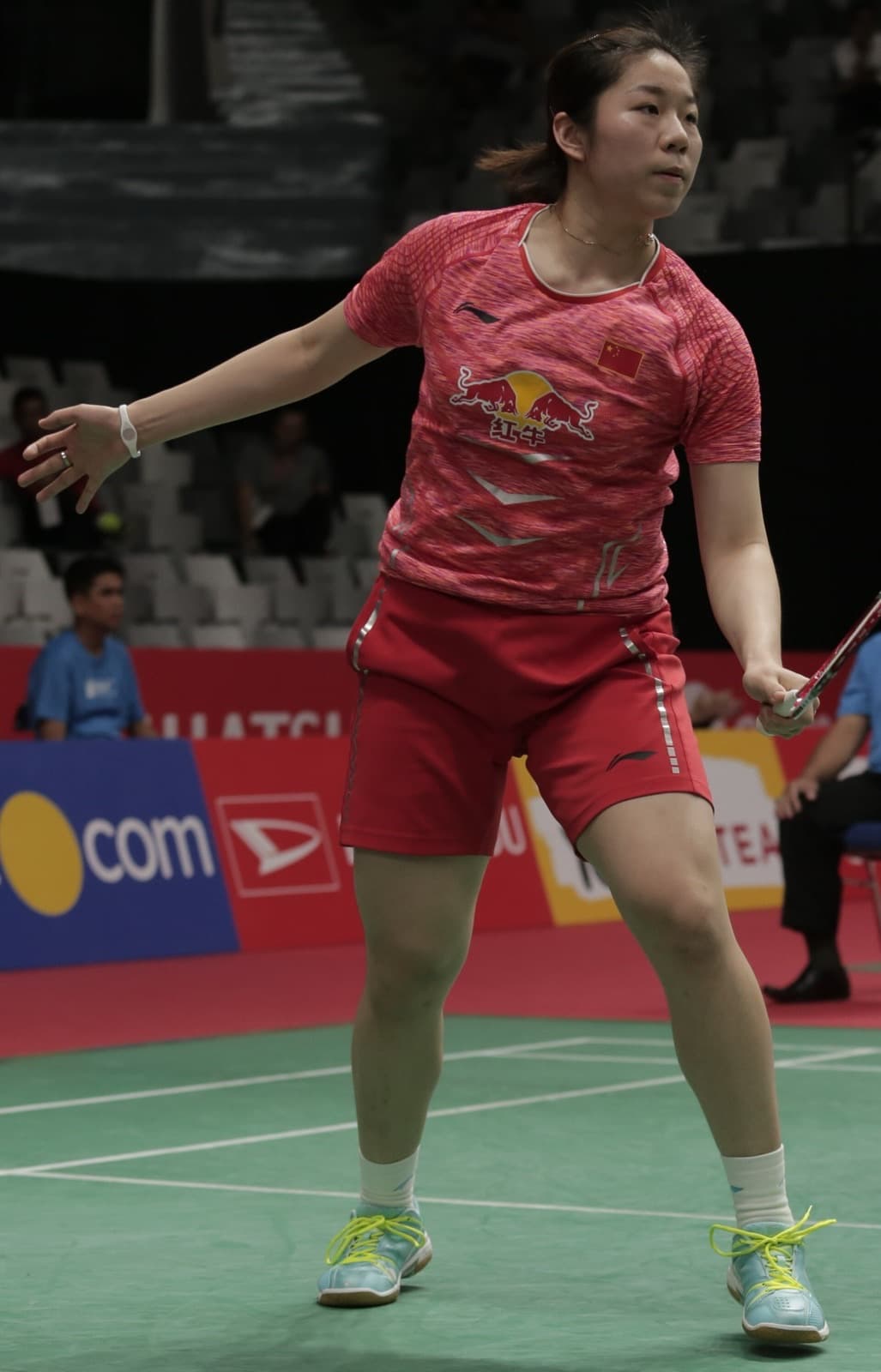
Jia Yifan of China at the 2018 Indonesia Masters. She and Chen Qingchen won women's doubles gold in Paris.
Photo: Fauziananta / CC BY 4.0
Korea's An Se-young beat China's He Bingjiao in the Paris women's singles final, 21-13, 21-16. Gregoria Mariska Tunjung of Indonesia took bronze after Spain's Carolina Marín retired from the other semifinal. Three Asian names on a badminton podium is what the sport usually looks like. An's gold was Korea's first in that event since Bang Soo-hyun in Atlanta in 1996.
Marcus Noland and Kevin Stahler, then at the Peterson Institute, studied the Summer Games from 1960 to 2012. Asian women did better on the medal stand than Asian men. China, Japan, and South Korea looked like other large economies once you accounted for population and income. The rest of Asia lagged, and the lag was the men. The women held their own.
The medals sit in a short list of sports. In that same 1960–2012 window, Asian countries took 88 percent of Olympic badminton medals and 85 percent of table tennis. Paris stayed on that list. China swept all eight diving golds and all five table tennis golds. China's Chen Qingchen and Jia Yifan won badminton women's doubles. Korea's women won a tenth straight team archery gold, every title since the event started in 1988.
China has put money into women's events for decades. The historian Dong Jinxia wrote about that choice. A 2008 TIME piece said the sports ministry funded women's sports because those fields were underfunded abroad. At London 2012, Chinese athletes took 58 percent of all medals Asian countries won in women's events. In Paris, China's women won 50 medals and the men 34.
Korea's women out-medaled Korea's men, 17 to 10. Japan's men went the other way, 23 to 18. One cycle can flip; the longer record still sits with the women.
Weight classes are how more of Asia gets a look. Hidilyn Diaz won the Philippines' first Olympic gold in the 55-kilogram class in Tokyo. In Paris, Thailand's Surodchana Khambao took bronze in the 49-kilogram behind China's Hou Zhihui, and India's Mirabai Chanu finished fourth, one kilo short. Japan's Natsumi Tsunoda won the 48-kilogram judo gold.
Noland and Stahler found Asia did a little better in boxing, judo, taekwondo, weightlifting, and wrestling taken together, especially after 1992. They suggested weight brackets make the contest fairer. National programs have been building those sports for years.
They do not own the women's 100 meters. The Paris final had no Asian runner. China's women's athletics medals there came in the walk and the throws — Yang Jiayu's 20-kilometer walk gold, Feng Bin's discus silver. Most of Asia still trails in swimming.
An's next Olympic singles draw will look a lot like Paris.