
Women’s hockey has an Asian talent pipeline—and a visibility problem
India named its Junior Asia Cup squad this week. Captain Khaidem Shileima Chanu is one more excellent Asian hockey player most sports fans have never heard of.
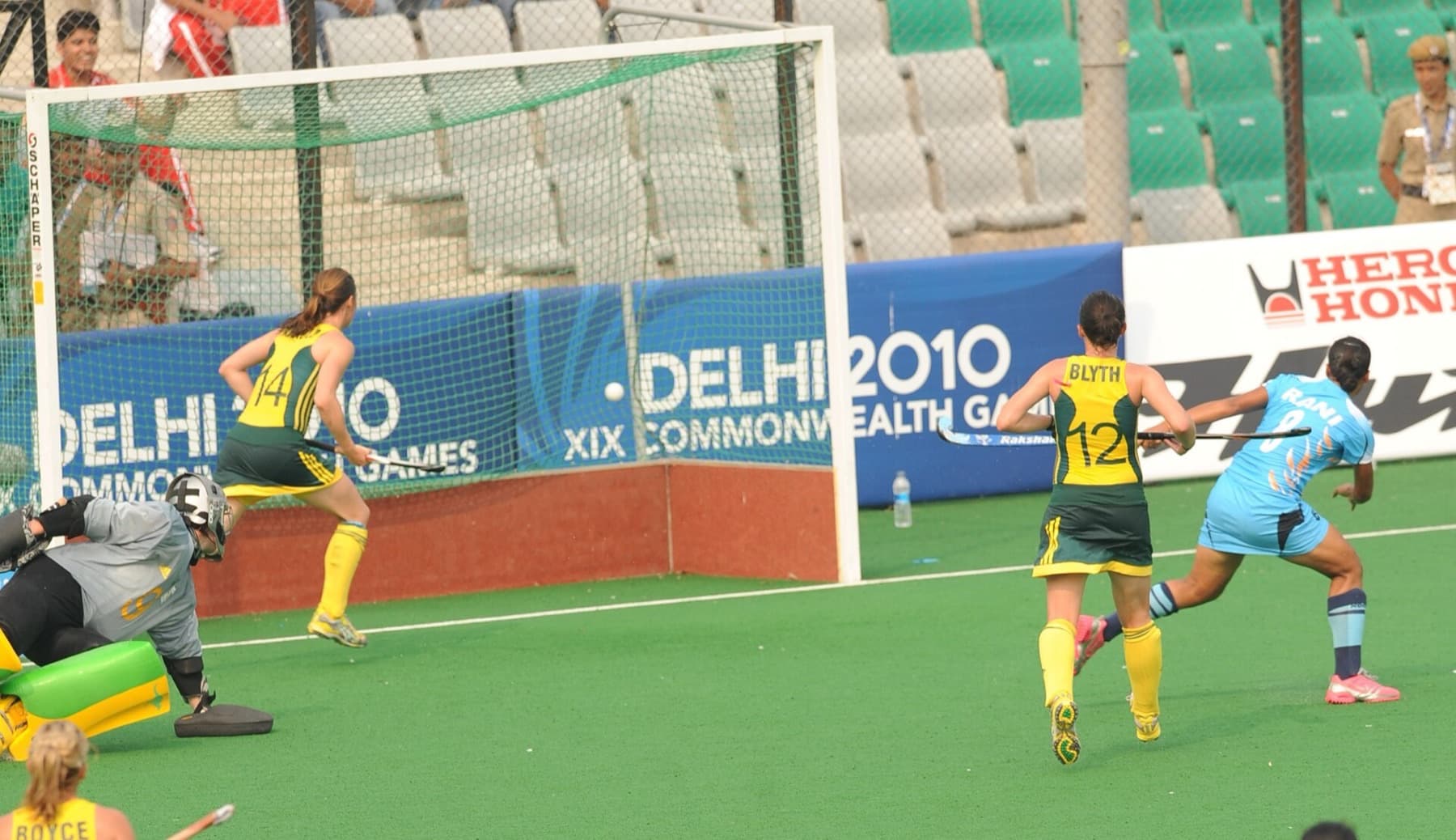
Rani Rampal scores India’s only goal against Australia at the 2010 Commonwealth Games in New Delhi. Fifteen years on, she is still one of the few Asian women’s hockey names most fans would recognize.
Photo: Ministry of Youth Affairs and Sports (India) / GODL-India
Hockey India named its junior women’s team this week for the Junior Asia Cup in Moqi, China, from August 30 to September 13. Khaidem Shileima Chanu, a midfielder from Manipur, is captain. New coach Tim White just brought the group back from a United Kingdom tour against Scotland, England, Belgium, and the United States. The pools are not even out yet.
On paper this is the fun assignment: a continental under-21 week and a first look at China and Japan at the same age. Asia has been good at women’s hockey for a while. China is fourth in the world after Olympic silver in Paris. India is ninth after winning the Nations Cup in June and earning a Pro League return. Japan, Korea, and Malaysia all sit inside the top 25. Last December at the Junior World Cup in Chile, China finished fourth and India came 10th, with several of those same Indian names back on Chanu’s sheet. Ask a casual sports fan to name three of those players, and the room usually goes quiet.
India still makes this team in camps. Junior nationals and academy championships feed a core at the Sports Authority of India centre in Bengaluru. Then came the UK tour. Moqi is next. The Women’s Hockey India League is the one that actually pays them — Chanu was retained by SG Pipers — but a franchise’s whole salary cap sits around ₹2 crore, and the top Indian names still go for mid-lakhs. In Indian sport, that is not how you get famous.
China bet on one big senior program. Alyson Annan, who had coached the Netherlands to Tokyo gold, took the job in 2022, loaded the calendar with Pro League travel, and got a shootout silver against the Dutch in Paris. That is an Olympic final. It still did not make those players famous outside hockey.
Japan has a domestic Hockey Japan League and will host the Asian Games hockey in Kakamigahara this fall — the same city where China just won the U18 Asia Cup and India took bronze. Korea still turns out junior players even as the senior ranking has slipped outside the top 15. Malaysia’s development program and invitational cups create games at home. None of that looks like a weekly European league that television actually bothers to show.
Players usually survive the first junior camp. They leave after a Junior Asia Cup or Junior World Cup, when the skills are there and the minutes are not. White has been blunt: junior medals are not the point. The job is athletes who can walk into the senior team and play. Those minutes live in the Pro League, the Nations Cup, and a thin set of Test series. Miss that window and the next offer is often a state job, teaching, or leaving the sport.
Former India captain Rani Rampal put the money problem in plain language in New Delhi last year. Hockey players work as hard as cricketers, she said, and still hear parents warn that sport will not put food on the table. That warning is the part the medals never fix.
Chanu played that Chile World Cup, kept her HIL spot with the Pipers, and now wears the junior armband. A few from the same junior side have already jumped. Sunelita Toppo, who was in that Chile squad, scored in India’s senior Nations Cup final in June. Most of her old teammates will not become names you hear on a sports show. Savita Punia has more than 300 India caps and is still, for most of the country, a goalkeeper behind a helmet. China’s Olympic finalists are in the same spot — still less famous than the Dutch side they almost beat.
The Pro League and junior continental hockey live on specialist streams and late windows. Sponsorship follows cricket, badminton, and a handful of Olympic faces. Moqi will not flip that by itself. The Asian Games in September might, if a senior gold turns into an LA28 story people can actually find on a screen.
Moqi is where this junior side finds out if it belongs with China and Japan. The thing worth watching after that is whether one of them is still on television when the senior Asian Games start.